Entity SEO: How Google and AI Engines Understand Your Brand
Introduction
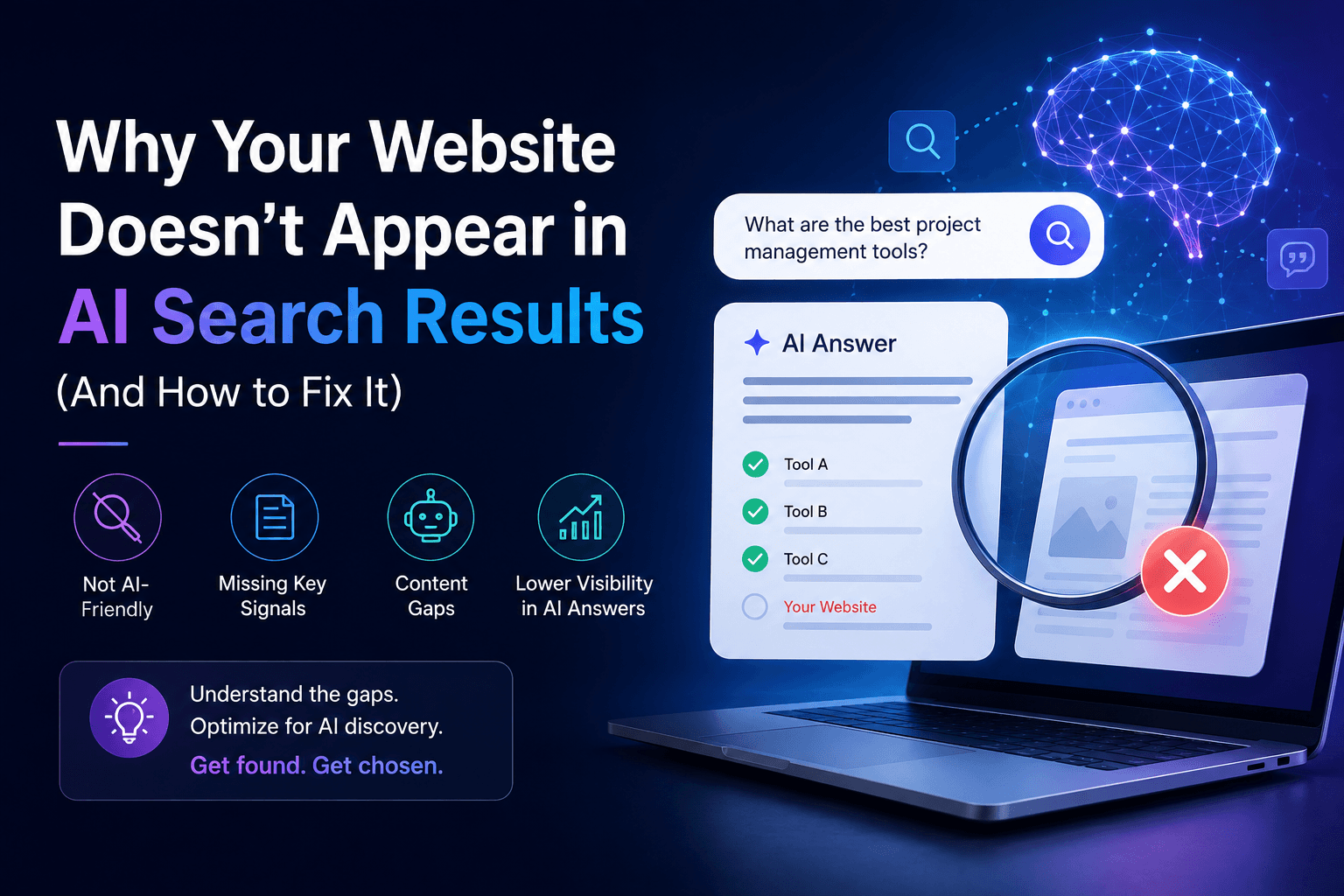
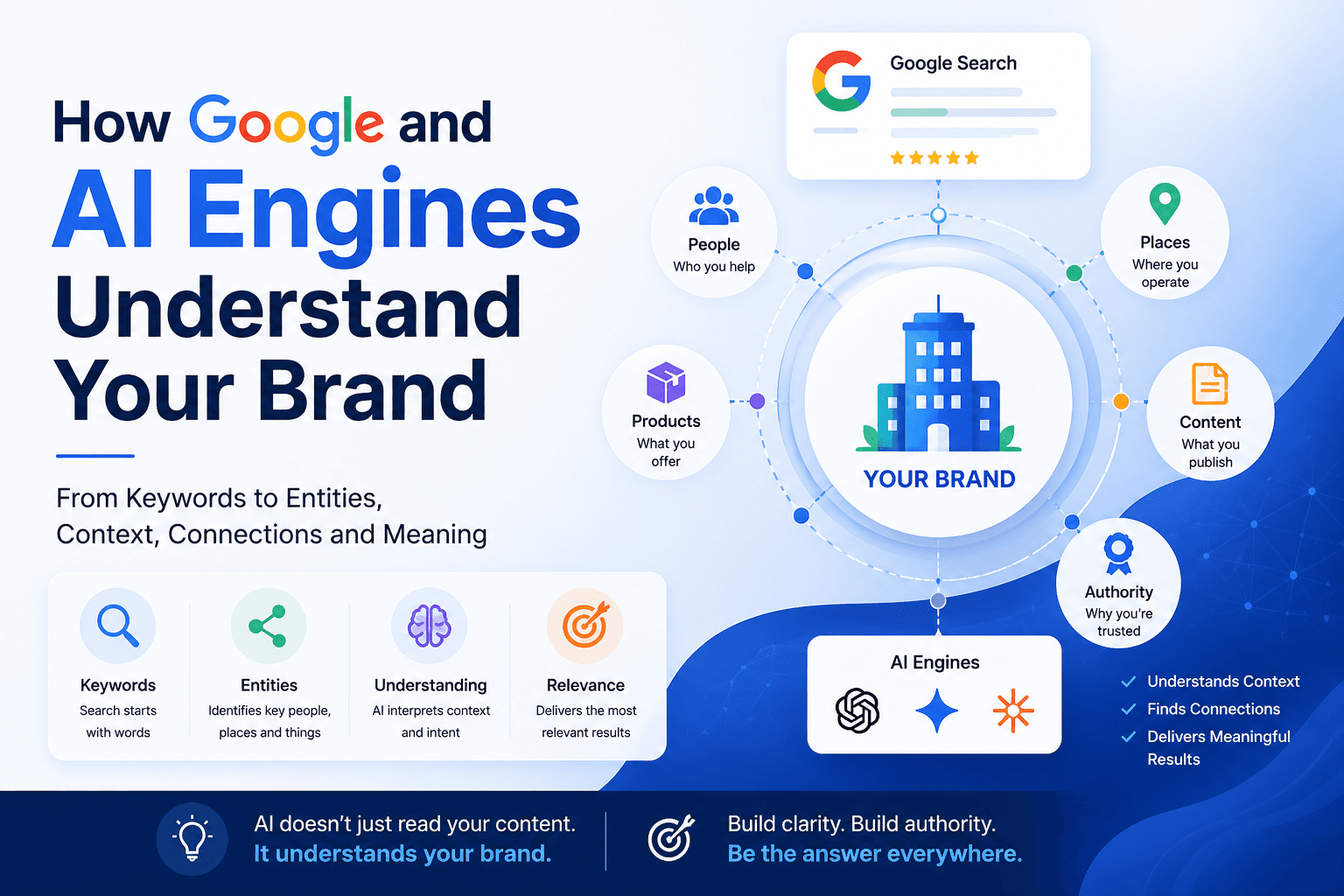
Search has fundamentally changed. In 2026, ranking for keywords is no longer enough. Google and AI systems now rely heavily on entities, structured relationships, and contextual understanding to determine authority, relevance, and trust.
If traditional SEO helped you rank pages, Entity SEO helps search engines understand your brand. And that shift changes everything.
Why This Matters in 2026
- AI-generated answers now appear in 13% of Google queries (double from early 2026)
- Google's Gemini AI is trained on the Knowledge Graph
- Brands with strong entity representation gain structural advantages in AI Overviews
- Answer Engine Optimization (AEO) is now essential for visibility
What is Entity SEO?
Understanding Entities
An entity is a clearly defined concept that search engines can identify independently. It could be:
| Entity Type | Example | |------------|---------| | Person | Sundar Pichai | | Company | Google, Microsoft, OpenAI | | Product | iPhone, GPT-4, Chrome | | Place | New York, Singapore | | Concept | Artificial Intelligence, Machine Learning |
The Entity Relationship Model
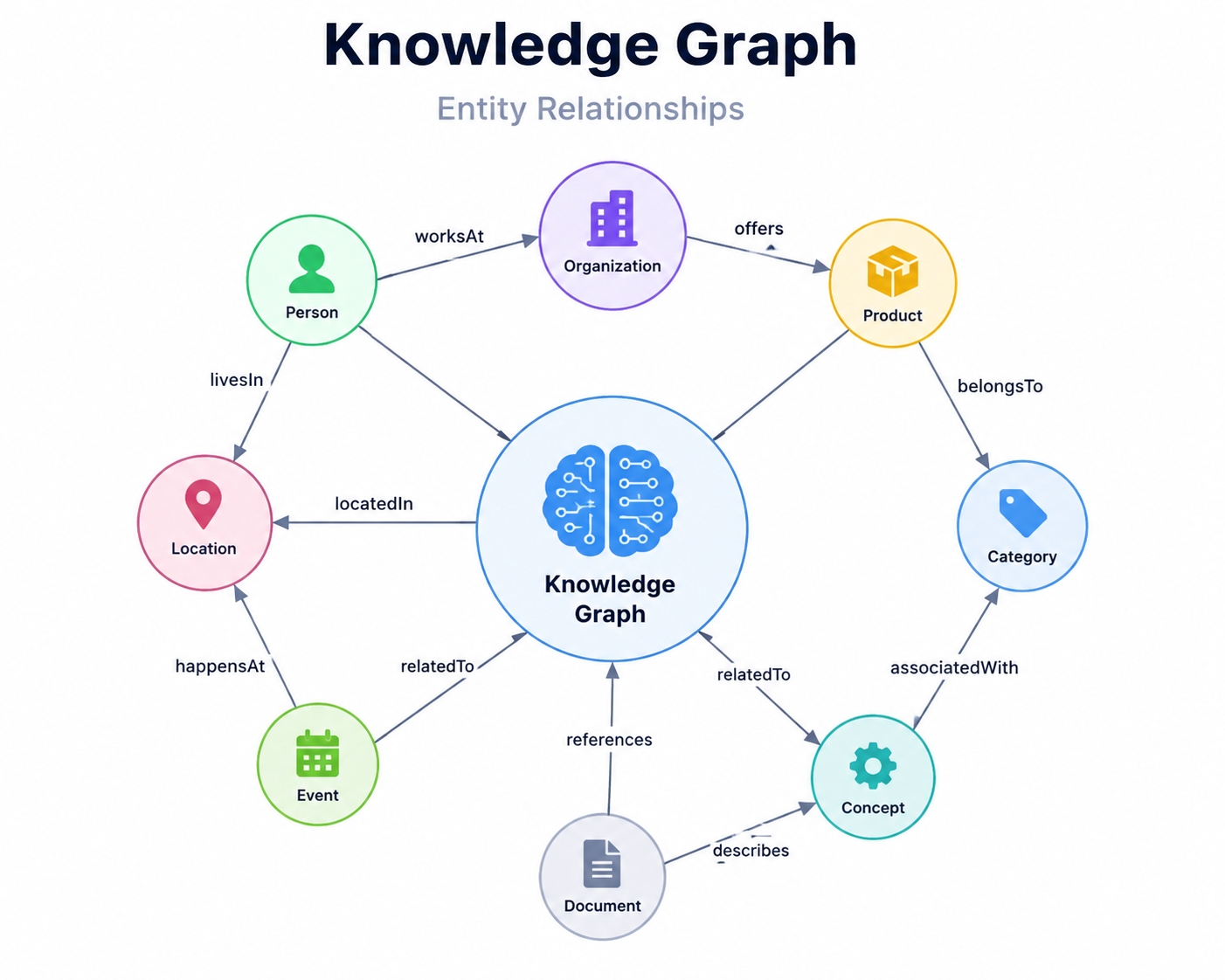
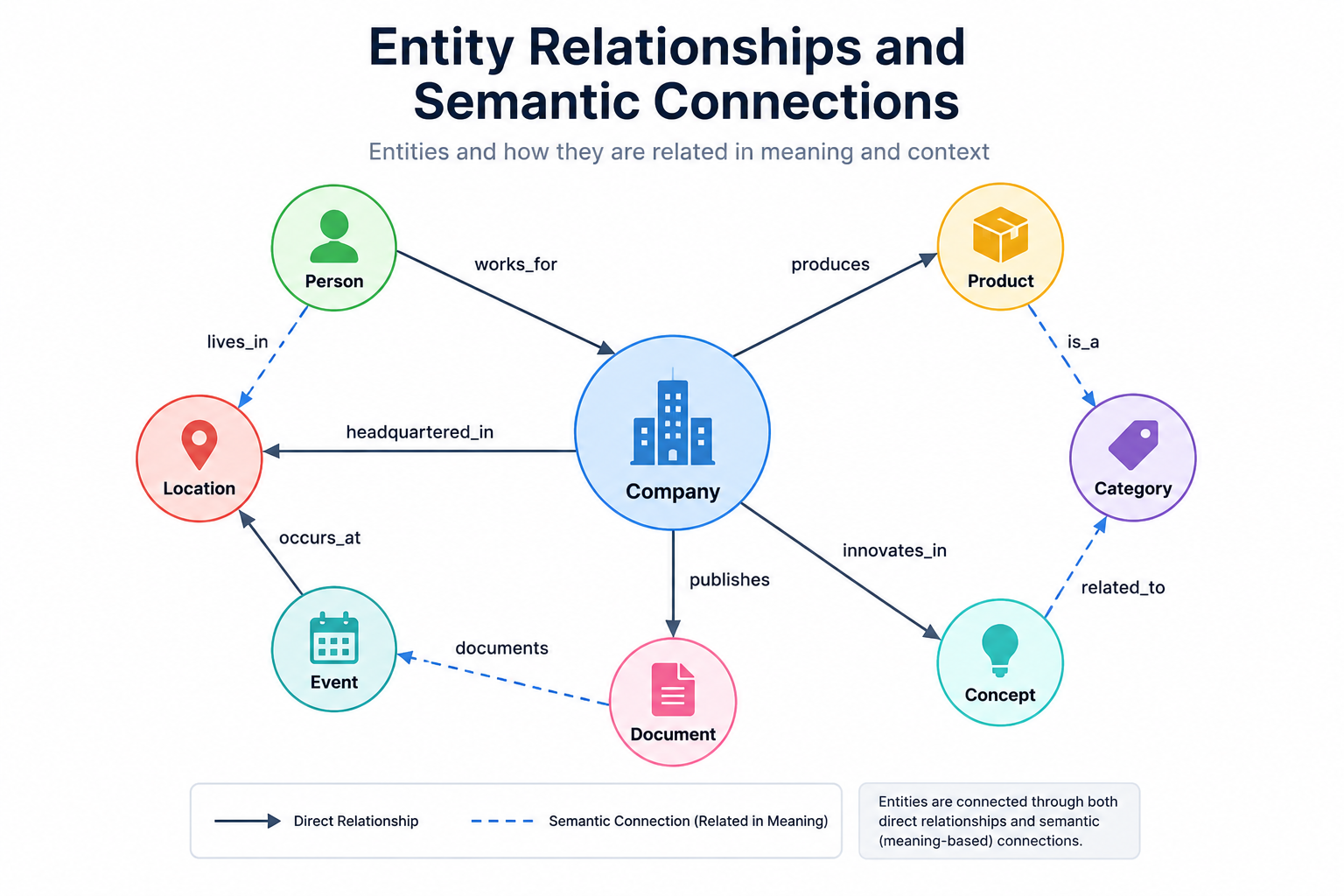
Search engines don't just see words—they see connections between entities. They understand relationships like:
- Google (company) → Founded by Larry Page and Sergey Brin
- Sundar Pichai → CEO of Google
- AI Overviews → Feature of Google Search
- Knowledge Graph → Powers AI recommendations
This entity-based model powers the Knowledge Graph and AI-generated answers across platforms like Google, ChatGPT, and Perplexity.
The Shift from Keyword SEO to Entity SEO
Traditional Keyword SEO (Old Model)
- Focus: Keyword research and optimization
- Goal: Rank for specific search queries
- Limitation: Fragmented, keyword-dependent
- Result: Page-level rankings
Modern Entity SEO (2026 Model)
- Focus: Building brand authority and semantic relationships
- Goal: Become a recognized entity in knowledge systems
- Advantage: Visibility across search, AI answers, and generative experiences
- Result: Brand-level recognition and recommendations
Key Insight: Entity SEO isn't replacing keyword optimization—it's expanding beyond it. You need both for complete visibility.
How Google and AI Systems Understand Entities
The Knowledge Graph: AI's Reference System
Google's Knowledge Graph contains billions of facts and entities. It's AI's contact list. When AI systems like Gemini generate answers, they pull directly from the Knowledge Graph.
If your brand is in the Knowledge Graph with accurate details and clear connections—AI can confidently recommend you.
If you're not in it, you're essentially a stranger to AI systems.
How AI Systems Connect the Dots
- Recognition: Can the AI identify your brand as a distinct entity?
- Authority: Does your content demonstrate expertise?
- Trust: Do third-party sources validate your claims?
- Relevance: Are you connected to related, authoritative entities?
The Search Engine Evolution Timeline
| Year | Focus | Method | Technology | |------|-------|--------|-----------| | 2010-2015 | Keywords | Exact match, keyword density | Basic algorithms | | 2015-2020 | Context | BERT, semantic understanding | Neural networks | | 2020-2026 | Entities | Knowledge Graph, NLP, Entity relationships | Advanced AI | | 2026+ | Authority + Identity | Semantic SEO + Entity authority | Generative AI |
![AI Search Evolution and Entity Understanding]https://res.cloudinary.com/jt0zpx9e/image/upload/v1786335848/3_Image_Aug_10_2026_09_53_40_AM_w6esly.png)
Why Entity SEO Matters for Your Business
AI Overviews and Entity Signals
When Google generates an AI Overview (summary at the top of search results), it relies on:
- Entity clarity: Is your brand clearly identifiable?
- Topical authority: Are you a recognized expert in your field?
- Semantic relationships: Are you connected to related, authoritative entities?
- Structured data: Do you use schema markup to communicate entity information?
The Competitive Advantage in 2026
Businesses that understand Entity SEO are gaining significant advantages because:
✅ AI systems prioritize entities over keywords
✅ Knowledge Graph representation = visibility in AI answers
✅ Semantic authority builds compounding benefits over time
✅ Brand fragmentation weakens entity recognition
✅ Early movers gain structural advantage
Real-World Impact
Businesses implementing Entity SEO consistently see:
- 3-6 months: Noticeable improvements in Knowledge Graph presence
- 6-12 months: Improved visibility in AI Overviews and AI-generated answers
- 12+ months: Compounding benefits from established entity authority
How to Implement Entity SEO: A 5-Step Framework
1. Define Your Core Entities
Start by identifying the key entities related to your business:
- Your Brand: What is your company known for?
- Your Industry: What category do you belong to?
- Your Expertise: What topics are you authoritative in?
- Your Relations: Who are your partners, competitors, and influencers?
Example for Anavya AI Labs:
- Core Entity: Anavya AI Labs (AI/SEO Agency)
- Related Entities: Entity SEO, Knowledge Graph, AI Search, Digital Marketing
- Authority Connections: Google, Generative Search, AI Overviews
2. Build Your Entity Profile
Strengthen your presence across knowledge systems:
Google Business Profile (Critical)
- Complete all fields with detailed information
- Add service categories and descriptions
- Upload high-quality photos and FAQs
- Encourage reviews mentioning your expertise
Third-Party Directories
- Industry-specific listings and directories
- Consistent business information (NAP: Name, Address, Phone)
- Earn mentions from reputable, authoritative sources
Your Website
- Create comprehensive "About" page
- Use structured data (schema markup)
- Link to authoritative third-party sources
- Establish thought leadership content
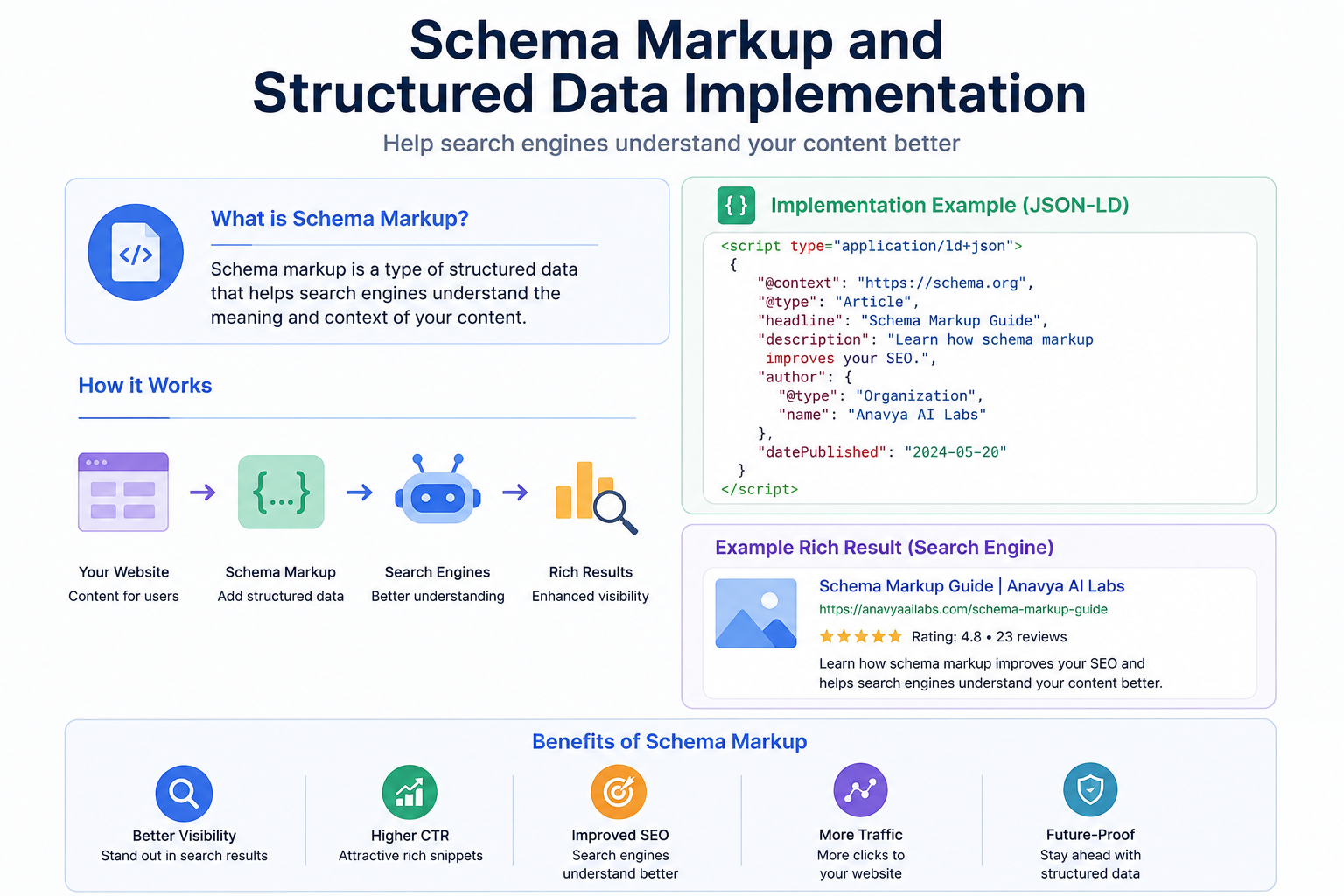
3. Use Schema Markup (Structured Data)
Schema markup tells search engines exactly what your entity is:
{
  "@context": "https://schema.org",
  "@type": "Organization",
  "name": "Anavya AI Labs",
  "url": "https://anavyaailabs.com",
  "description": "AI-powered SEO and digital marketing agency specializing in Entity SEO and Knowledge Graph optimization",
  "foundingDate": "2024",
  "founder": {
    "@type": "Person",
    "name": "Founder Name"
  },
  "knowsAbout": [
    "Entity SEO",
    "AI Search Optimization",
    "Generative Search Optimization",
    "Knowledge Graph Optimization",
    "Semantic SEO"
  ],
  "sameAs": [
    "https://www.linkedin.com/company/anavya-ai-labs",
    "https://twitter.com/anavyailabs"
  ]
}
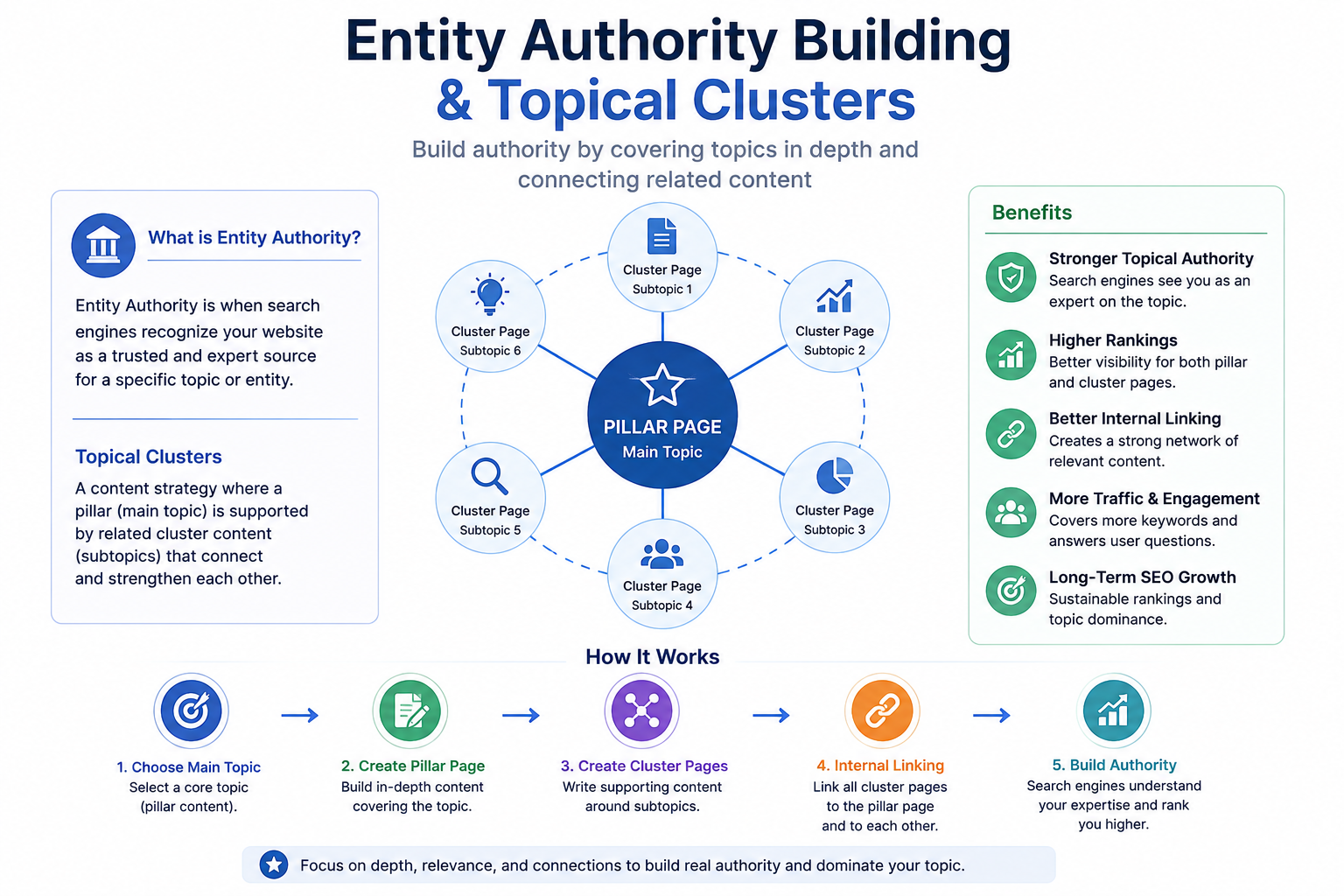
4. Create Topical Authority Content
Instead of scattered articles, build content ecosystems around core topics:
Main Pillar: "Complete Entity SEO Guide"
Supporting Cluster Content:
- Knowledge Graph optimization strategies
- Schema markup implementation guide
- Semantic SEO best practices
- AI search visibility tactics
- Entity relationship building
This structure creates semantic relationships that strengthen your entity authority and topical relevance.
5. Build Entity Relationships
Connect your content to other authoritative entities naturally:
- Link to official Google Search documentation
- Reference industry leaders and their research
- Mention related technologies and platforms
- Create content answering questions about related entities
- Build backlinks from authority sites in your industry
Remember: Don't just use keywords—reference entities that help AI understand context and relationships.
Entity SEO Tactics That Work in 2026
Content Strategy ✍️
✅ Depth over volume: One comprehensive guide beats ten shallow articles
✅ Semantic relationships: Include related entities naturally in your content
✅ Answer real questions: Address what users and AI systems actually ask
✅ Consistency reinforces recognition: Maintain brand voice and messaging
✅ Update regularly: Keep entity information fresh and accurate
Technical Implementation 🛠️
✅ Schema markup on all entity-related pages
✅ Internal linking strategy based on entity relationships
✅ Consistent NAP (Name, Address, Phone) across all platforms
✅ Mobile-first, fast-loading pages with clear entity information
✅ Proper XML sitemap and robots.txt configuration
Authority Building 🏆
✅ Third-party mentions from reputable industry sources
✅ Quality backlinks from authority sites in your industry
✅ Consistent social media presence with entity-optimized profiles
✅ Industry awards, certifications, and recognitions
✅ Guest appearances on podcasts, interviews, and publications
Common Entity SEO Mistakes to Avoid
❌ Critical Mistakes
| Mistake | Impact | Solution | |---------|--------|----------| | Fragmented Business Info | Weakens entity recognition across platforms | Use consistent NAP everywhere | | Ignoring Schema Markup | Missing structured data signals | Implement schema on key pages | | Keyword-Only Content | Missing semantic relationships | Include entity context naturally | | No Third-Party Validation | Lacks authority signals | Earn mentions from reputable sources | | Neglecting Google Business Profile | Losing primary entity control center | Complete and optimize fully | | Siloed Content | No semantic relationships built | Create pillar-cluster strategy |
The Future of SEO: Entity-First Strategy
In 2026 and beyond, Entity SEO isn't optional—it's essential. Here's why:
🤖 Why AI Changes Everything
- AI systems think in entities and relationships, not keywords
- Knowledge Graph optimization directly influences AI recommendations
- Semantic authority compounds over time
- Entity-first brands compete at a higher level than keyword-focused competitors
Your Action Plan
| Instead of... | Do This... | Result | |---------------|-----------|--------| | Chasing keyword rankings | Build brand as recognized entity | Sustainable visibility | | Reacting to algorithm changes | Strengthen semantic authority | Resilient to updates | | Competing page-by-page | Compete as distinct authority | Brand-level recognition | | Keyword stuffing | Entity relationship building | AI recommendations |
Quick Reference Checklist
Define Your Entity:
- [ ] Identify core brand entity
- [ ] List related entities and topics
- [ ] Map competitor entities
- [ ] Define unique authority areas
Build Your Profile:
- [ ] Complete Google Business Profile
- [ ] Claim industry directory listings
- [ ] Ensure NAP consistency everywhere
- [ ] Create "About" page
Implement Structure:
- [ ] Add schema markup to homepage
- [ ] Add schema to key service/product pages
- [ ] Configure rich snippets
- [ ] Monitor structured data errors
Create Content:
- [ ] Develop pillar content
- [ ] Create cluster topics
- [ ] Build internal linking
- [ ] Establish topical authority
Build Authority:
- [ ] Earn third-party mentions
- [ ] Get quality backlinks
- [ ] Optimize social profiles
- [ ] Pursue industry recognition
Monitor & Maintain:
- [ ] Monitor Knowledge Graph presence
- [ ] Track entity visibility in AI Overviews
- [ ] Update content regularly
- [ ] Maintain information accuracy
Conclusion
Entity SEO represents a fundamental shift in how we approach digital visibility. By understanding entities, building semantic relationships, and establishing authority signals, you're not just optimizing for search—you're building lasting brand infrastructure.
The Brands Winning in 2026
✨ Aren't those chasing keywords
✨ Are those that understand how Google and AI systems work
✨ Are building themselves as recognized, authoritative entities in their fields
✨ Are thinking in terms of semantic relationships, not keyword matches
Your Next Steps
- Start with your core entity definition - TODAY
- Build your Knowledge Graph presence - THIS WEEK
- Implement schema markup - THIS MONTH
- Create topical authority content - ONGOING
- Watch your AI search visibility compound - OVER TIME
The question isn't whether Entity SEO matters anymore. The question is: How quickly can you implement it before your competitors do?
The brands that embrace Entity SEO in 2026 will establish semantic authority that compounds for years to come. The time to start is now.
Ready to Implement Entity SEO?
Anavya AI Labs specializes in helping businesses build lasting entity authority and dominate AI search results. Let's build your semantic foundation and establish your brand as a recognized authority in your industry.
Your entity definition starts today. Your competitive advantage compounds from tomorrow.