GEO Analytics: How to Track Brand Mentions Across ChatGPT, Gemini, and Perplexity
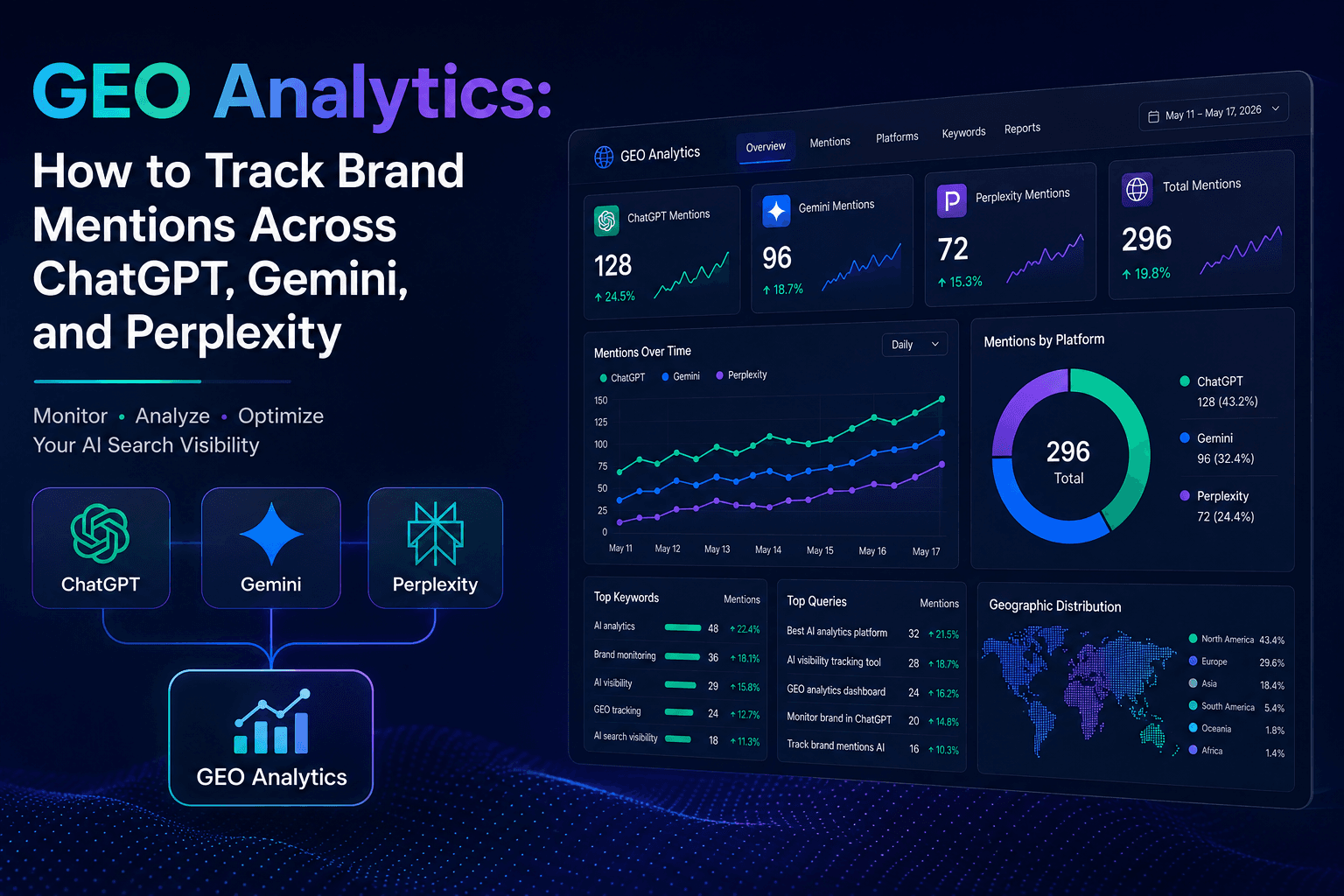
[IMAGE 1: Hero/Cover Image - "GEO Analytics Dashboard Overview"] Insert your cover image here with ALT text: "GEO Analytics tracking dashboard showing brand mentions across ChatGPT, Gemini, and Perplexity"
Introduction: Why Brand Mention Tracking Matters in 2026
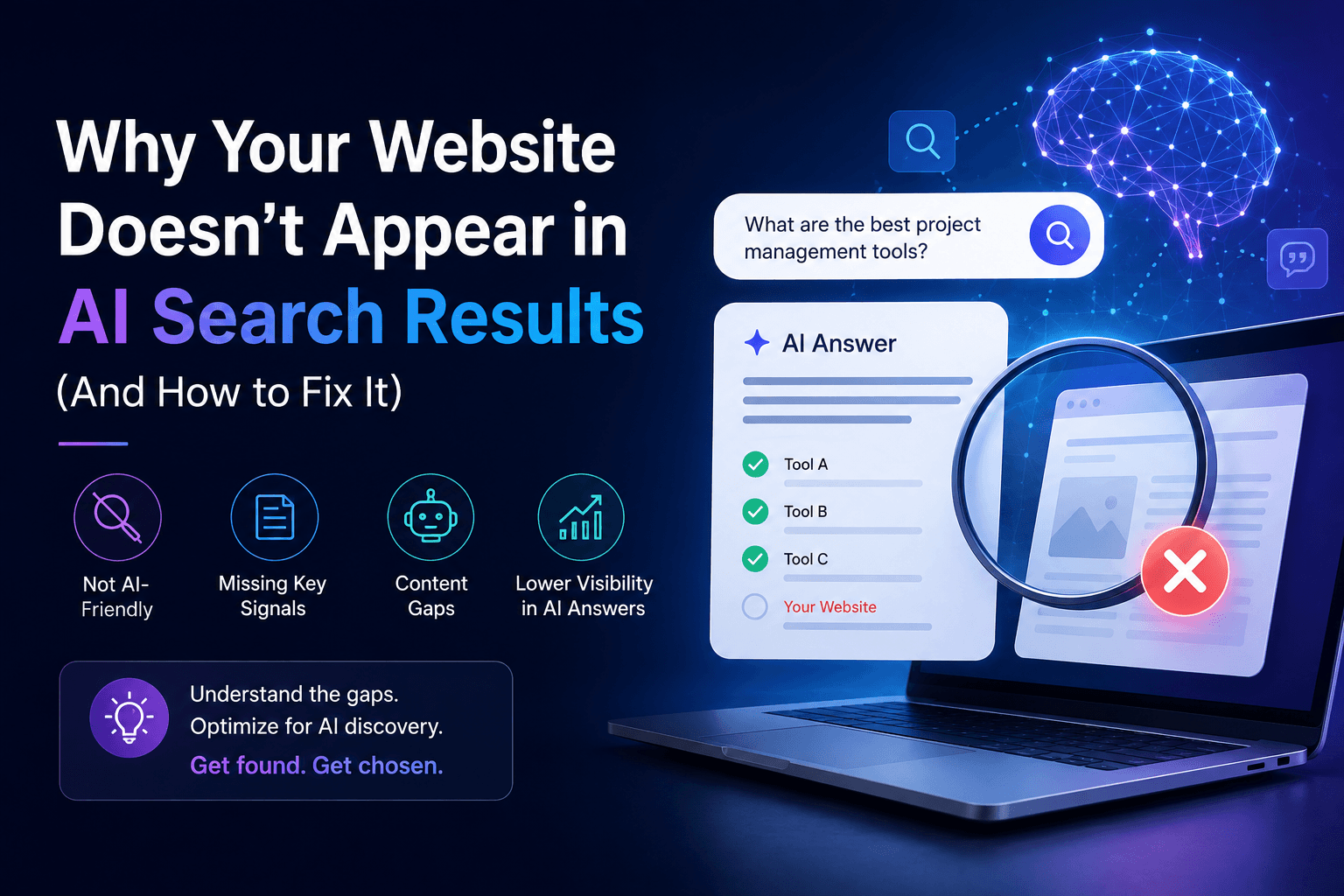
The AI landscape has fundamentally shifted. Your brand isn't just competing on Google search results anymore—it's competing across ChatGPT, Gemini, Perplexity, and dozens of other AI platforms. When users ask these systems about your industry, product category, or business, do they mention you? Do they recommend you?
This is where GEO Analytics becomes crucial. Brand mention tracking across AI platforms isn't just a "nice-to-have"—it's essential for understanding your AI visibility and market positioning.
What is GEO Analytics? Understanding the Basics
GEO Analytics refers to the systematic tracking, measurement, and analysis of:
- Brand Mentions: Direct references to your company, product, or brand across AI platforms
- Sentiment Analysis: Whether these mentions are positive, negative, or neutral
- Geographic Distribution: Where your mentions are coming from (country, region, language)
- Competitive Context: How your mentions compare to competitors
- Engagement Metrics: Click-through rates, user interactions, and conversion paths
Unlike traditional web analytics that track your own website traffic, GEO Analytics monitors external conversations about your brand across AI systems.
The Big Three: ChatGPT, Gemini, and Perplexity
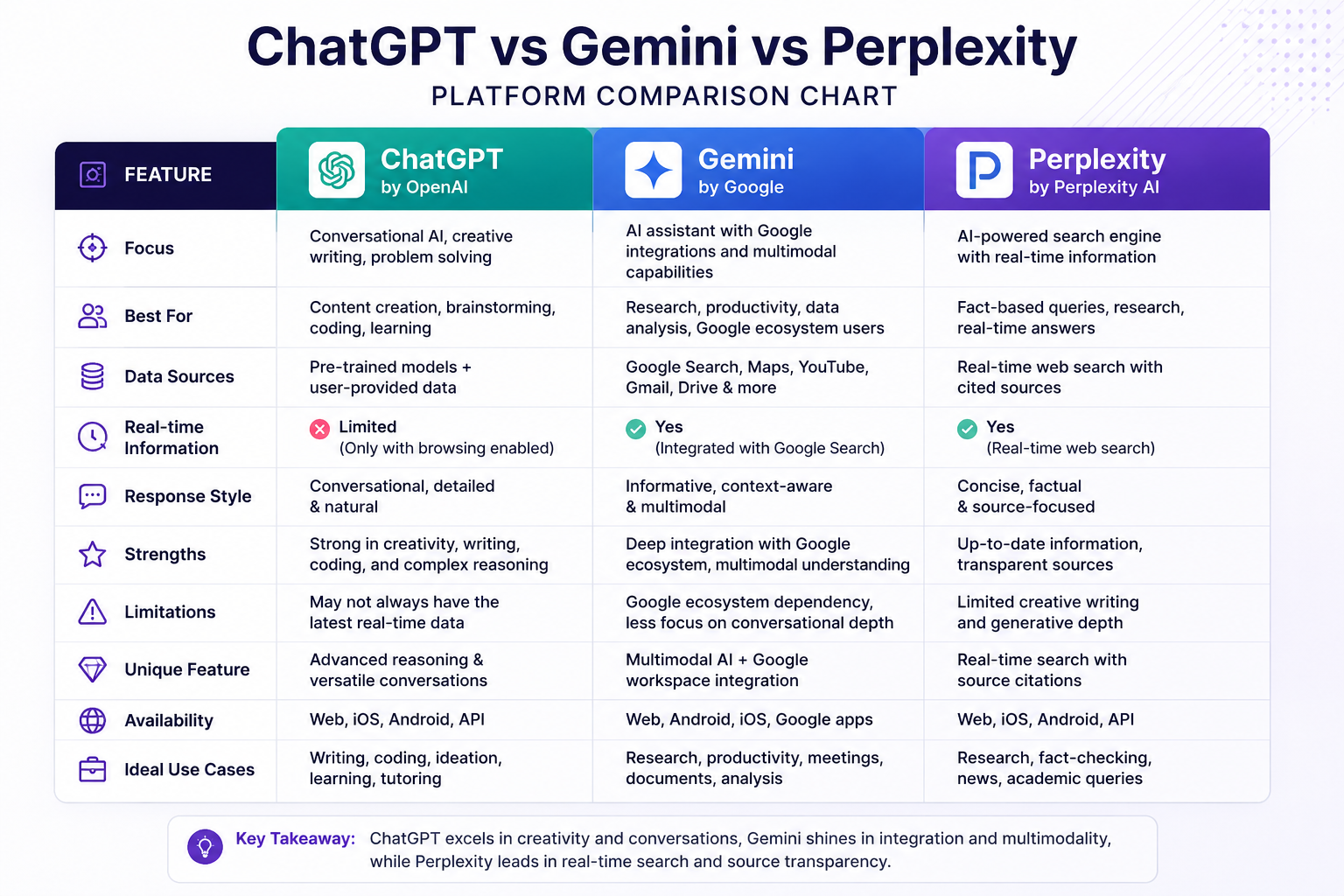
ChatGPT: The Market Leader
User Base: 200+ million monthly active users Key Characteristics:
- Largest AI user base globally
- Strong integration with web search
- Direct citations and source attribution
- Business users: Students, professionals, enterprises
Why It Matters for Your Brand: ChatGPT mentions carry significant weight because of its massive reach. Users often cite sources, creating natural backlinks and brand visibility.
Gemini: Google's Integrated Approach
User Base: 100+ million integrated users (via Gmail, Workspace, Search) Key Characteristics:
- Deeply integrated with Google Search and Workspace
- Multimodal capabilities (text, image, code)
- Strong for enterprise/business queries
- Native connection to Google Search results
Why It Matters for Your Brand: Gemini integration with Google Search means your brand visibility here impacts your SEO and SERPs directly.
Perplexity: The Research Engine
User Base: 15+ million monthly active users (growing rapidly) Key Characteristics:
- Focus on research and cited sources
- Always shows source citations
- Popular among researchers, students, professionals
- Mobile-first approach
Why It Matters for Your Brand: Perplexity explicitly cites sources, making it a high-intent platform for brand discovery and traffic generation.
How to Set Up Brand Mention Tracking: A 5-Step Process
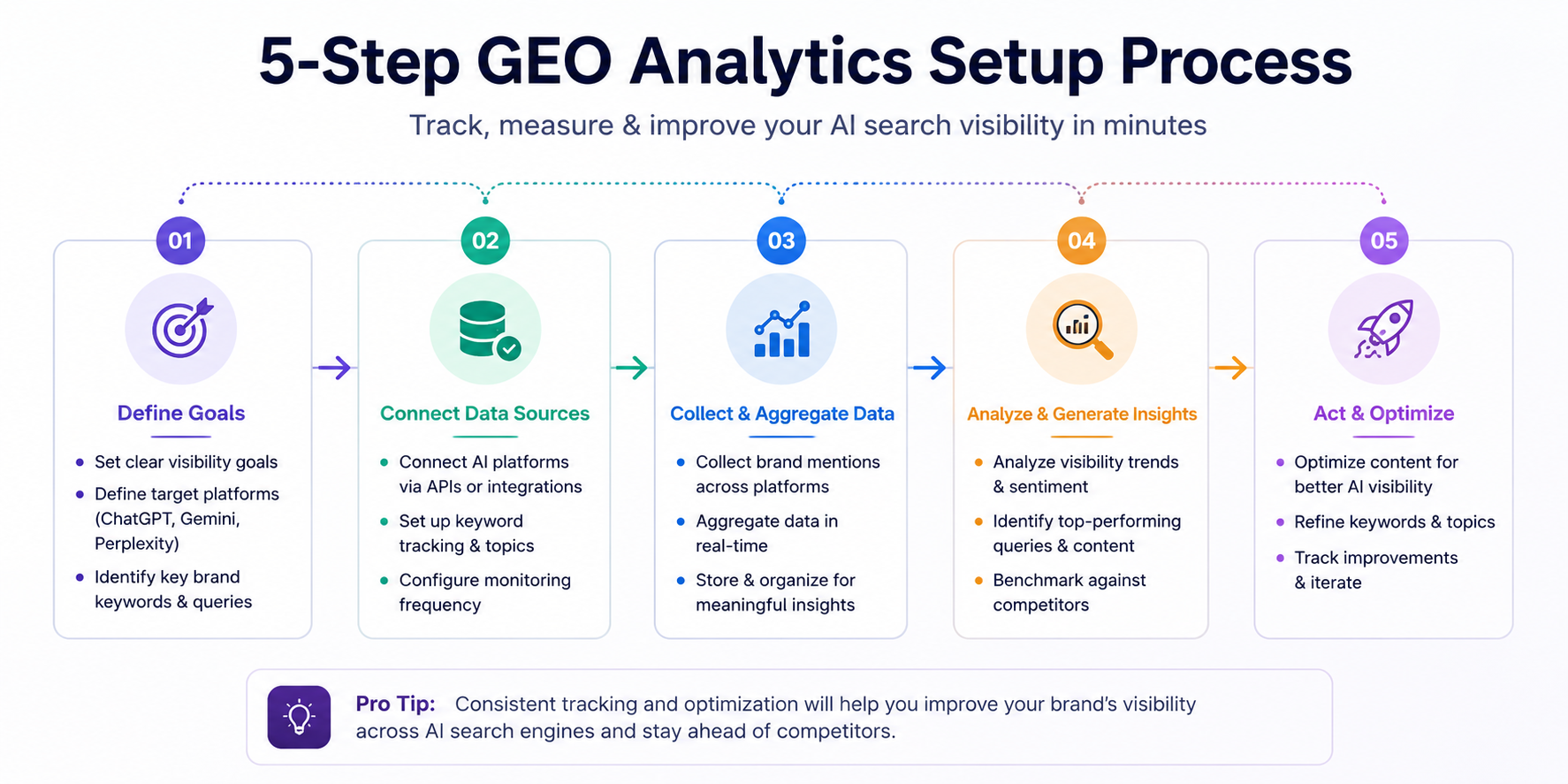
Step 1: Define Your Brand Keywords
Start with a comprehensive list:
Primary Keywords:
- Your company name
- Product names
- Founder names
- Unique brand terminology

Secondary Keywords:
- Industry terms where you're mentioned
- Competitor names (for comparative mentions)
- Problem statements your product solves
- Solution categories
Step 2: Choose Your Tracking Tool
Recommended Tools for AI Platform Monitoring:
| Tool | Best For | Pricing | |------|----------|---------| | Semrush Brand Monitoring | Comprehensive overview | Enterprise | | Ahrefs Site Explorer | Competitor comparison | Professional+ | | Meltwater AI Insights | Real-time mentions | Custom | | Brandwatch | Sentiment analysis | Enterprise | | Custom Web Scraping (Python/API) | Specific AI platforms | Free/Internal |
Step 3: Set Up Tracking Across Each Platform
For ChatGPT:
- Use ChatGPT's web plugin directory to scan mentions
- Monitor OpenAI's official blog and community forums
- Track indirect mentions through cited sources
- Monitor conversations shared publicly
For Gemini:
- Integrate with Google Search Console
- Use Google Analytics 4 for traffic attribution
- Monitor Google Trends for related searches
- Track Knowledge Panel visibility
For Perplexity:
- Monitor Perplexity's "Discover" section
- Set up alerts for source attribution
- Track referral traffic from Perplexity
- Monitor citation frequency
Step 4: Establish Baseline Metrics
Before you optimize, measure:
Baseline Metrics to Track:

1. Mention Frequency
   - How often mentioned per week
   - Trend direction (increasing/decreasing)

2. Sentiment Score
   - Percentage positive mentions
   - Percentage negative mentions
   - Percentage neutral mentions

3. Traffic Attribution
   - Referral traffic from each platform
   - Conversion rates from each source
   - Time-on-site and bounce rates

4. Competitive Position
   - Mentions vs. top 3 competitors
   - Market share of voice
   - Sentiment comparison
Step 5: Create a Monitoring Dashboard

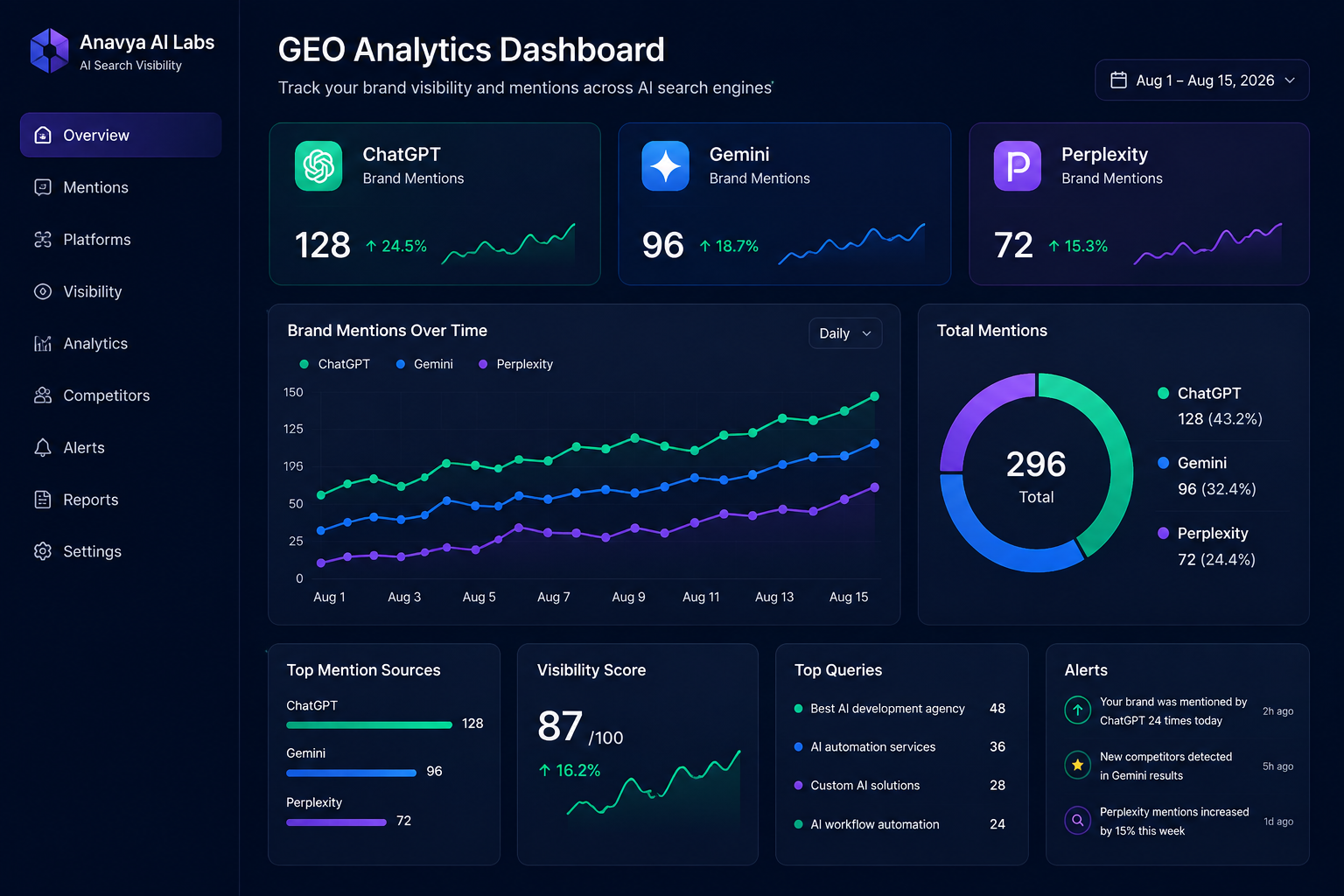
Build or use existing dashboards to track:
- Weekly mention counts across all three platforms
- Real-time sentiment changes
- Geographic distribution of mentions
- Competitor benchmarking
- Traffic source attribution
Advanced Strategies: Maximizing Your AI Visibility
Strategy 1: Optimize for AI Platform Citations
What to Do:
- Ensure your content is easily discoverable and citable
- Use clear headings, bullet points, and structured data
- Create "citation-friendly" content (research, statistics, original data)
- Build authoritative resource pages
Expected Impact: +40-60% increase in AI platform mentions within 3 months
Strategy 2: Leverage Sentiment Analysis
What to Do:
- Monitor negative mentions and respond proactively
- Amplify positive mentions through your channels
- Identify common objections from negative mentions
- Address product gaps revealed by sentiment trends
Expected Impact: 25-35% improvement in sentiment score over 6 months
Strategy 3: Geographic Targeting
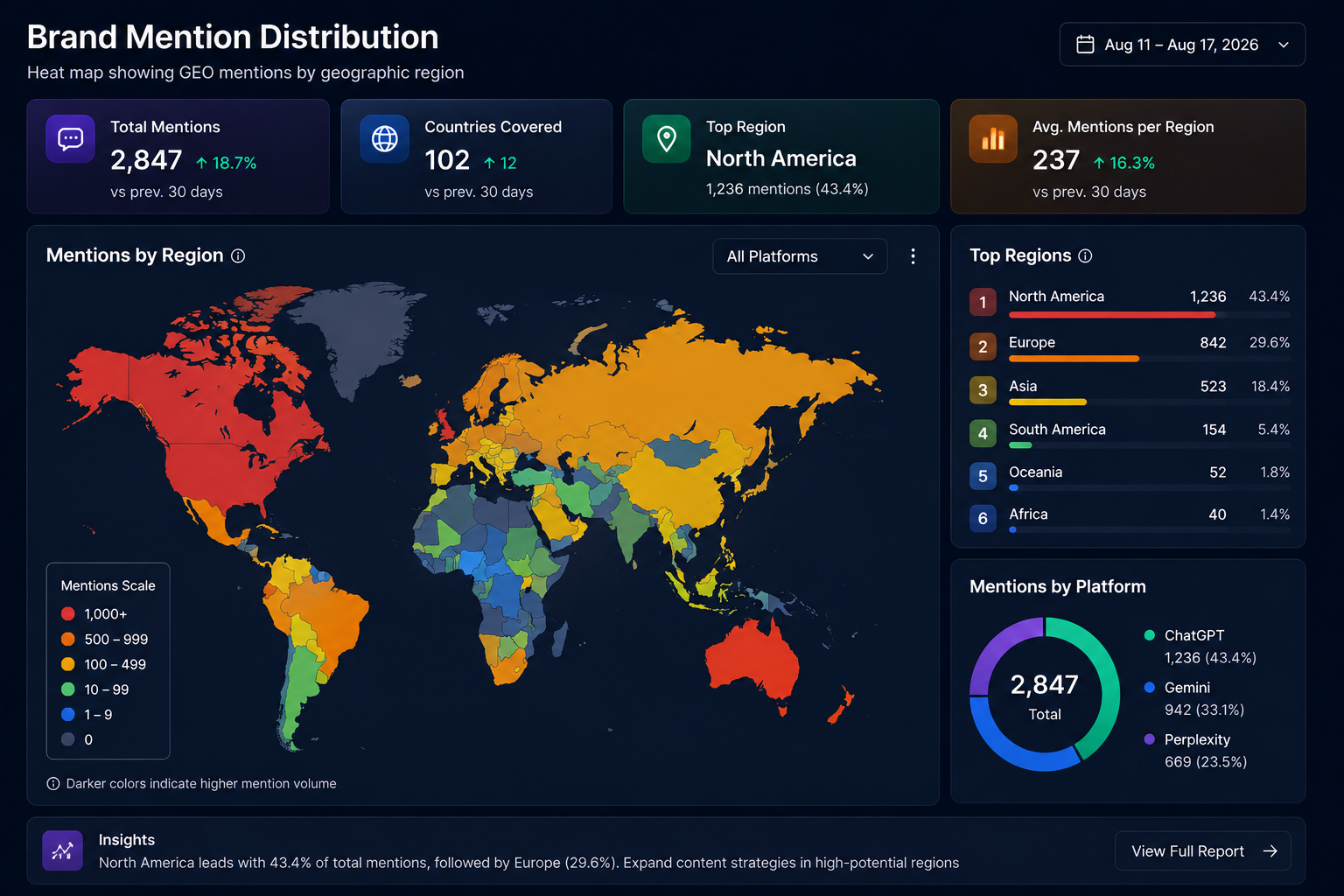
What to Do:
- Identify high-mention geographic markets
- Tailor content for high-potential regions
- Localize your messaging for key markets
- Prioritize market-specific PR and partnerships
Expected Impact: Unlock growth in underpenetrated markets
Strategy 4: Competitive Intelligence
What to Do:
- Compare your mention frequency vs. top 3 competitors
- Analyze what competitors are cited for
- Identify gaps in their coverage
- Position your brand to fill those gaps
Expected Impact: Identify market opportunities and messaging angles
Tools & Technologies for Advanced GEO Analytics
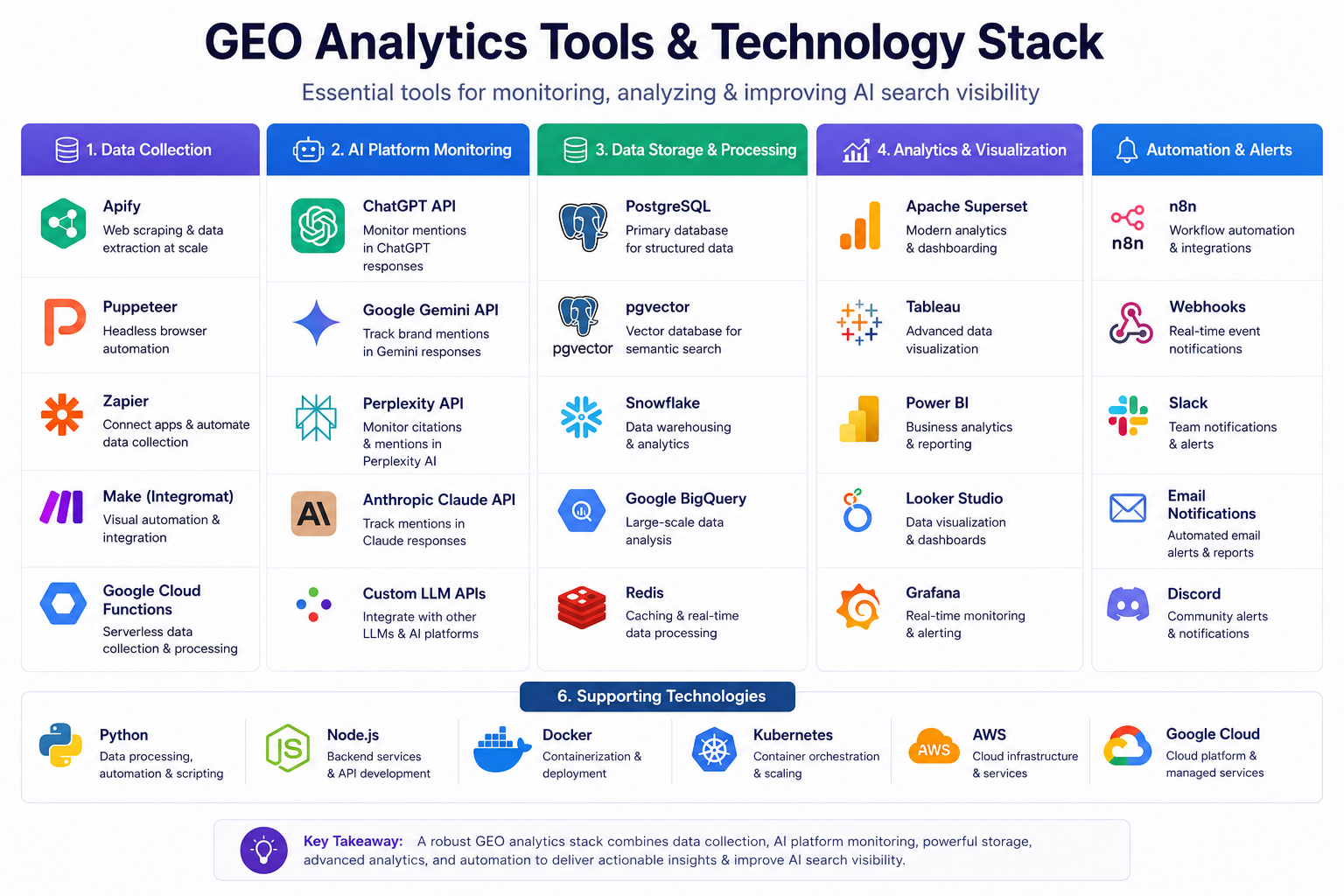
Option 1: Enterprise Solutions
Best For: Mid-to-large companies with dedicated teams
- Comprehensive, all-in-one platforms
- White-glove customer support
- Advanced AI-powered insights
- Custom integrations
Option 2: Mid-Market Solutions
Best For: Growing companies wanting accuracy without enterprise cost
- Good balance of features and price
- API access for integration
- Dedicated support
- Customizable dashboards
Option 3: DIY/Developer-Led Approach
Best For: Tech-savvy teams and startups
- Build using Python APIs
- Monitor through custom dashboards
- Full control and flexibility
- Minimal recurring costs
Sample Python Setup:
# Pseudocode for tracking setup
import analytics_tools

tracker = GEOAnalytics(
    platforms=['chatgpt', 'gemini', 'perplexity'],
    keywords=['your_brand', 'product_name'],
    sentiment_analysis=True,
    geographic_tracking=True
)

# Daily monitoring
tracker.run_daily_scan()
tracker.generate_report()
tracker.send_alerts_on_sentiment_change()
Measuring ROI: What Results to Expect
Month 1-2: Baseline & Foundation
- Establish tracking
- Collect baseline data
- Identify key opportunities
- Expected mentions increase: 5-15%
Month 3-4: Optimization & Amplification
- Implement citation strategies
- Address negative sentiment
- Improve content discoverability
- Expected mentions increase: 20-40%
Month 5-6: Scaling & Leverage
- Geographic expansion
- Competitive positioning
- Strategic partnerships
- Expected ROI: 2-3x traffic increase from AI platforms
Common Challenges & Solutions
Challenge 1: Platform APIs Keep Changing
Solution: Use abstraction layers and work with tool providers who stay updated
Challenge 2: Sentiment Analysis Isn't Perfect
Solution: Combine automated analysis with manual review (10% sampling)
Challenge 3: Attributing Conversions from AI Platforms
Solution: Use UTM parameters, unique landing pages, and platform-specific discount codes
Challenge 4: Competing with Established Brands
Solution: Find niche keywords, target specific use cases, partner with micro-influencers
Best Practices: Your Action Checklist
✓ Monitor all three major platforms (ChatGPT, Gemini, Perplexity) weekly ✓ Set up automated alerts for brand mentions above baseline ✓ Review sentiment monthly and address negative mentions ✓ Benchmark against top 3 competitors quarterly ✓ Optimize your content for AI platform citations ✓ Use geographic data to identify expansion opportunities ✓ Create a cross-functional team (Marketing, Product, PR) ✓ Document case studies of your best AI-amplified content ✓ Test different content formats to see what gets cited most ✓ Build relationships with AI platform communities
Conclusion: AI Visibility is a Competitive Advantage
In 2026, brand visibility isn't limited to Google search results. With ChatGPT, Gemini, and Perplexity commanding millions of daily active users, your presence—or absence—across these platforms directly impacts your market position.
GEO Analytics transforms AI platform monitoring from a black box into actionable intelligence. By systematically tracking mentions, understanding sentiment, and optimizing for AI discoverability, you'll:
- Increase brand awareness among AI users
- Build authority in your category
- Identify market opportunities before competitors
- Improve overall digital visibility
Start today: Set up tracking for even one platform this week. The data will guide your next moves.