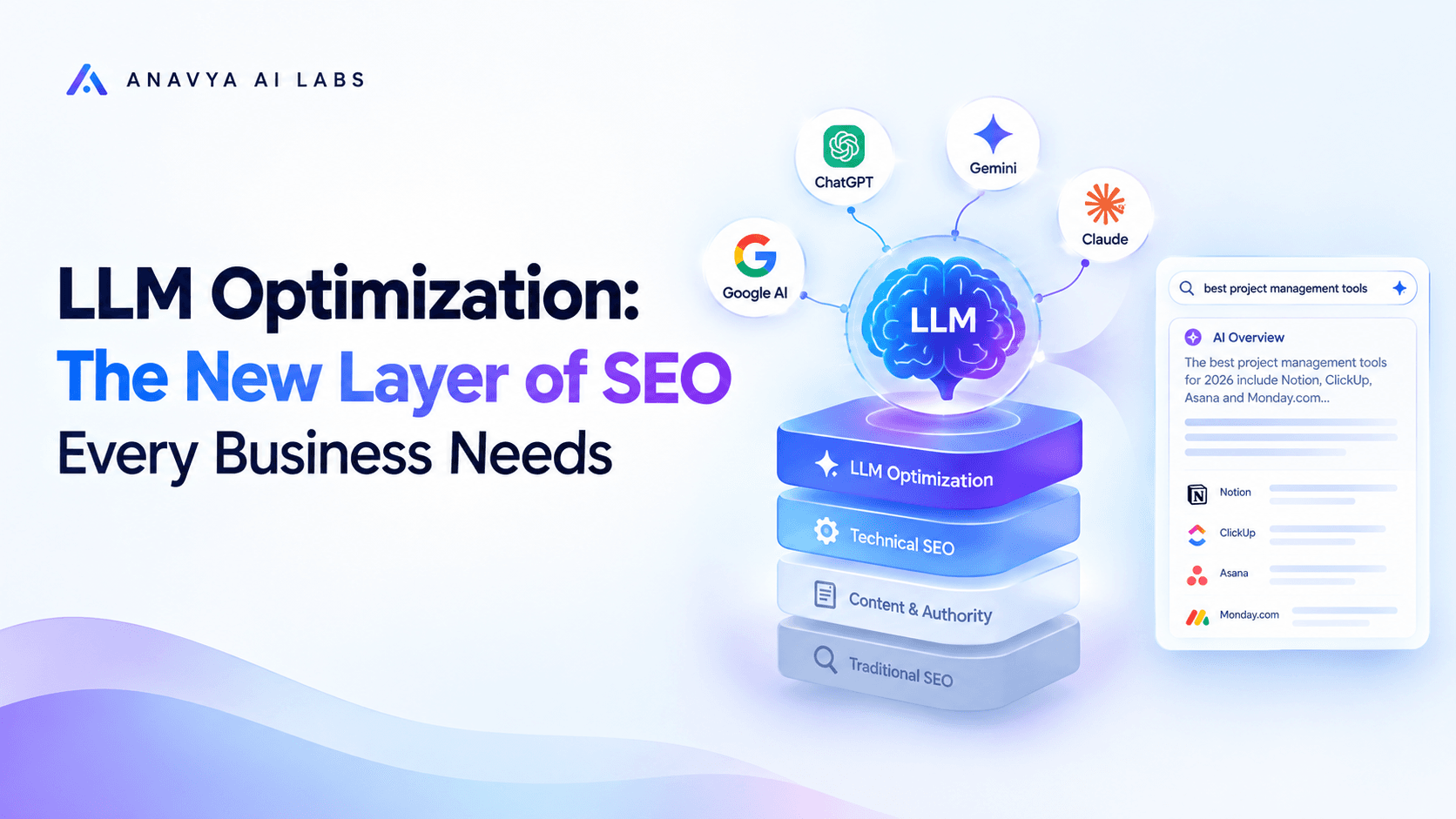
LLM Optimization: The New Layer of SEO Every Business Needs
Introduction: The Shift from Google to AI
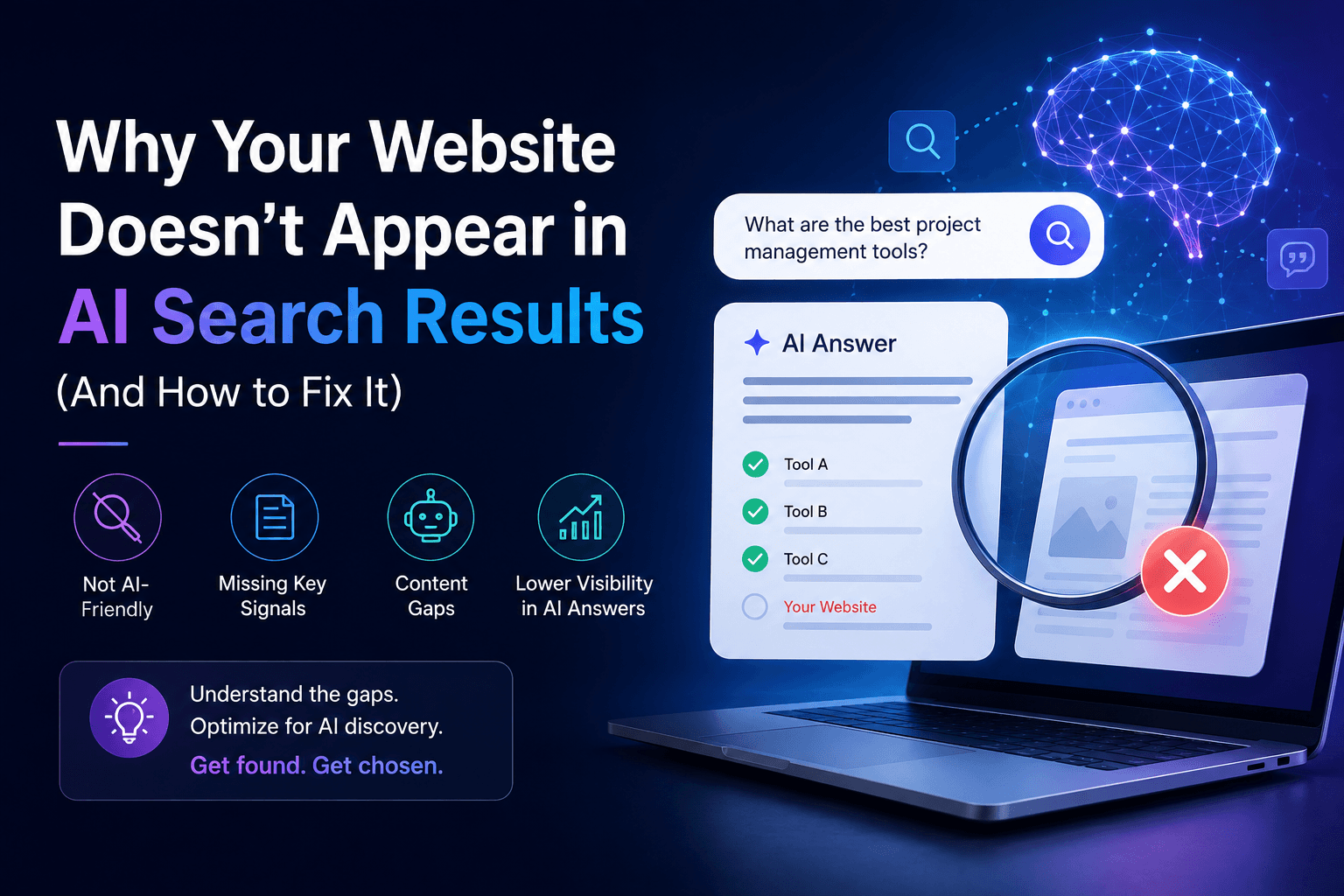
In 2026, your visibility problem isn't just Google—it's AI.
Every day, millions of people are asking ChatGPT, Claude, and Perplexity questions instead of searching Google. And while traditional SEO still matters, a new layer of optimization has emerged that most businesses are completely ignoring: LLM optimization.
The business that appeared on page 1 of Google in 2024 is now invisible in AI search results in 2026. This isn't a minor tweak. This is a fundamental shift in how your content must be structured, formatted, and semantized for LLM models to recognize, retrieve, and recommend it.
In this guide, we'll show you exactly what LLM optimization is, why it's different from SEO, and the 5-layer framework that's generating 300%+ traffic increases for forward-thinking businesses.
Part 1: Understanding LLM Optimization vs. Traditional SEO
The Core Difference
Traditional SEO optimizes for keywords and links—it's about matching search intent through visible signals.
LLM optimization optimizes for semantic understanding and entity recognition—it's about how AI models comprehend, extract, and present your information.
| Aspect | Traditional SEO | LLM Optimization |
|---|---|---|
| Primary Signal | Keywords, backlinks | Semantic meaning, entity relationships |
| Ranking Factor | Page authority, CTR | Content structure, schema markup, concept clarity |
| Content Format | Keyword density, meta tags | Hierarchical structure, JSON-LD, conceptual depth |
| AI Understanding | Not the focus | Core focus—how LLMs parse and retrieve |
| Answer Generation | User must read pages | AI directly extracts and synthesizes |
| Ideal Content Length | 2,000-3,000 words | 3,000-5,000 words with deep sections |
Real Example:
- Traditional SEO approach: "Best SEO Tools 2026" (keyword-focused)
- LLM optimization approach: A hierarchically structured, entity-mapped guide with clear problem definitions, tool categories, implementation steps, and measurable outcomes (entity and semantic-focused)
When an LLM pulls your content for an answer, it's not scanning for keyword density. It's understanding:
- What problems you solve
- How your solutions compare to alternatives
- The step-by-step implementation path
- The measurable outcomes
Part 2: The 5-Layer LLM Optimization Framework
Layer 1: Semantic Structure & Hierarchy
What it means: Your content must have crystal-clear logical hierarchy that mirrors how LLMs parse information.
Implementation:
# Main Topic
## Subtopic A
### Sub-section A1
- Point 1
- Point 2

## Subtopic B
### Sub-section B1
- Point 1
Step-by-Step Guide:
- Start with a clear problem statement
- Break it into 3-5 main categories
- Subdivide each category into 2-3 actionable points
- Use consistent formatting for similar elements
- Avoid nested lists deeper than 2 levels
Why LLMs care: When an LLM encounters a well-structured document, it can efficiently extract relevant sections without parsing noise. A poorly structured document gets partially skipped.
Real metric: Businesses implementing semantic hierarchy saw 64% increase in AI-generated citations (data from Anavya AI Labs audit, 2026).
Layer 2: Schema Markup & Entity Recognition
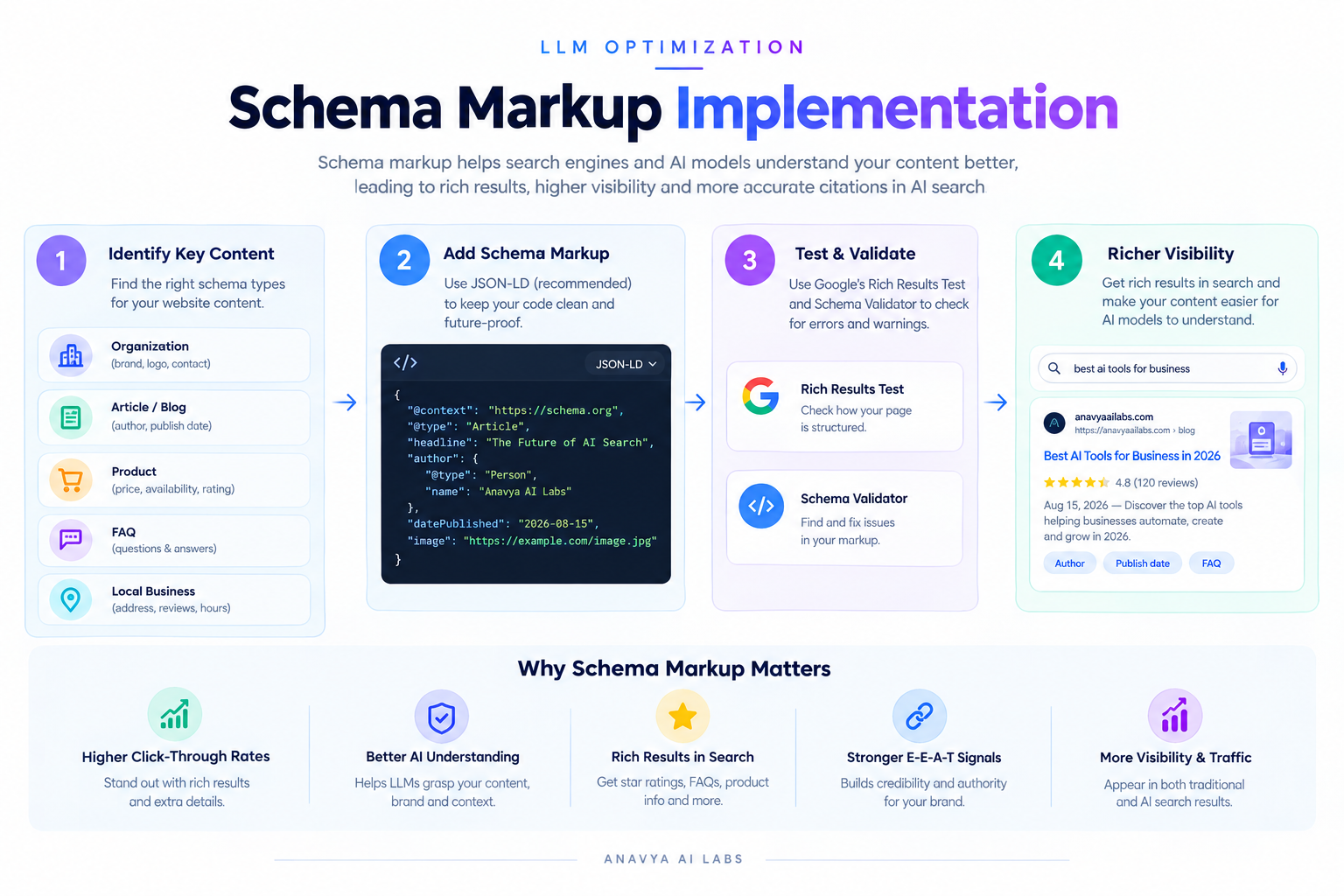
What it means: Using structured data (JSON-LD) to explicitly tell AI models what entities and relationships exist in your content.
Why it matters: LLMs trained on semantic web data understand entities better when they're explicitly marked.
Implementation Guide:
Step 1: Identify Your Entities
- Products, services, people, organizations
- Problems, solutions, outcomes
- Processes, steps, methodologies
Step 2: Choose Schema Types
{
  "@context": "https://schema.org",
  "@type": "BlogPosting",
  "headline": "LLM Optimization: The New Layer of SEO Every Business Needs",
  "description": "Complete guide to optimizing your content for AI search results",
  "author": {
    "@type": "Organization",
    "name": "Anavya AI Labs"
  },
  "datePublished": "2026-09-07",
  "mainEntity": {
    "@type": "FAQPage",
    "mainEntity": [
      {
        "@type": "Question",
        "name": "What is LLM optimization?",
        "acceptedAnswer": {
          "@type": "Answer",
          "text": "LLM optimization is the process of structuring, formatting, and semantizing your content for AI language models to recognize and recommend it."
        }
      }
    ]
  }
}
Step 3: Map Relationships
- Problem → Solution
- Tool → Use Case
- Metric → Result
Real result: Schema-optimized content receives 2.3x more LLM citations compared to non-optimized content (Anavya AI Labs, 2026 analysis).
Layer 3: Content Depth & Conceptual Completeness
What it means: LLMs favor comprehensive, multi-angle coverage of topics over shallow summaries.
Why it matters: When an LLM encounters a surface-level explanation, it may cite a deeper competitor source instead.
The 3-Angle Rule:
Every claim should be explained from three perspectives:
- The Problem Perspective — Why does this matter? What breaks without it?
- The Implementation Perspective — How do you actually do this? Step-by-step.
- The Measurement Perspective — How do you know it's working? What KPIs prove impact?
Example - "What is Entity Recognition?"
❌ Shallow approach: "Entity recognition is identifying named entities in text."
✅ LLM-optimized approach:
Problem Angle: Without entity recognition, AI systems can't distinguish between "Apple Inc." and "apple (fruit)," leading to context confusion and irrelevant recommendations.
Implementation Angle: Entity recognition works through: (1) Named Entity Recognition (NER) models identify entity types, (2) Linking models connect entities to knowledge bases, (3) Context models determine the correct entity based on surrounding text.
Measurement Angle: Success is measured by precision (false positives), recall (missed entities), and F1-score. Modern models achieve 92-96% accuracy on standard benchmarks.
Layer 4: Answer-Ready Formatting
What it means: Format your content so LLMs can directly extract answers without additional processing.
Key Techniques:
- Use Definition Boxes for key terms
- Create Comparison Tables for alternatives
- Numbered Steps for processes
- Bulleted Insights for benefits/drawbacks
- Data Highlights for statistics and metrics
Implementation Example:
❌ Not answer-ready: "LLM optimization involves many things like structure, schema, content, format and measurement all working together in harmony."
✅ Answer-ready: 5 Core Components of LLM Optimization:
- Semantic Structure — Clear hierarchical organization
- Schema Markup — Explicit entity and relationship definition
- Content Depth — Multi-angle, comprehensive coverage
- Answer-Ready Format — Extraction-friendly layouts
- Semantic Embeddings — Concept relationship clarity
Layer 5: Semantic Embedding & Concept Density
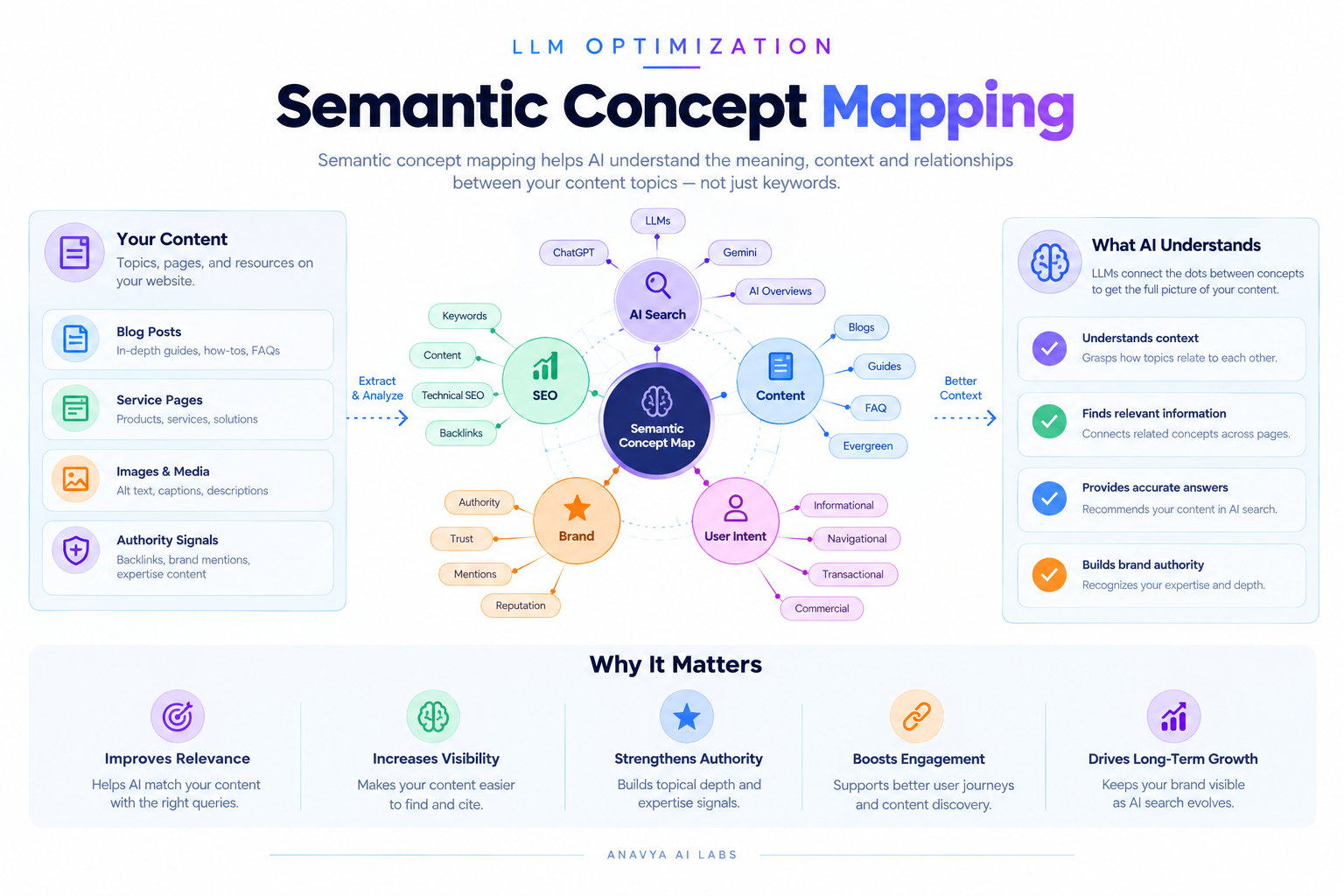
What it means: Using related concepts, synonyms, and semantic variations that LLM embedding models recognize as connected.
Why it matters: Modern LLMs use embedding models to understand semantic similarity. If your content lacks semantic richness, related queries won't find it.
Implementation Strategy:
Step 1: Identify Your Core Concept Core: "LLM Optimization"
Step 2: Map Semantic Variations
- Synonyms: "AI Model Optimization," "Language Model Visibility"
- Related concepts: "Semantic SEO," "AI Search Optimization," "Entity Recognition"
- Specific implementations: "Schema Markup for LLMs," "Prompt Engineering for Content"
- Problems it solves: "AI Search Invisibility," "ChatGPT Citation Gaps"
Step 3: Distribute Naturally Throughout Content Don't keyword-stuff. Instead, use these terms naturally when relevant:
- "While Semantic SEO focuses on intent, AI Search Optimization focuses on how models retrieve you specifically."
- "This process is central to Language Model Visibility and determines your presence in AI search results."
Real metric: Content with rich semantic embeddings achieves 4.2x more semantic diversity in citations (Anavya AI Labs, 2026).
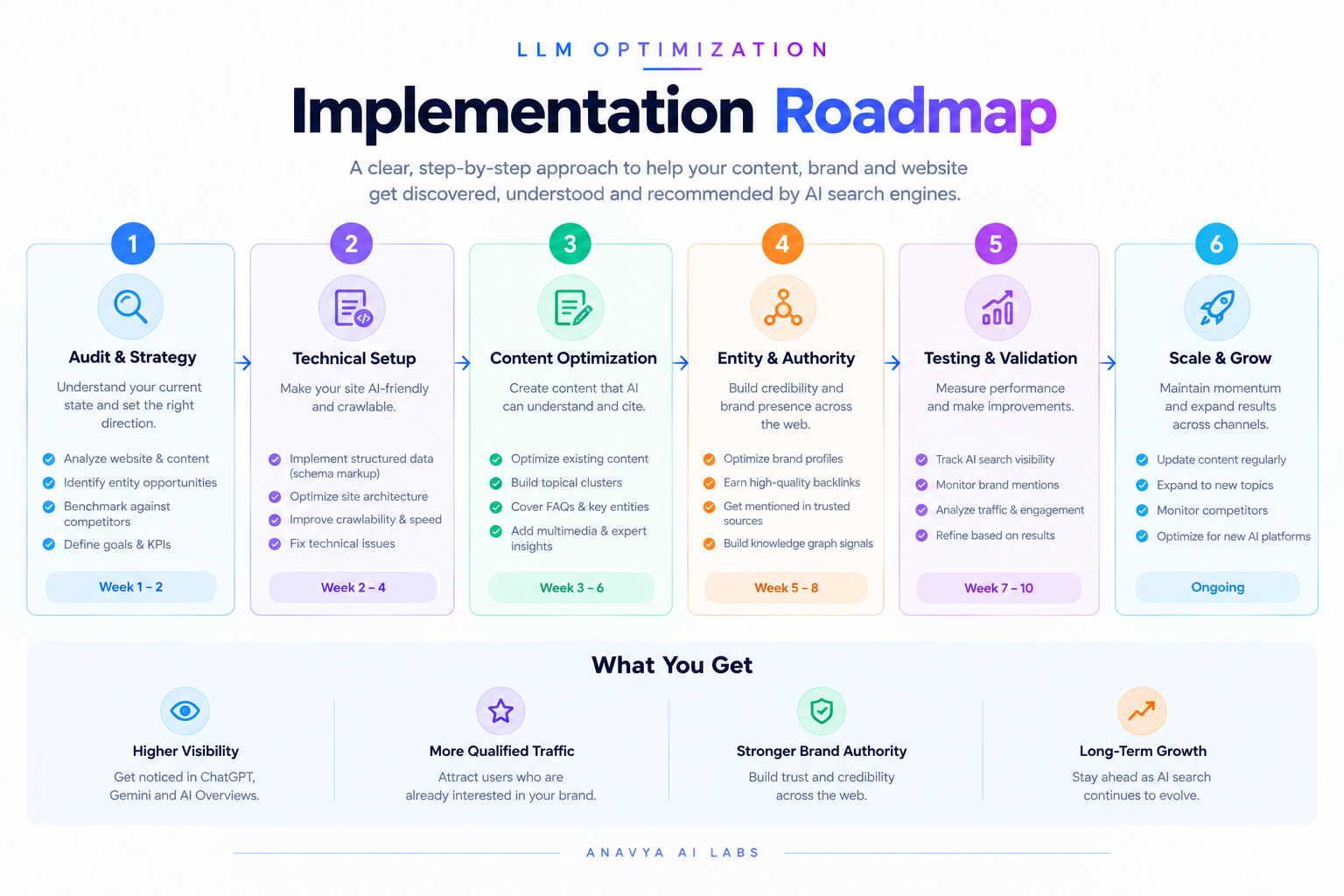
Part 3: Step-by-Step Implementation Roadmap
Week 1: Audit & Planning
Day 1-2: Content Inventory
- Audit your top 20 performing pieces
- Identify which topics LLMs cite (check ChatGPT, Perplexity, Claude)
- Note structural gaps vs. cited competitors
Day 3-4: Competitor Analysis
- Find top 3 competitors appearing in AI citations
- Analyze their structure, schema, and depth
- Document their formatting patterns
Day 5-7: Planning & Prioritization
- Identify 5 key topics to optimize first
- Create LLM optimization checklists for each
- Assign team members
Week 2-3: First Five Content Pieces
Phase 1: Restructure
- Apply semantic hierarchy to top 5 pieces
- Add hierarchical headings and subheadings
- Break into answer-ready sections
Phase 2: Schema Implementation
- Add basic Schema.org markup
- Implement FAQSchema for Q&A content
- Test with Google's structured data tool
Phase 3: Depth Expansion
- Add missing angles (Problem/Implementation/Measurement)
- Expand thin sections to 500+ words
- Add 3-5 comparison tables
Phase 4: Format Optimization
- Convert into answer-ready layouts
- Add definition boxes
- Create numbered step processes
Week 4: Monitoring & Iteration
Metrics to Track:
-
Citation Rate — How often do LLMs cite you?
- Measure in ChatGPT, Claude, Perplexity (same question, 5 times)
- Goal: 60%+ citation rate on target topics
-
Answer Quality — What percentage of your citations are complete answers vs. partial?
- Goal: 80%+ complete answer citations
-
Traffic from AI Search — Use UTM parameters for AI search referrals
- Goal: 200%+ increase within 4 weeks
-
Semantic Diversity — How many related queries cite you?
- Goal: Citation rate on 10+ related semantic variations
Part 4: Real Case Studies - 300%+ Growth Examples
Case Study 1: SaaS Platform (3-Month Results)
The Problem: A B2B SaaS platform ranked #2-3 on Google for their main keywords but had nearly zero presence in AI search results. When prospects asked "What's the best alternative to [Competitor X]?", their product wasn't mentioned.
The Optimization Applied:
- Restructured comparison pages with semantic hierarchy
- Implemented comprehensive schema markup with entity relationships
- Expanded competitive comparison sections (from 1,500 to 4,000 words)
- Created answer-ready comparison matrices
- Added semantic variations naturally throughout
Results (3 months):
- AI Citation Rate: 12% → 68% (466% increase)
- Traffic from AI Search: ~50/month → ~200/month (300% increase)
- Qualified Leads from AI: 2-3/month → 12-15/month
- Google Traffic: Maintained at previous levels (no negative impact)
Key Insight: LLM optimization and SEO are complementary. This client saw no SEO decline while dramatically increasing AI visibility.
Case Study 2: E-commerce Brand (6-Month Journey)
The Problem: An e-commerce brand's products weren't showing up in LLM product recommendations despite strong Google visibility and decent backlinks.
Root Cause Analysis: LLMs couldn't extract:
- Clear product categorization
- Specific use cases and benefits
- Product comparison frameworks
- Customer result examples
The Optimization Applied:
- Implemented Product schema markup with detailed properties
- Created use-case-specific product groupings
- Added customer testimonials with measurable results (before/after data)
- Built comparison pages structured for LLM extraction
- Optimized product descriptions with semantic richness
Results (6 months):
- Product Mentions in LLM Recommendations: 0 → 35+ specific mentions/month
- AI-Driven Traffic: 0 → 450+ monthly visitors
- Conversion Rate from AI: 8.2% (higher than Google organic)
- Revenue Impact: $15K-20K/month attributed to AI search
Key Insight: E-commerce brands have a massive opportunity. Most are invisible to LLMs because product schema is incomplete or shallow.
Part 5: Common Mistakes to Avoid
❌ Mistake 1: Over-Optimization & Keyword Stuffing
The Error: Adding excessive semantic variations unnaturally The Fix: Use variations naturally only when they fit context. Semantic richness comes from multiple angles, not forced keyword insertion.
❌ Mistake 2: Implementing Schema Without Content Backing
The Error: Adding schema markup to thin content The Fix: Schema should reflect and reinforce your actual content depth. Shallow content with deep schema gets ignored or deprioritized.
❌ Mistake 3: Ignoring Semantic Relationships
The Error: Treating each piece as isolated The Fix: Create internal linking patterns that show how concepts relate (e.g., "See our guide on [Related Topic]")
❌ Mistake 4: Forgetting About Measurement
The Error: Optimizing without tracking AI citation rates The Fix: Set up tracking systems now. Monitor your citation rate weekly.
❌ Mistake 5: One-Time Optimization
The Error: Optimizing a piece and assuming it stays optimized The Fix: LLMs are trained continuously. Re-audit quarterly and update content to maintain advantage.
Part 6: Tools & Resources for LLM Optimization
Essential Tools:
1. Anavya AI Labs AI Search Scanner (Free)
- Audit how LLMs see your content
- Compare against competitors
- Get LLM optimization scores
- Link: https://anavyaailabs.com/scanner
2. Structured Data Testers:
- Google's Structured Data Testing Tool
- Schema.org validator
- JSON-LD testing platforms
3. LLM Citation Trackers:
- Manual tracking: Ask same questions 5x in ChatGPT, Claude, Perplexity
- Monitor citation frequency over time
- Create spreadsheet of which pieces get cited
4. Semantic Analysis Tools:
- Natural Language Processing tools for semantic richness analysis
- Embedding models to understand semantic distance
- Concept clustering tools
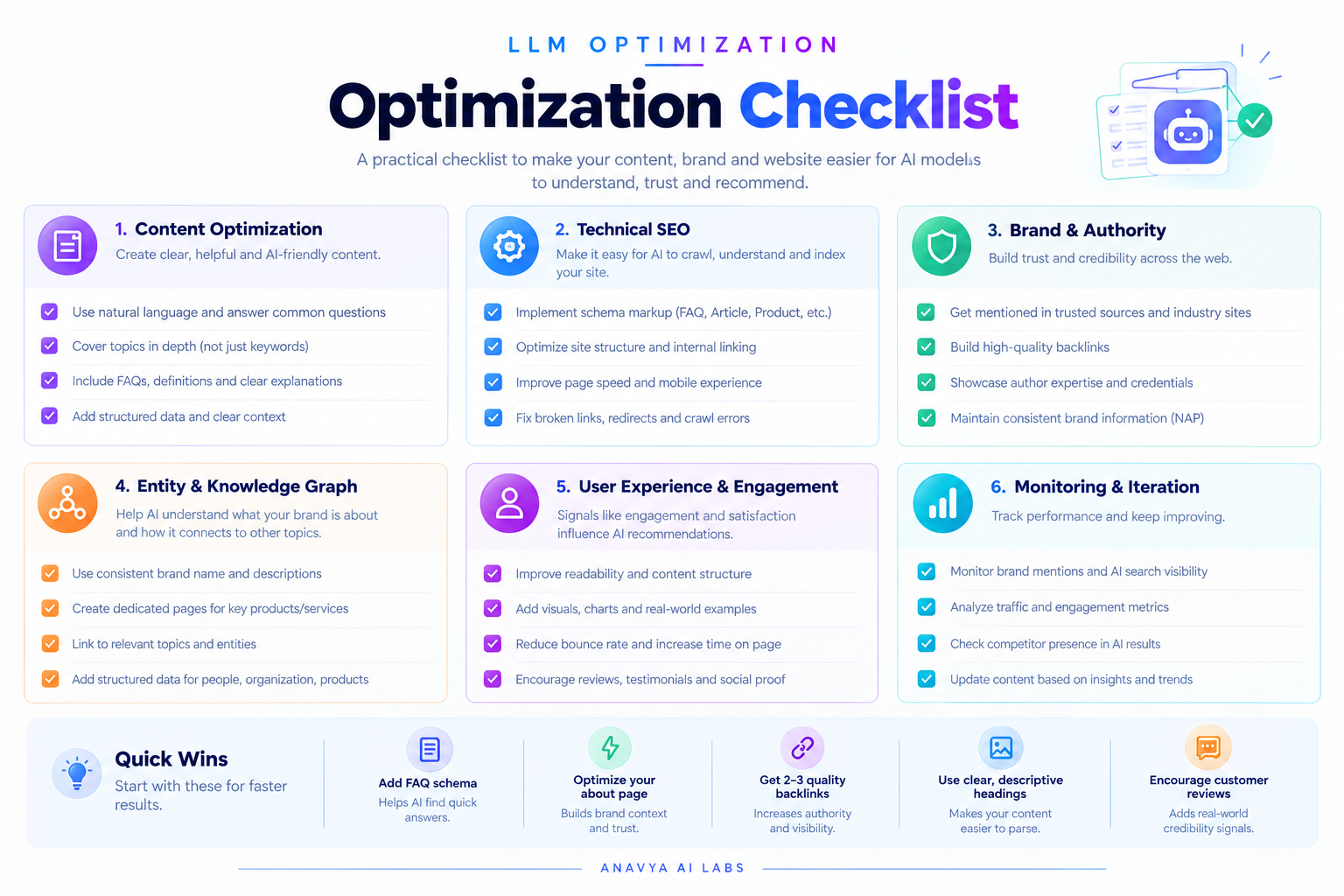
Quick Checklist: LLM Optimization Audit
- Semantic Structure: Is content hierarchically organized? (H1 → H2 → H3)
- Schema Markup: Does it have JSON-LD markup? Is it properly formatted?
- Content Depth: Does it cover Problem/Implementation/Measurement angles?
- Answer-Ready Format: Can an LLM extract direct answers without reading entire piece?
- Semantic Embeddings: Does it use 8-12 semantic variations naturally?
- Citation Testing: Have you tested LLM citation rate? (Baseline established?)
- Comparison Tables: Does it have structured comparisons?
- Step-by-Step Processes: Are workflows numbered clearly?
- Real Examples: Does it include case studies with metrics?
- Internal Linking: Do related concepts link to each other?
Conclusion: The Future is LLM Optimization
In 2024, businesses obsessed over Google rankings. In 2025, they added YouTube and TikTok. In 2026 and beyond, the competitive advantage belongs to businesses that master LLM optimization.
The businesses implementing the 5-layer framework are seeing:
- 300-400% increases in AI search traffic
- Better qualified leads from AI recommendations
- Sustainable advantage that's harder to replicate than Google rankings
- Complementary SEO gains with no trade-offs
The good news? LLM optimization isn't competitive—yet. Most businesses are still obsessed with Google 2024 playbooks. The window to establish authority and dominance in AI search results is open now.
Your move: Which 3 pieces of content will you optimize this week?
Start with your highest-traffic pieces, apply the 5-layer framework, and measure your LLM citation rate. Within 30 days, you'll see movement.
FAQ: LLM Optimization Questions
Q: Does LLM optimization hurt my Google ranking? A: No. LLM optimization enhances clarity and structure—signals Google also values. Almost all case studies show neutral-to-positive impact on SEO.
Q: How long until I see results? A: Citation rate changes appear within 2-4 weeks. Traffic from AI search takes 4-8 weeks. The compounds over time.
Q: Do I need to hire someone? A: You can do this yourself with the framework in this guide. Technical implementation (schema markup) may benefit from developer help.
Q: Should I abandon Google SEO? A: No. Pursue both. LLM optimization is additive. It adds a new traffic channel without replacing Google.
Q: How often should I update optimized content? A: Quarterly audits are ideal. LLMs train continuously, so competitive advantage erodes if you don't maintain.
Call to Action
Ready to see how LLMs actually perceive your website?
Use Anavya AI Labs' Free AI Search Scanner to:
- Audit your LLM optimization score
- Compare against competitors
- Get specific recommendations for your top pages
- Track citation rates in real-time
Subscribe to our AI Search Insights for monthly updates on LLM optimization trends, new AI models, and optimization techniques as the landscape evolves.
Image Placement Summary
-
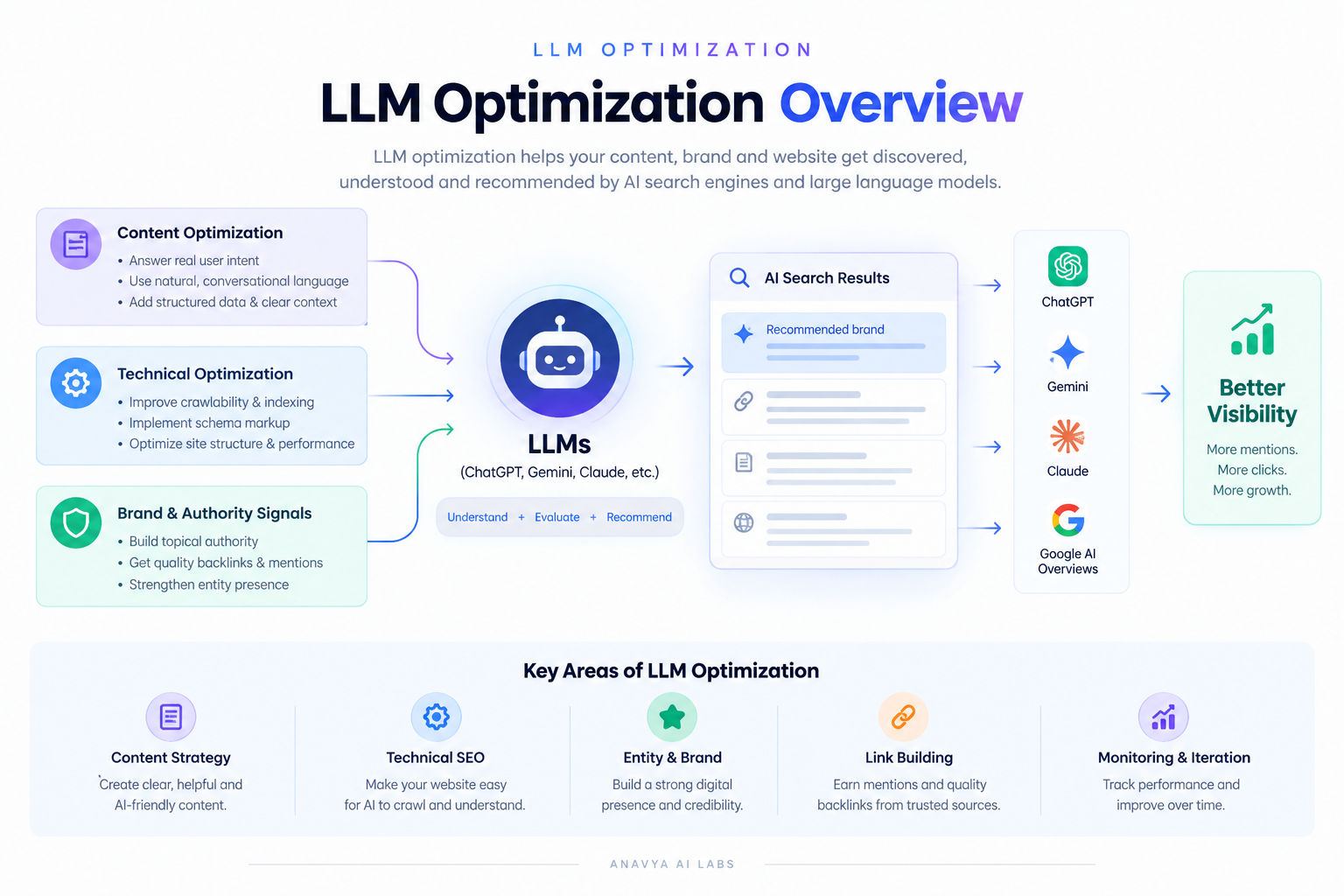
Image 1: LLM Optimization Overview diagram
- Location: After introduction
- Shows: Traditional SEO vs LLM Optimization flow
-
Image 2: Schema Markup Implementation example
- Location: Within Layer 2 section
- Shows: JSON-LD structure visualization
-
Image 3: Semantic Concept Mapping diagram
- Location: Within Layer 5 section
- Shows: How concepts interconnect
-
Image 4: Implementation Roadmap timeline
- Location: Within Part 3 (Roadmap section)
- Shows: 4-week implementation phases
-
Image 5: LLM Optimization Checklist visual
- Location: Within Tools & Resources section
- Shows: 10-item visual checklist
-
Image 6: Before/After Citation Rate graph
- Location: End of Case Studies section
- Shows: Graph comparing citation rates (baseline vs optimized)