RAG, LLMs, and GEO: How AI Systems Retrieve Your Content
Introduction
The way people search is changing fundamentally. Instead of typing keywords into a search box and scanning a list of links, users increasingly ask conversational questions to AI assistants—Claude, ChatGPT, Perplexity, and dozens of others—that respond with synthesized answers drawn from multiple sources.
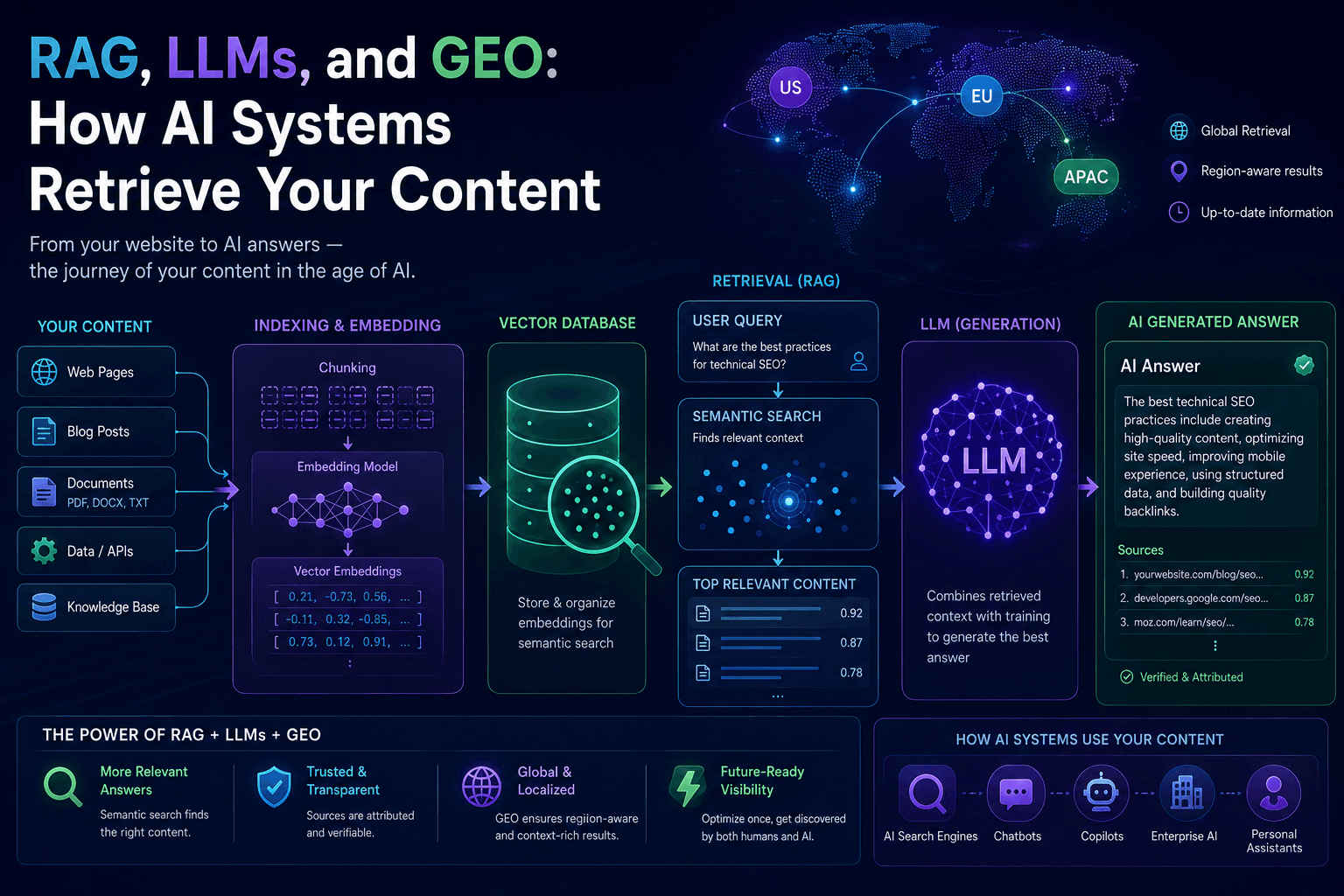
Behind this shift lies Retrieval-Augmented Generation (RAG): a technique that lets AI models access your content by searching through indexed information and incorporating relevant passages into their responses.
But RAG alone isn't enough. The most sophisticated RAG systems now integrate geographic awareness—what we call the "GEO layer"—to surface location-specific, culturally relevant, and region-optimized content to users across different geographies.
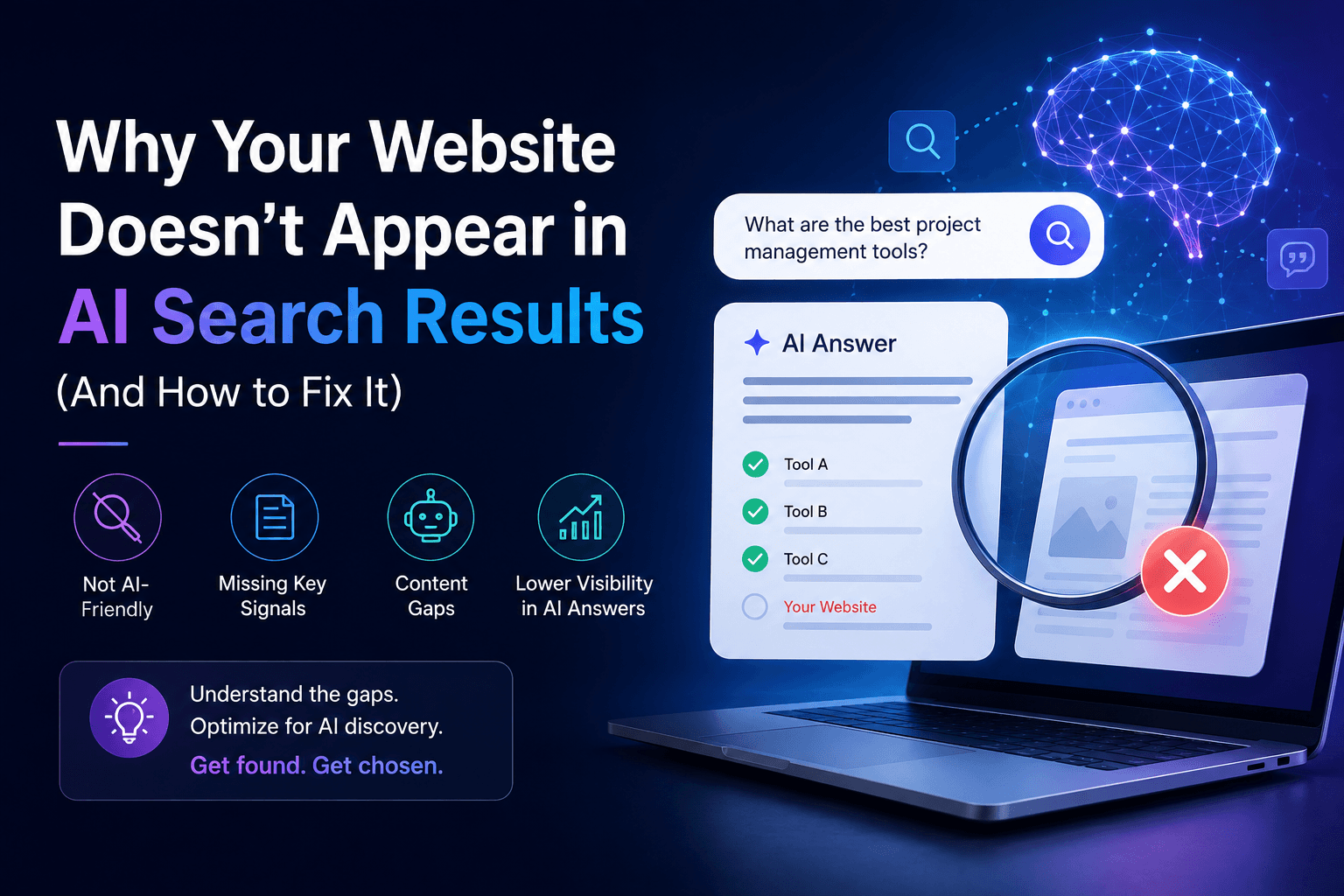
For businesses and content creators, this means the ranking game has changed. Your website doesn't just need to rank on Google anymore. It needs to be discoverable by RAG-powered systems, indexed properly for semantic search, and optimized for geographic context.
This guide walks you through RAG systems, how they retrieve content, and how to optimize your website so AI systems—and the users querying them—can find you.
What is Retrieval-Augmented Generation (RAG)?
The Problem RAG Solves
Large Language Models (LLMs) are powerful, but they have critical limitations:
- Knowledge cutoff: Models trained in 2023 don't know what happened in 2024
- Hallucinations: Models sometimes confidently state false information
- Lack of specificity: General models struggle with proprietary, niche, or recent information
- No source attribution: Users can't verify where the AI got its answer
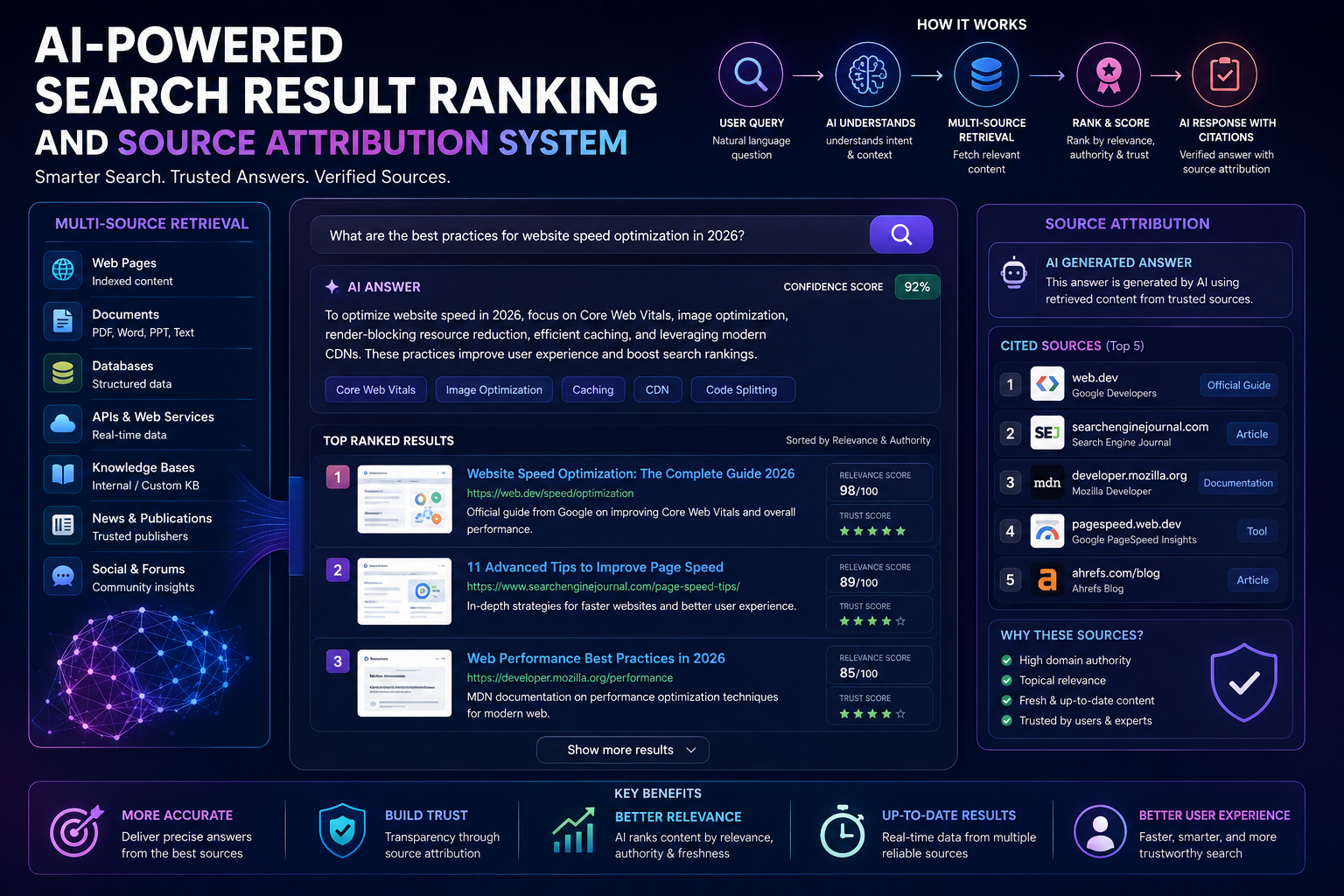
RAG solves these problems by letting AI systems retrieve real, up-to-date content from indexed sources and weave that information into responses.
How RAG Works: The Three-Stage Process
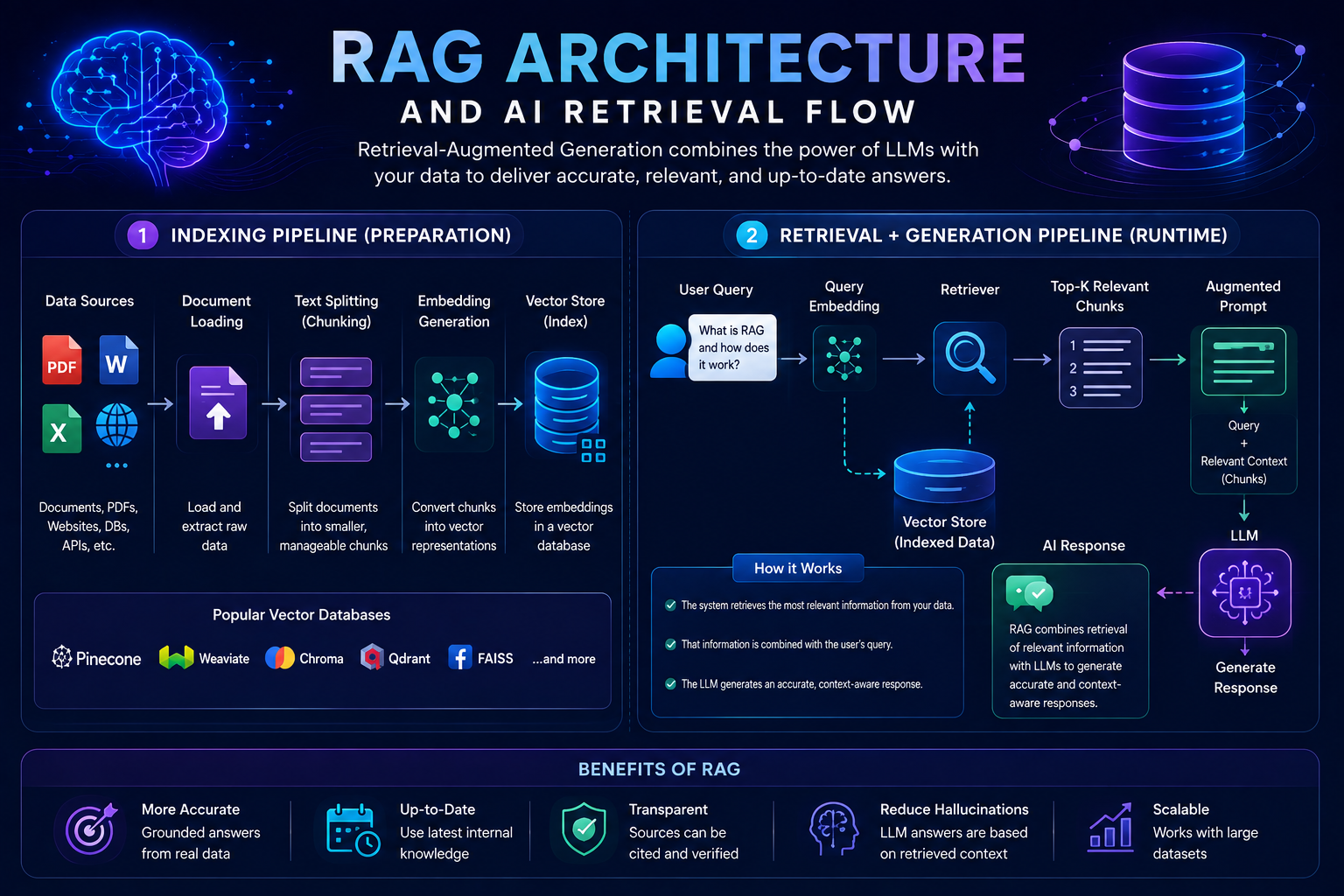
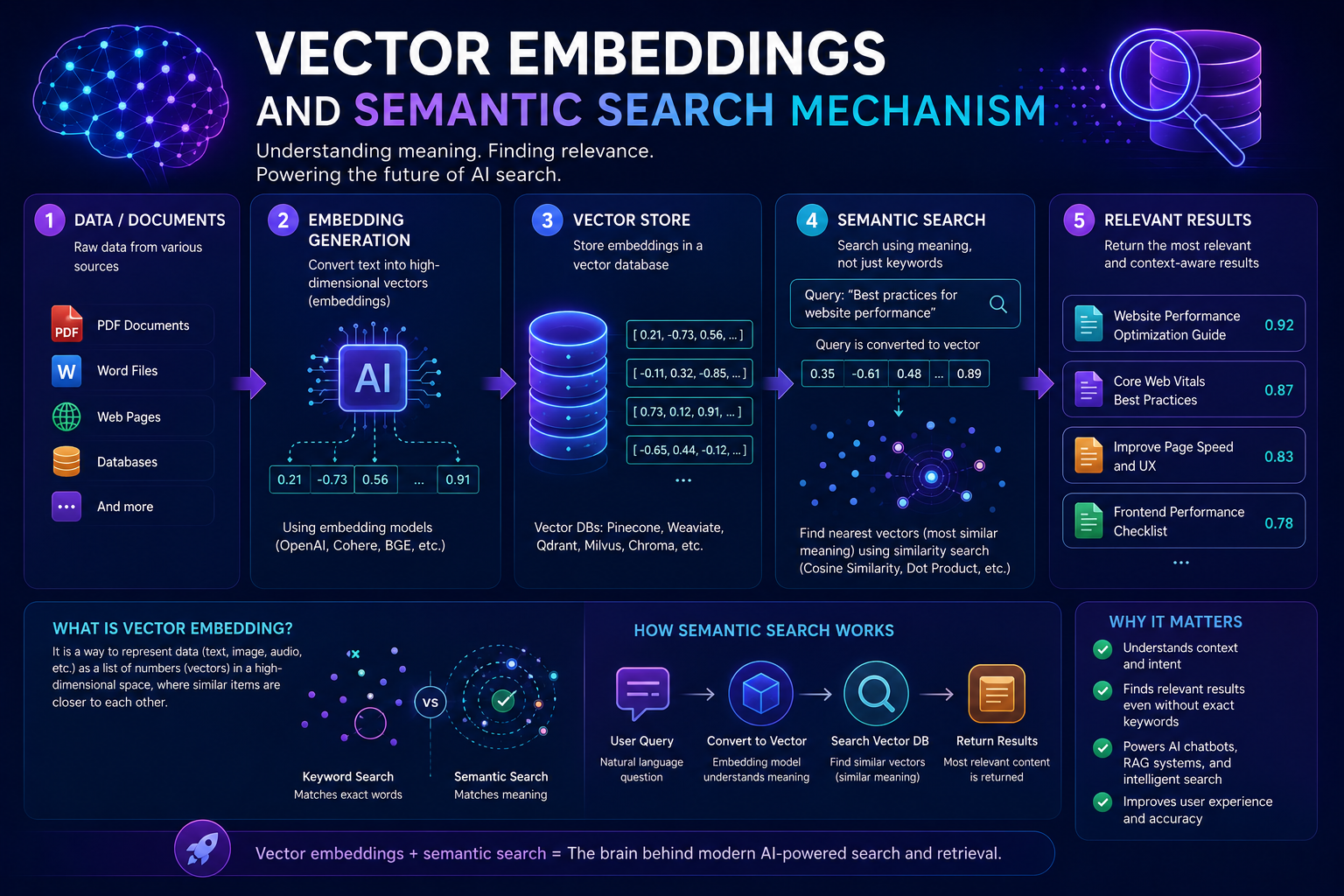
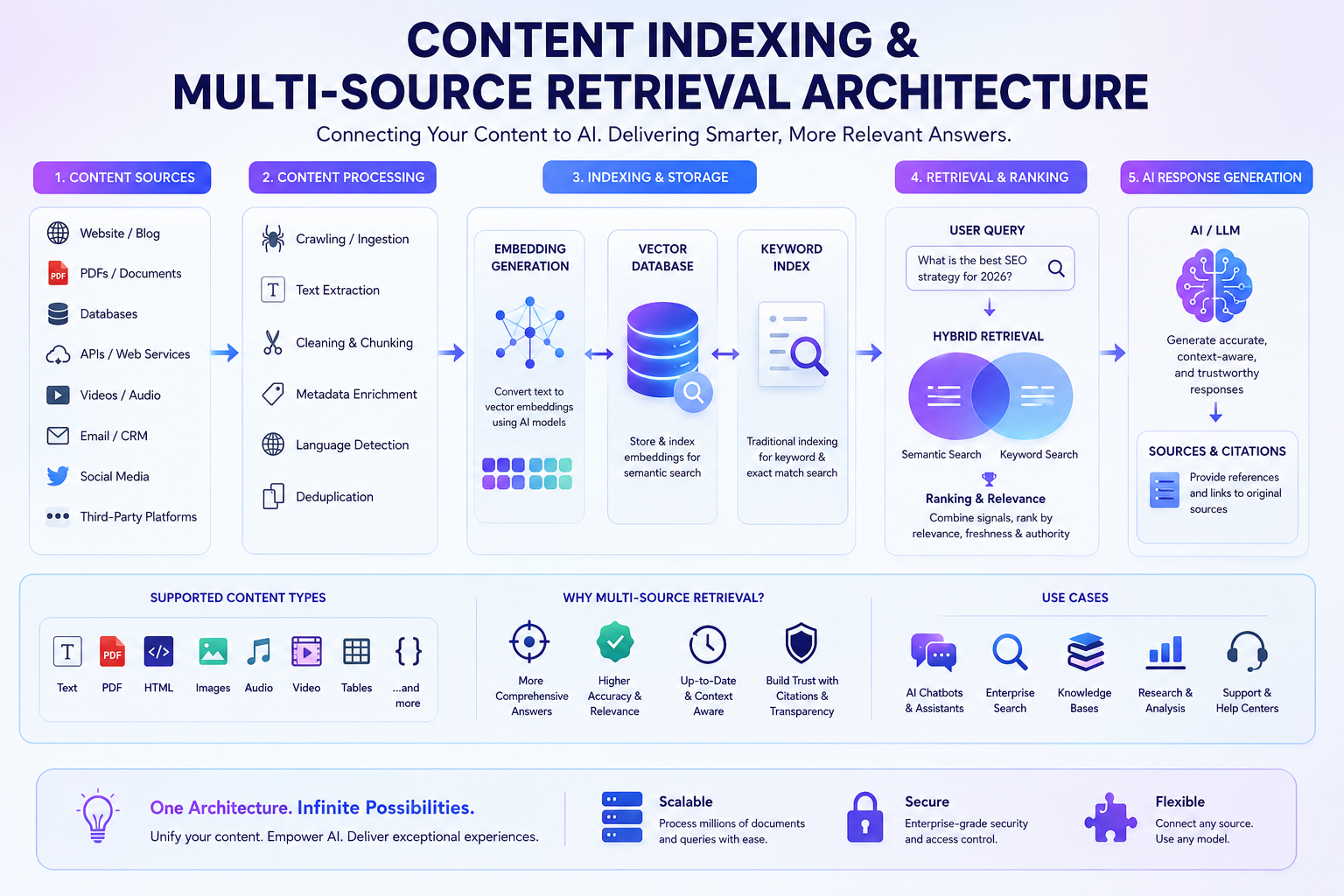
Stage 1: Indexing Your content (blog posts, documentation, product pages) is ingested into a vector database. Each piece of content is converted into mathematical representations called embeddings that capture semantic meaning.
Stage 2: Retrieval When a user queries an AI system, the query is also converted to embeddings. The system searches the database for content whose embeddings are semantically similar to the query—regardless of exact keyword matches.
Stage 3: Generation The retrieved passages are supplied to the LLM as context ("here's what the internet says about this"). The LLM synthesizes a response using both its training and the retrieved information, citing sources.
The result? Users get accurate, current, source-verified answers. Your content gets surfaced in conversations—a new channel for visibility and traffic.
Understanding Vector Embeddings & Semantic Search
What Are Embeddings?
An embedding is a numerical representation of text that captures its meaning. Unlike keyword indexing, which stores "the" and "product" as separate atoms, embeddings encode semantic relationships.
Two pieces of text with different keywords but similar meaning will have similar embeddings:
- "How do I fix a broken coffee maker?"
- "My espresso machine stopped working—help!"
Both would have high embedding similarity because the semantic intent is the same.
Why this matters for RAG: RAG doesn't search for exact phrases. It searches for meaning. Your content doesn't need to match a user's exact wording to be retrieved—it needs to address the same semantic intent.
Semantic Search vs. Keyword Search
| Aspect | Keyword Search | Semantic Search (RAG) | |--------|---|---| | Match Type | Exact or partial word overlap | Meaning & intent alignment | | Flexibility | Rigid—must contain target words | Flexible—finds related concepts | | Context | Limited—each keyword isolated | Rich—understands relationships | | Synonyms | Requires manual synonym handling | Automatic—embeddings capture synonymy | | Freshness | Easy to index new content | Requires re-embedding if model changes |
Implication for content creators: You should write for semantic clarity, not keyword density. Answer questions naturally. Use related concepts and synonyms. Explain context. RAG systems will understand your meaning even if you don't use the exact phrase a user searches for.
The Geographic Context Layer (GEO in RAG)
Why Geography Matters in AI Retrieval
A RAG system that returns the same results worldwide isn't intelligent—it's naive. Geography affects:
- Local business information: "Best pizza in Mumbai" should return Mumbai restaurants, not global chains
- Regional compliance: GDPR-relevant content shouldn't be served to users outside the EU in the same way
- Cultural context: Language nuances, local events, regional preferences
- Real estate & location-specific services: A "real estate agent near me" query should surface local agents
- Time zones & business hours: Operating hours for a restaurant vary by location
The GEO layer integrates location data into RAG retrieval, ensuring that geographic relevance is factored into what gets surfaced.
How GEO-Aware RAG Works
- User Location Detection: The AI system knows the user's approximate location (from IP, explicit request, or app settings)
- Geographic Metadata Enrichment: Content is tagged with geographic identifiers—city, region, country, coordinates
- Distance-Based Re-ranking: Retrieval results are re-ranked by geographic proximity
- Localization Filtering: Content in the user's language or region is prioritized
- Context Fusion: Geographic context is merged with semantic similarity for final ranking
Practical Example
A user in Bangalore asks: "Where can I find affordable web development services?"
Without GEO layer: Results might include top-ranked web agencies globally With GEO layer: Results are filtered and re-ranked to show local Bangalore agencies first, with international options as fallback
For content creators, this means local relevance is now a ranking factor in RAG systems.
Optimization Strategies: Making Your Content Discoverable to RAG
1. Embed Geographic Metadata
RAG systems can't infer your location implicitly. Make it explicit:
Add location schema markup:
{
  "@context": "https://schema.org",
  "@type": "LocalBusiness",
  "name": "Anavya AI Labs - Ludhiana Office",
  "address": {
    "@type": "PostalAddress",
    "streetAddress": "123 Tech Street",
    "addressLocality": "Ludhiana",
    "addressRegion": "Punjab",
    "postalCode": "141001",
    "addressCountry": "IN"
  },
  "geo": {
    "@type": "GeoCoordinates",
    "latitude": "30.9010",
    "longitude": "75.8573"
  }
}
For location-specific content, include geography in:
- Page titles and meta descriptions
- Body text (naturally, not forced)
- Image alt text
- Internal navigation and breadcrumbs
2. Optimize Content for Vector Similarity
Since RAG uses semantic search, optimize for meaning:
Be comprehensive and explicit:
- Answer questions fully, not in fragments
- Define technical terms where first mentioned
- Provide context that helps embeddings capture intent
- Use related concepts naturally
Structure for scanability:
- Use clear headings that describe content
- Format lists and tables for easy parsing
- Provide summaries at the start of sections
- Include examples alongside explanations
Example — This section title ("Optimize Content for Vector Similarity") immediately tells embeddings this section is about content optimization for AI systems. A better embedding matches will occur when RAG searches for related queries.
3. Create Location-Specific Content Variations
If you serve multiple geographies, create region-specific content:
# Web Development Services in Bangalore
[Content specific to Bangalore market, regulatory environment, local tech scene]

# Web Development Services in Mumbai
[Mumbai-specific content, industries, regulatory context]
Each page gets its own geographic metadata, and RAG systems will route users to the geographically relevant version.
4. Implement Proper Content Hierarchy
RAG retrieves content at the passage level, not the page level. Structure helps:
Use semantic headings:
# Main Topic
## Subtopic 1
### Detailed Point
**Key Concept**: Explanation
When RAG extracts a passage, it can tag it with the hierarchy ("this answer came from the 'Pricing' section of the 'Product Features' article"), enabling better context stitching.
5. Optimize Freshness & Currency Signals
RAG systems prioritize recent information. Signal content currency:
- Publication date: Include in schema markup
- Last updated: Add update timestamps for revised content
- Publish consistently: Frequent, quality updates signal active maintenance
- Version numbers: For documentation, mark versions explicitly
6. Build Authority Through Citation & Linking
RAG systems evaluate source credibility:
- Link to authoritative sources: Cite research, official docs, and established references
- Accept citations: Encourage other sites to link to your expertise-building content
- Create linkable assets: Write comprehensive guides, research reports, or frameworks that other creators want to cite
- Use clear citations: When citing others, use proper schema and structured formats
Technical Implementation: Getting Your Content Into RAG Systems
Making Content Indexable
1. Ensure crawlability:
- robots.txt allows AI crawlers (Googlebot, Bingbot, but also Apify, Diffbot, etc.)
- No JavaScript-only rendering (RAG crawlers need static HTML)
- Proper sitemap.xml with priority hints
2. Provide structured data:
- Schema.org markup (Article, FAQPage, BreadcrumbList, LocalBusiness)
- JSON-LD format (easiest for RAG parsers)
- Complete, accurate metadata
3. Optimize API endpoints (if content is behind APIs):
- Provide REST APIs or GraphQL endpoints for structured access
- Use proper HTTP headers and status codes
- Support pagination for large datasets
Submitting to RAG Index Services
Many RAG platforms accept direct submissions:
- Perplexity: Direct webmaster submission portal
- ChatGPT Web Browsing: Indexed via standard web crawlers
- Custom RAG platforms: Often provide API or submission tools
Check the documentation of RAG systems your users interact with and follow their submission guidelines.
Monitoring RAG Visibility
Track where you appear:
- Use platform-specific analytics where available
- Monitor where your URLs are cited in AI responses
- Track referral traffic from AI assistants
- Set up alerts for brand/product mentions in RAG outputs
Multi-Region Deployment: Serving Global RAG Networks
If you operate in multiple regions or serve a global audience, geographic optimization becomes critical:
1. Content Localization Strategy
- Translate or create region-specific versions
- Adapt examples to local contexts
- Consider regional regulations and compliance
- Use hreflang tags for language/region signaling
2. Distributed Geographic Metadata
- Tag content with all relevant regions
- Use region-specific schema markup
- Create location-specific landing pages
- Maintain a geographic content map (internal documentation)
3. Performance & Availability
- Host content close to users (CDN)
- Ensure consistent availability across regions
- Optimize for local internet speeds
- Test crawlability from different geolocations
4. Cultural & Linguistic Consistency
- Ensure translations are semantically accurate (not just literal)
- Adapt imagery and examples to cultural context
- Maintain brand voice across regions
- Hire local reviewers for cultural sensitivity

RAG Optimization Checklist
Content Layer
- ☐ Comprehensive, semantically rich content answering real user questions
- ☐ Clear structure with semantic headings and logical flow
- ☐ Natural use of related concepts, synonyms, and context
- ☐ Regular updates and freshness signals (publication/update dates)
- ☐ Proper citations and links to authoritative sources
Technical Layer
- ☐ JSON-LD schema markup (Article, FAQPage, LocalBusiness)
- ☐ Geographic metadata (city, region, coordinates for location-relevant content)
- ☐ Robot-crawlable HTML (no JavaScript-only content)
- ☐ Proper sitemap.xml and robots.txt
- ☐ HTTPS security and fast load times
Visibility Layer
- ☐ Direct submission to major RAG platforms (Perplexity, etc.)
- ☐ API endpoints or structured data feeds for content access
- ☐ Monitoring and analytics for RAG-driven traffic
- ☐ Regular audits of how your content appears in AI results
Geographic Layer
- ☐ Location-specific content versions or clear geographic scoping
- ☐ Region-appropriate language and cultural context
- ☐ Consistent geographic tagging across all properties
- ☐ hreflang tags for multi-region/multi-language content
The Future of RAG: What's Coming
As RAG systems mature, expect:
- Real-time indexing: Content will appear in RAG results within minutes of publication, not days
- Attribution transparency: Users will see exactly which sources informed each answer
- Interactive RAG: Responses will be interactive, linking back to your content with engagement signals
- Attribution rewards: Some platforms may offer compensation or incentives for high-quality source content
- Federated RAG: Multiple RAG systems collaborating or being queried simultaneously
- Multimodal RAG: Images, videos, audio, and text indexed together with unified embeddings
Your competitive advantage: Start optimizing for RAG today. By the time these features become standard, your content will already be the gold standard in your category.
Conclusion: RAG Optimization is Strategic
Retrieval-Augmented Generation represents a fundamental shift in content discovery. Unlike traditional SEO, which optimizes for keywords and links, RAG optimization focuses on:
- Semantic clarity: Writing for meaning, not keyword density
- Geographic relevance: Tagging and creating region-specific content
- Authority & trustworthiness: Demonstrating expertise and citing sources
- Technical accessibility: Ensuring AI crawlers can parse your content
The sites and creators who master RAG now will see exponential visibility gains as RAG-powered search becomes the primary discovery mechanism.
Start by auditing your current content:
- Is it semantically comprehensive?
- Is geographic information explicit and properly tagged?
- Are you cited by authoritative sources?
- Can AI crawlers easily parse your content?
Then implement the optimizations outlined above. The visibility and traffic rewards will follow.
Ready to optimize your website for AI-powered discovery? Connect with the Anavya AI Labs team to audit your content readiness, implement RAG-focused technical SEO, and ensure your message reaches users through the next generation of search.