Content
Understanding AI-Powered Search in 2026
The landscape of search has fundamentally transformed. While Google remains dominant, AI-powered search engines and discovery platforms are reshaping how users find information. Search engines now employ advanced machine learning models to understand not just keywords, but context, expertise, and topical authority.
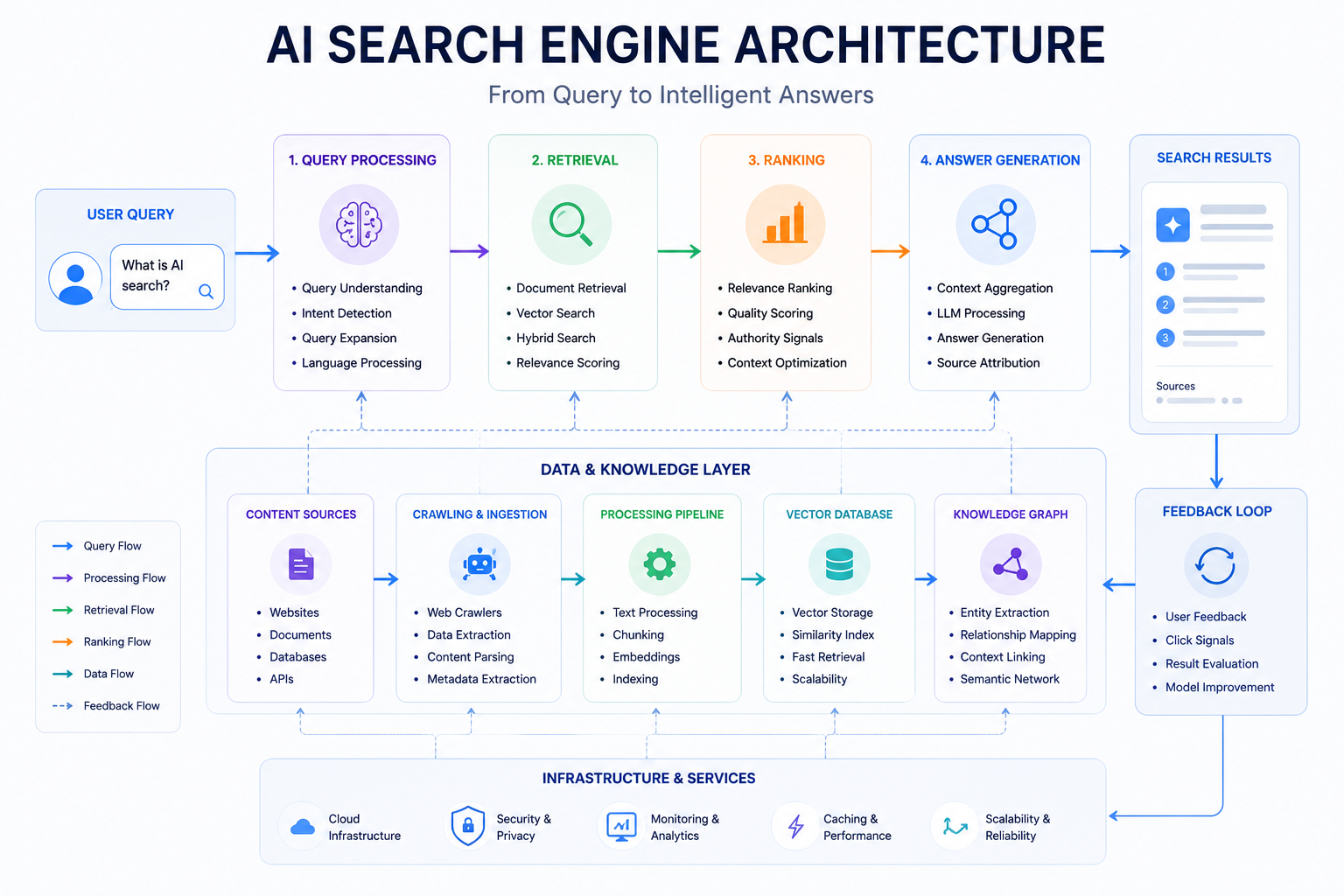
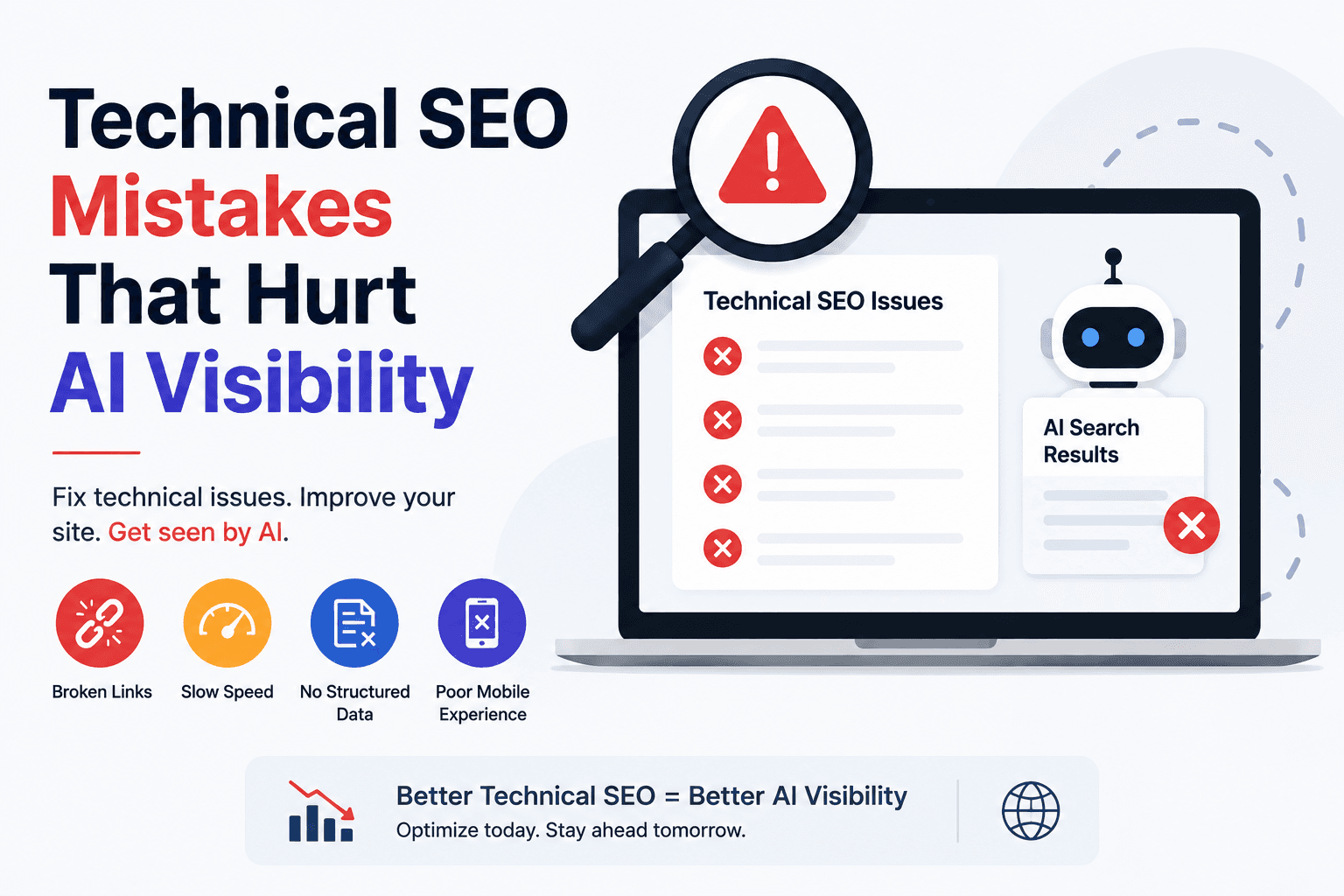
The mistake most brands make? They optimize for traditional keyword matching without considering how AI engines parse, understand, and rank technical elements. When your technical foundation is weak, AI systems struggle to crawl, index, and interpret your content—regardless of quality.
Mistake #1: Poor Site Architecture and Internal Linking Strategy
The Problem: Many websites have siloed, poorly connected content structures. Pages exist in isolation with minimal internal linking strategies. AI engines use link graphs to understand topic relevance and content hierarchy, yet most sites fail to leverage this.
Why AI Engines Care:
- AI models use internal links to understand content relationships
- Poor linking structures reduce topical authority signals
- Crawl efficiency decreases exponentially with bad architecture
- Context and entity relationships become unclear to search algorithms
The Fix: Implement a hierarchical site structure with strategic internal linking:
- Create pillar pages for main topics
- Link related cluster content back to pillars (hub-and-spoke model)
- Use descriptive anchor text that provides context
- Maintain logical URL hierarchies (e.g.,
/ai/seo/technical-seo/) - Aim for 2-3 clicks maximum from homepage to any page
Real Impact: Brands implementing proper internal linking see 20-35% improvements in AI-powered search visibility within 3 months.
Mistake #2: Ignoring Core Web Vitals and Page Experience
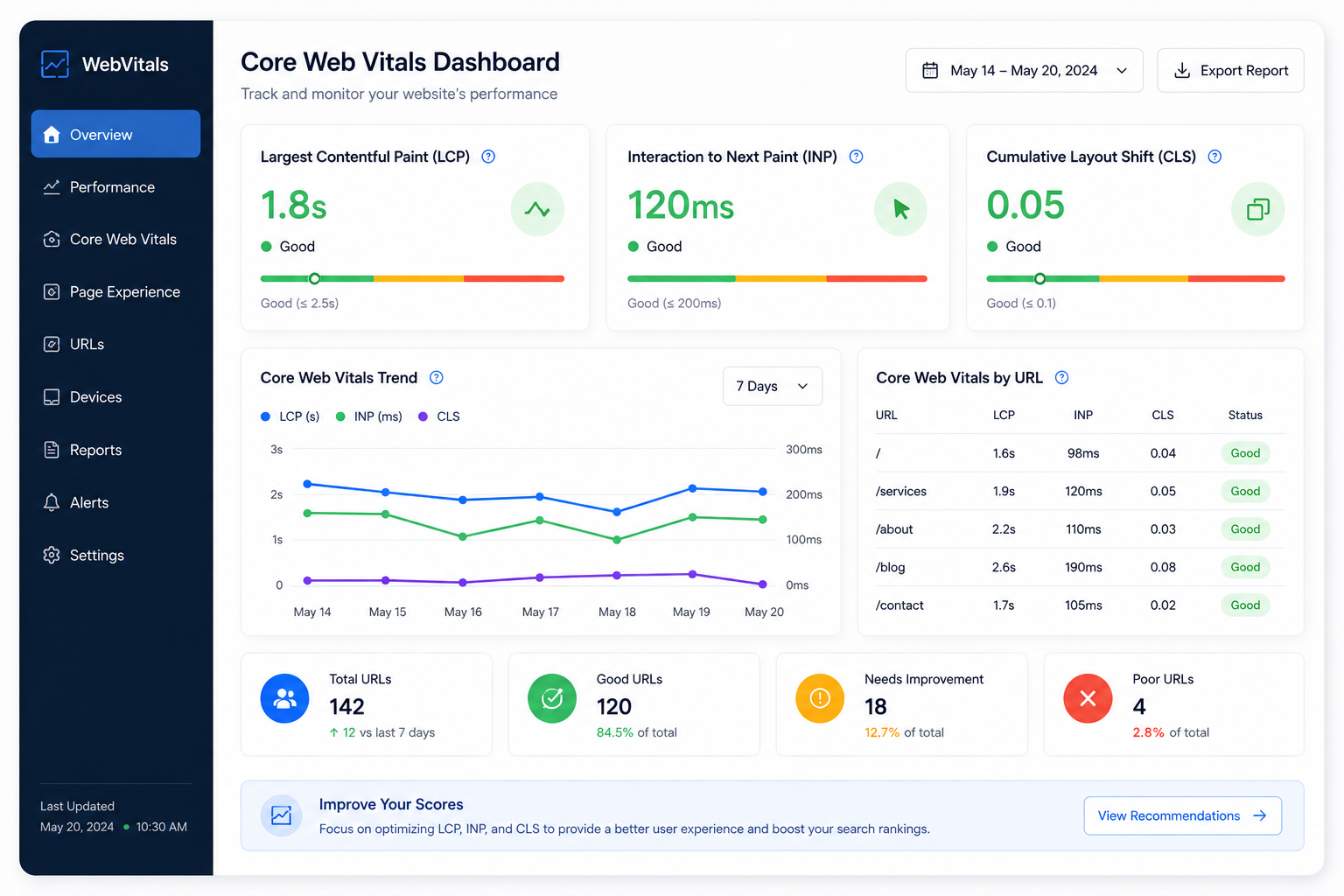
The Problem: Core Web Vitals measure real user experience: Largest Contentful Paint (LCP), First Input Delay (FID), and Cumulative Layout Shift (CLS). Many brands view these as secondary to content, a critical error.
Why AI Engines Care:
- AI engines prioritize user experience signals
- Poor performance indicates low-quality user engagement
- Crawl budgets suffer from slow-loading pages
- User behavior patterns influence ranking algorithms
Critical Metrics for 2026: | Metric | Good | Needs Improvement | Poor | |--------|------|-------------------|------| | LCP (Largest Contentful Paint) | < 2.5s | 2.5-4s | > 4s | | FID (First Input Delay) | < 100ms | 100-300ms | > 300ms | | CLS (Cumulative Layout Shift) | < 0.1 | 0.1-0.25 | > 0.25 |
The Fix:
- Optimize image delivery with WebP format and proper sizing
- Implement lazy loading for non-critical resources
- Minimize JavaScript blocking render
- Use Content Delivery Networks (CDNs) for global distribution
- Regularly monitor PageSpeed Insights and Search Console
Mistake #3: Inadequate or Missing Structured Data Implementation
The Problem: Structured data (Schema.org markup) tells AI systems what your content is about at a semantic level. Many websites either ignore it entirely or implement it incorrectly.
Why AI Engines Care:
- Structured data enables AI models to understand content meaning without human interpretation
- Entity recognition and relationships depend on proper markup
- Rich snippets improve Click-Through Rates (CTR)
- AI systems use structured data for context and credibility verification
Essential Schema Types for 2026:
- Organization Schema (brand identity)
- Article/Blog Schema (content metadata)
- FAQ Schema (question-answer pairs)
- BreadcrumbList Schema (site hierarchy)
- Product Schema (if e-commerce)
- Author Schema (expertise signals)
- AggregateRating Schema (social proof)
The Fix:
- Audit current schema implementation using Schema.org validator
- Implement Article schema for all blog posts with author, date, and topic
- Add Organization schema to homepage (foundational)
- Use JSON-LD format over microdata (preferred by AI engines)
- Include Topic/Main Entity properties for content clarity
- Test all markup in Google Rich Results Test
Impact: Proper schema markup can improve CTR by 20-30% in AI-assisted search results.
Mistake #4: Neglecting XML Sitemaps and Robots.txt Optimization
The Problem: Many brands upload a basic sitemap once and forget about it. Robots.txt rules are often set carelessly. These foundational files directly control how AI engines discover and prioritize your content.
Why AI Engines Care:
- Sitemaps guide crawlers to priority content
- XML sitemaps can specify update frequency and importance
- Robots.txt signals which pages to crawl vs. skip
- Poor configuration wastes precious crawl budget
XML Sitemap Best Practices:
- Maintain separate sitemaps for pages, images, and videos
- Include lastmod and changefreq tags (helps freshness signals)
- Set priority levels based on business importance
- Exclude thin, duplicate, or low-value pages
- Submit to AI search engines and Google Search Console
- Regenerate and update weekly for active sites
Robots.txt Optimization:
User-agent: *
Allow: /
Disallow: /admin/
Disallow: /private/
Crawl-delay: 2

User-agent: GPTBot
Allow: /

Sitemap: https://yoursite.com/sitemap.xml
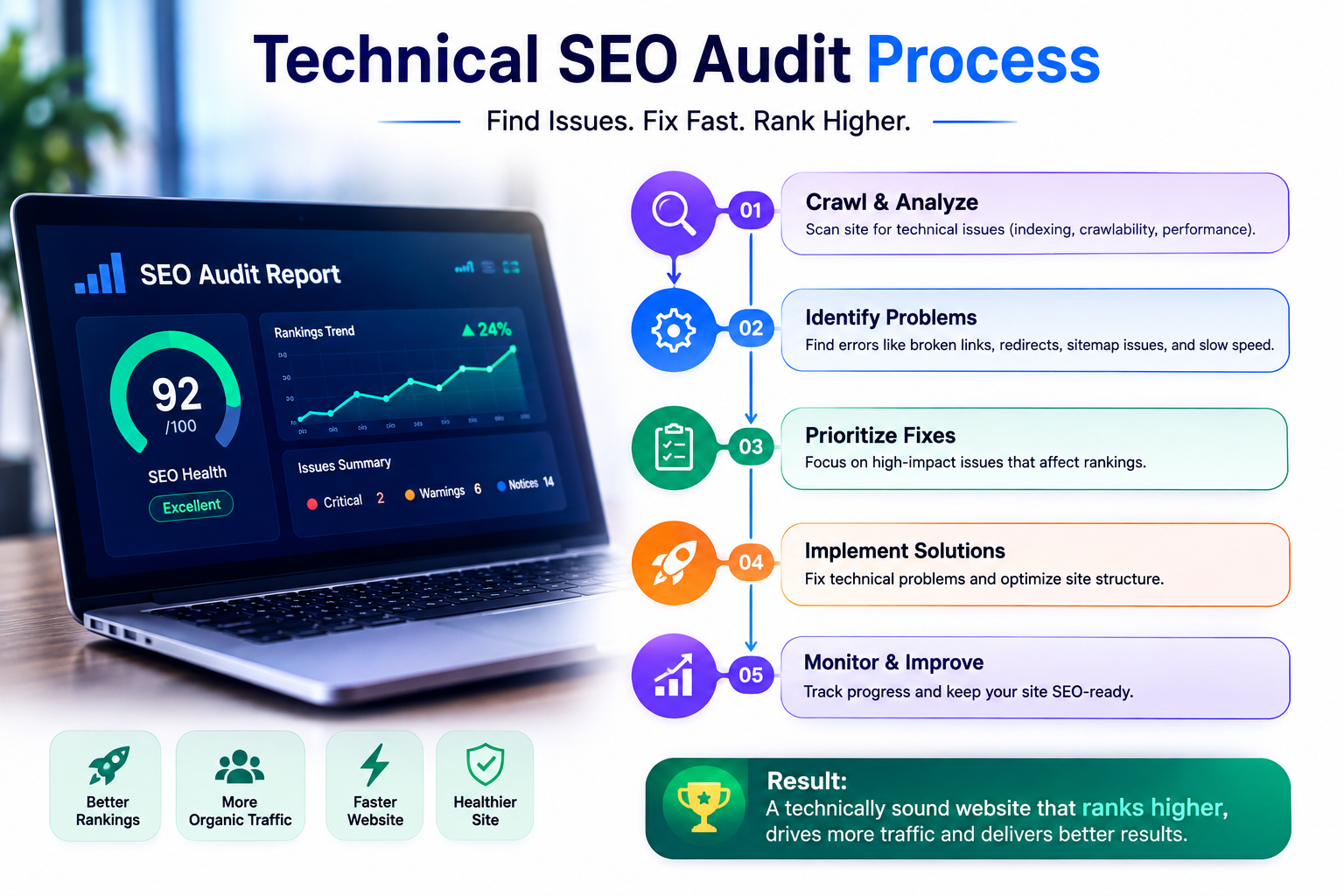
The Fix:
- Audit and clean your XML sitemap quarterly
- Use dynamic sitemap generation for large sites
- Monitor crawl stats in Search Console
- Create specific rules for AI crawlers vs. traditional bots
Mistake #5: Poor Canonical Tag Implementation
The Problem: Duplicate content is rampant. Websites often have multiple URLs serving identical or near-identical content (pagination, session IDs, URL parameters) without proper canonical tags.
Why AI Engines Care:
- Duplicates confuse topic authority metrics
- Crawl budget is wasted on duplicate crawling
- Ranking signals get diluted across multiple URLs
- AI systems may index wrong versions as primary content
Common Duplicate Content Scenarios:
- Pagination (page/1, page/2, etc.)
- URL parameters (utm_source, session_id)
- WWW vs. non-WWW versions
- HTTP vs. HTTPS versions
- Multiple category assignments
- Mobile-specific URLs
The Fix:
- Set canonical tags on all potentially duplicate pages
- Use self-referential canonicals on unique pages (best practice)
- Consolidate session-based URLs
- Implement proper redirects (301) for truly duplicate pages
- Canonicalize to HTTPS and www. (or non-www. consistently)
- Use canonical in sitemaps for clarity
Example Implementation:
<!-- For page with parameters -->
<link rel="canonical" href="https://www.anavyailabs.com/blog/seo-tips" />

<!-- Self-referential on unique pages -->
<link rel="canonical" href="https://www.anavyailabs.com/about/" />
Mistake #6: Inadequate Mobile Optimization
The Problem: Mobile-first indexing is now the standard. Websites with poor mobile experience, missing mobile metadata, or mobile-specific issues suffer severe ranking penalties.
Why AI Engines Care:
- Mobile is the primary indexing version (mobile-first indexing)
- User behavior signals heavily influenced by mobile metrics
- Responsive design is non-negotiable
- Mobile content must be equivalent to desktop version
Critical Mobile Elements:
- Responsive viewport configuration
- Mobile-friendly font sizes and touch targets
- Minimal intrusive interstitials (pop-ups)
- Fast mobile load times (especially crucial)
- Mobile-specific structured data (if different from desktop)
- Readable text without zooming
Testing & Validation:
- Use Mobile-Friendly Test tool regularly
- Check PageSpeed Insights mobile scores
- Test on real devices (not just emulation)
- Monitor mobile Core Web Vitals separately
- Ensure viewport meta tag is correct
Mistake #7: Missing or Weak E-E-A-T Signals
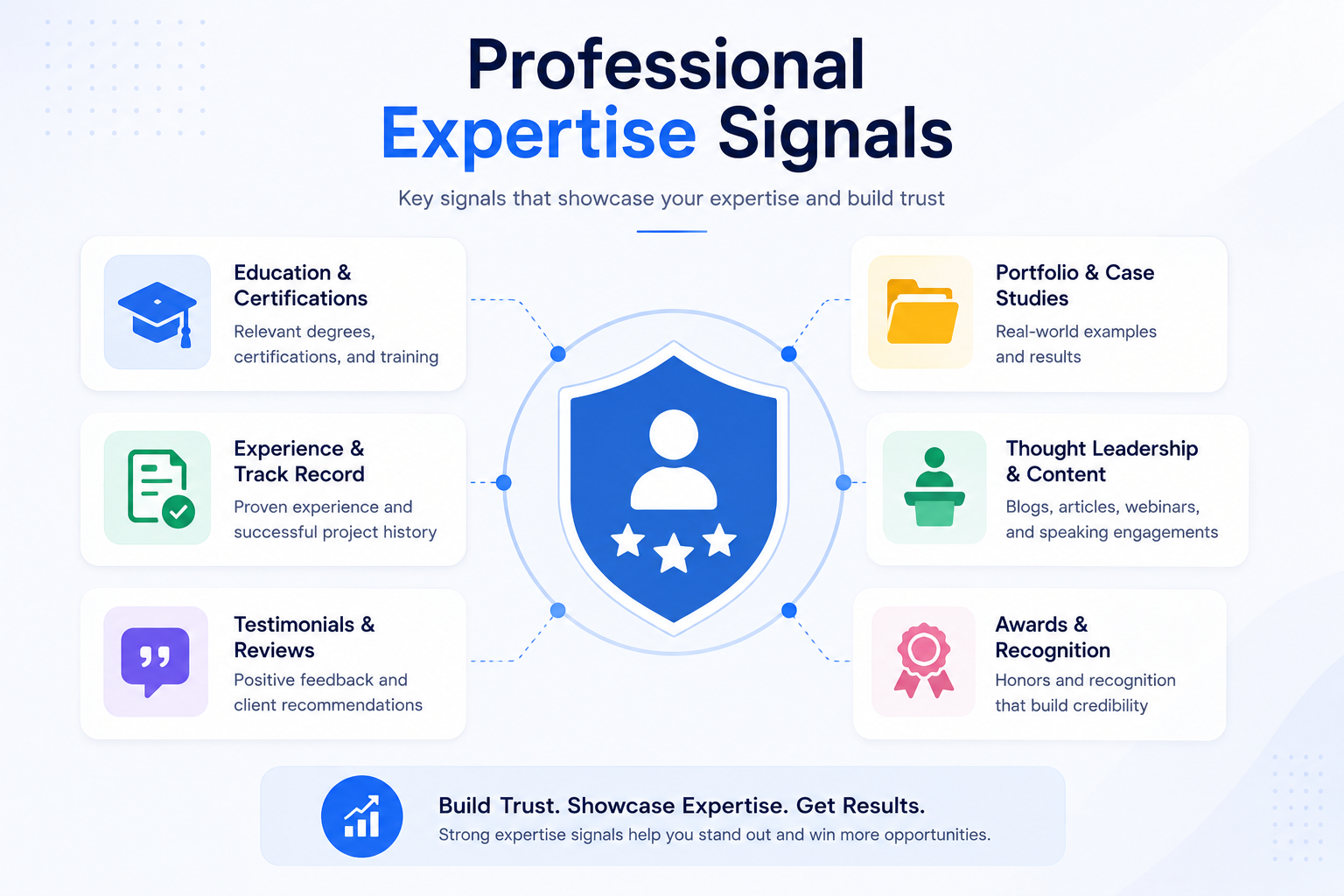
The Problem: E-E-A-T (Experience, Expertise, Authoritativeness, Trustworthiness) has become critical for AI rankings. Many websites lack clear author information, credentials, and trust signals.
Why AI Engines Care:
- AI models now evaluate human expertise verification
- Trust signals determine ranking in competitive niches
- Author credentials provide confidence to algorithms
- Backlink quality matters more than quantity
Implementing Strong E-E-A-T Signals:
| Element | Implementation | |---------|-----------------| | Author Info | Clear author bio with credentials and links | | Author Authority | Links to author's other published works | | About Page | Comprehensive company/team background | | Testimonials | Real user reviews and case studies | | Expert Credentials | Certifications, awards, media mentions | | Contact Info | Multiple contact methods and physical address | | Privacy Policy | Clear, accessible policy | | Money-Back Guarantee | Trust-building assurance (if applicable) |
Mistake #8: Ignoring AI-Specific Technical Requirements
The Problem: New AI search engines and discovery platforms have specific technical requirements different from Google. Many brands optimize only for Google, missing emerging platforms.
Why This Matters:
- AI search platforms grow 40% YoY
- Different requirements = different optimization strategies
- Early optimization = competitive advantage
- Google's dominance will decrease to 65-70% by 2028
AI Platform Technical Requirements:
Bing AI Search:
- Requires proper robots.txt compliance
- Needs clear content freshness signals
- Requires structured data implementation
ChatGPT Training & Browsing:
- Allow GPTBot in robots.txt (if you want inclusion)
- Provide clear, well-structured content
- Use proper heading hierarchies
Emerging Platforms (Perplexity, You.com, etc.):
- Standard robots.txt controls apply
- Rich structured data increases selection likelihood
- Content freshness crucial
The Fix:
# For AI inclusion
User-agent: GPTBot
Allow: /

User-agent: bing
Allow: /

User-agent: *
Allow: /
Mistake #9: Poor URL Structure and Slug Optimization
The Problem:
URLs like /page?id=12345&category=3 or /blog/2026/07/27/my-blog-post create crawlability issues and provide no semantic meaning to AI systems.
Why AI Engines Care:
- URLs provide semantic clues about content
- Parameter-heavy URLs confuse topic understanding
- Deep nesting reduces crawl efficiency
- URL keywords contribute to ranking (though minimally in 2026)
Optimal URL Structure:
Good: https://anavyailabs.com/blog/technical-seo-mistakes-ai-visibility
Poor: https://anavyailabs.com/blog?id=12345&category=SEO&date=2026-07-27
Best Practices:
- Keep URLs short (under 75 characters)
- Use hyphens to separate words (not underscores)
- Make URLs descriptive and semantic
- Avoid unnecessary parameters
- Use lowercase only
- Avoid dates in URL slugs (reduces flexibility)
- Minimize directory depth (2-3 levels ideal)
Mistake #10: Inadequate 404 Error Handling and Broken Links
The Problem: Broken links and poor 404 pages waste crawl budget and damage user experience. Crawlers expend resources on dead links instead of discovering new content.
Why AI Engines Care:
- Broken link patterns signal poor site maintenance
- Crawl budget is wasted on non-existent pages
- Redirects add crawl overhead
- User experience metrics suffer
Comprehensive Link Audit Strategy:
- Run monthly crawl audits using tools like Screaming Frog
- Check internal links for 404s
- Audit external outbound links (quarterly)
- Implement proper 301 redirects for moved content
- Create custom, helpful 404 pages
- Monitor Search Console for crawl errors
Custom 404 Page Elements:
- Brief explanation (friendly, not generic)
- Search functionality
- Link to homepage
- Popular content suggestions
- Sitemap link
- Contact option

Summary & Action Plan
Technical SEO mistakes don't just hurt traditional search rankings—they actively prevent AI engines from understanding, crawling, and valuing your content. The brands winning in AI-powered search are those treating technical foundations as mission-critical.
Your 30-Day Action Plan:
Week 1 - Audit:
- Crawl site with SEO tool (Screaming Frog, SEMrush)
- Test Core Web Vitals
- Validate existing schema markup
Week 2 - Architecture:
- Create internal linking strategy
- Establish pillar/cluster content model
- Optimize URL structure for new content
Week 3 - Technical Fixes:
- Implement missing schema markup
- Fix mobile experience issues
- Update XML sitemap and robots.txt
Week 4 - Ongoing:
- Monitor Search Console and PageSpeed Insights
- Establish quarterly audit schedule
- Test for new AI crawler requirements
The Bottom Line
In 2026, technical SEO isn't optional—it's existential. AI engines are increasingly discerning about technical quality. Websites that master these fundamentals won't just rank in traditional search; they'll dominate AI-powered discovery platforms, capturing the next wave of search traffic.
The competitive advantage goes to those who act now.