canonical: https://anavyaailabs.com/blog/how-rag-systems-retrieve-saas-content-what-geo-teams-need-to-know meta-application-name: Anavya AI Labs meta-article:modified_time: 2026-08-24T00:00:00Z meta-article:published_time: 2026-08-24T00:00:00Z meta-author: Anavya AI Labs meta-description: Learn how RAG systems retrieve SaaS content and why this matters for GEO teams. Discover how retrieval quality impacts AI search visibility, the role of embeddings in content discovery, and strategies to optimize your SaaS documentation for better AI-powered content retrieval. meta-last-modified: 2026-08-24 meta-og:description: Learn how RAG systems retrieve SaaS content and why this matters for GEO teams. Discover how retrieval quality impacts AI search visibility, the role of embeddings in content discovery, and strategies to optimize your SaaS documentation for better AI-powered content retrieval. meta-og:image: https://res.cloudinary.com/jt0zpx9e/image/upload/v1786336709/rag_saas_retrieval_hero_w4jvk2.png meta-og:title: How RAG Systems Retrieve SaaS Content: What GEO Teams Need to Know meta-og:url: https://anavyaailabs.com/blog/how-rag-systems-retrieve-saas-content-what-geo-teams-need-to-know meta-publish-date: 2026-08-24 meta-robots: index, follow meta-twitter:card: summary_large_image meta-twitter:description: Learn how RAG systems retrieve SaaS content and why this matters for GEO teams. Discover how retrieval quality impacts AI search visibility, the role of embeddings in content discovery, and strategies to optimize your SaaS documentation for better AI-powered content retrieval. meta-twitter:image: https://res.cloudinary.com/jt0zpx9e/image/upload/v1786336709/rag_saas_retrieval_hero_w4jvk2.png meta-twitter:title: How RAG Systems Retrieve SaaS Content: What GEO Teams Need to Know meta-viewport: width=device-width, initial-scale=1 title: How RAG Systems Retrieve SaaS Content: What GEO Teams Need to Know | Anavya AI Labs
HomeScannerBlogServicesAboutContact
Toggle theme
Toggle Menu
GEO & SEO
2026-08-2410 min read
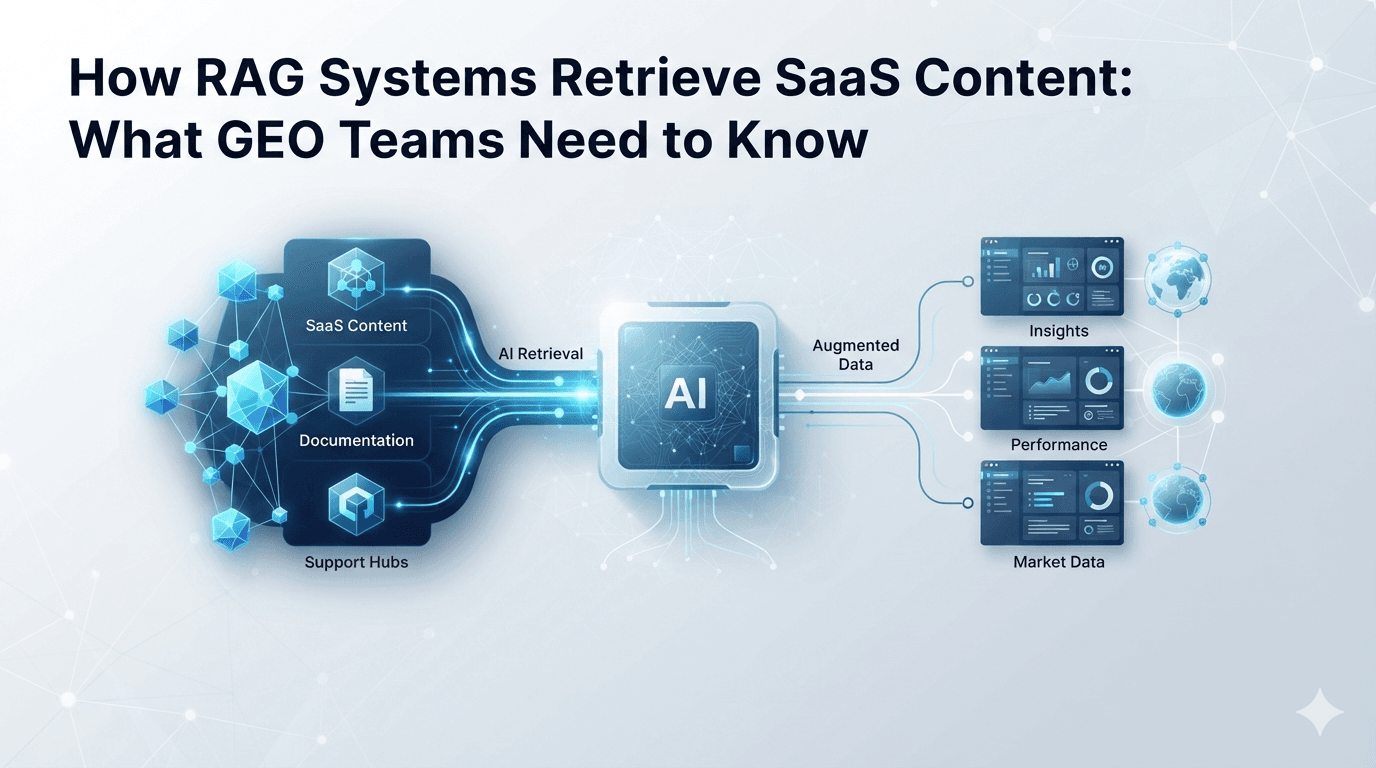
How RAG Systems Retrieve SaaS Content: What GEO Teams Need to Know
Discover how Retrieval-Augmented Generation (RAG) systems retrieve and rank your SaaS content in AI search results. Learn why traditional SEO optimization isn't enough, how embeddings impact content discovery, and the specific strategies GEO teams need to dominate AI search in 2026.
Anavya AI Labs Team
GEO Strategist & AI Search Optimization Expert
Focus Areas
RAG Systems
GEO Strategy
SaaS Content Optimization
AI Search
Content Retrieval
Embeddings
Vector Search
AI Visibility
SaaS Marketing
Search Optimization
AI Discovery
ChatGPT Optimization
Claude Integration
Perplexity Search
Content Strategy
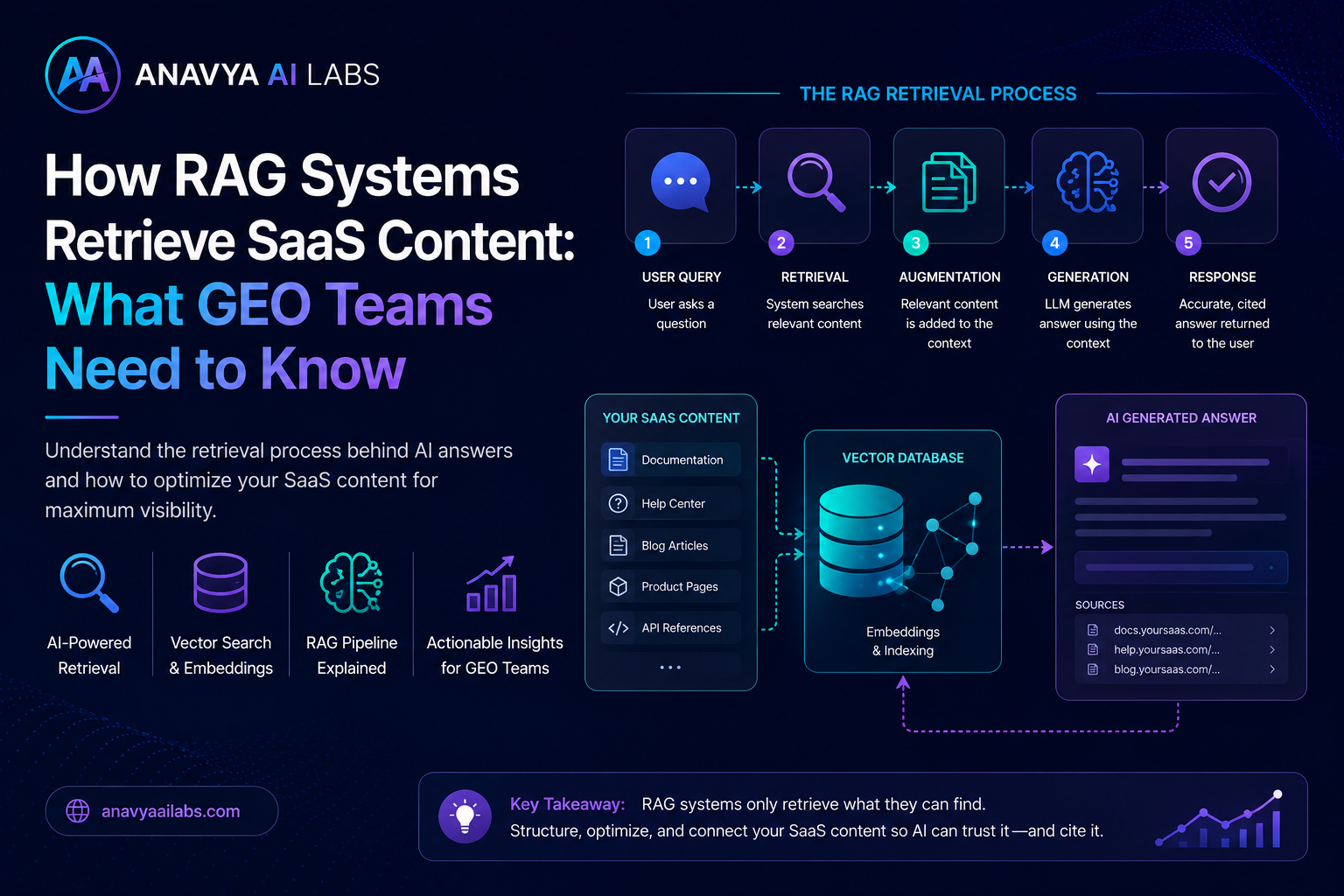
AI Key Takeaways (RAG & GEO Summary)
- RAG systems don't work like traditional search engines - They retrieve content based on semantic meaning, not just keyword matching, which fundamentally changes how SaaS content gets discovered
- Embedding quality directly impacts your AI visibility - Your content could be invisible if it's not properly vectorized and indexed by RAG systems
- GEO teams must think differently about content architecture - Documentation, help centers, and knowledge bases need to be optimized for both human readers AND RAG retrieval systems simultaneously
- Vector databases are the new search infrastructure - Understanding how your content is chunked, embedded, and ranked in vector space is critical for 2026 SaaS marketing
- Your SaaS documentation is now a distribution channel - Well-optimized docs get cited in AI search results, driving qualified traffic and establishing authority
How RAG Systems Retrieve SaaS Content: What GEO Teams Need to Know
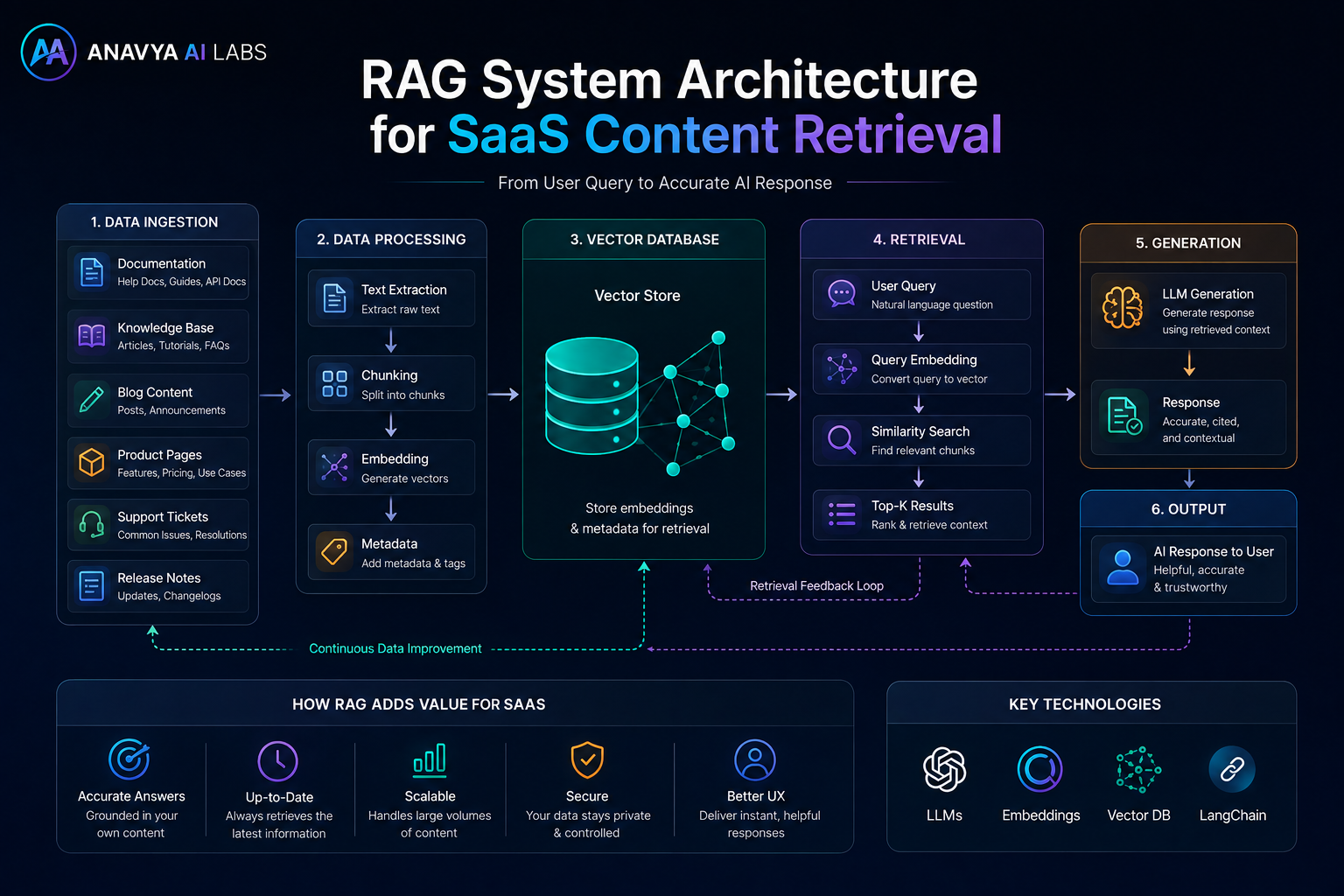
How modern RAG systems retrieve and rank SaaS content differently than traditional search engines
Introduction
In 2026, the way your SaaS content gets discovered has fundamentally changed. It's no longer just about ranking on Google or appearing in traditional search results. Today, AI-powered systems like ChatGPT, Claude, and Perplexity use a completely different mechanism to find and cite your content: Retrieval-Augmented Generation (RAG).
Here's the problem most SaaS companies face: They've spent years optimizing content for traditional SEO—keywords, backlinks, domain authority. But RAG systems retrieve content in an entirely different way. Your perfectly SEO-optimized blog post about pricing could be invisible to AI search if it's not optimized for RAG retrieval.
The opportunity for GEO teams is massive. Companies that understand how RAG systems retrieve content and optimize accordingly will dominate AI search visibility in their niche. Those that ignore it will become invisible.
This guide explains exactly how RAG systems work, why your current content strategy might be failing, and the specific optimizations you need to make your SaaS content retrievable by AI.
Part 1: How RAG Systems Actually Work
The RAG Retrieval Pipeline (Simplified)
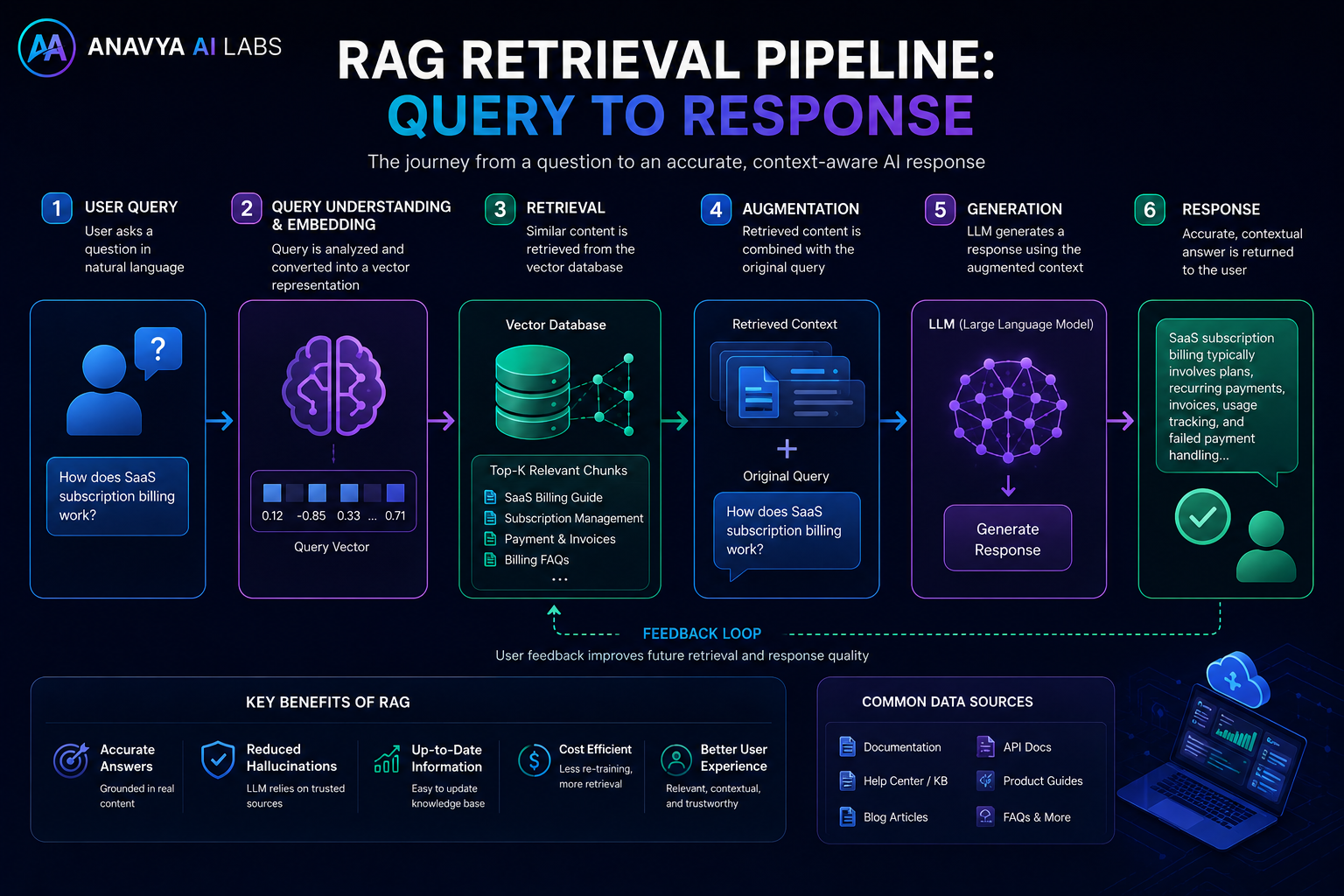
When you ask ChatGPT or Claude a question about a SaaS product, here's what happens behind the scenes:
Step 1: Query Vectorization
User Query: "How do I integrate Slack with my project management tool?"
↓ (converted to vector/embedding)
[0.234, 0.891, -0.124, 0.456, ...]
Step 2: Vector Similarity Search The system searches a vector database (Pinecone, Weaviate, Milvus) for content chunks with similar embeddings.
Step 3: Retrieval Ranking Retrieved documents are ranked by relevance using:
- Semantic similarity score
- Recency (freshness of content)
- Authoritativeness (domain reputation, E-E-A-T)
- Citation frequency (how often content appears in knowledge bases)
Step 4: Context Assembly Top-ranked documents are assembled into context:
Context from Retrieved Documents:
[Document 1 - Similarity: 0.95]
"Integration with Slack enables real-time notifications..."

[Document 2 - Similarity: 0.89]
"Step-by-step Slack integration guide..."

[Document 3 - Similarity: 0.82]
"Troubleshooting Slack connection issues..."
Step 5: Prompt Construction The LLM gets a prompt like:
Given the following context from authoritative sources:
[CONTEXT]

Answer this user question: {USER_QUERY}

Remember to cite your sources.
Step 6: Response Generation The LLM generates an answer grounded in the retrieved context and cites sources.
Why This Is Different From Traditional SEO
| Aspect | Traditional Search (Google) | RAG Systems (AI Search) | |--------|----------------------------|------------------------| | Matching | Keyword matching + semantic | Pure semantic similarity | | Ranking Factors | Links, domain age, CTR, RankBrain | Embedding similarity, recency, authority, citation frequency | | Content Type | Any indexed page | Highly structured, specific, comprehensive | | Discovery | Title tags, meta descriptions | Heading hierarchy, clear formatting, proper chunking | | Scale | Billions of pages | Millions of quality documents (curated) | | Speed | Cached indexes | Real-time vector search | | Source Attribution | Optional (meta) | Mandatory (directly cited) | | Authority | Link-based (PageRank) | Content-based (E-E-A-T, citations) |
Key Insight: RAG systems care far less about links and domain authority, and far more about:
- Content semantic quality - Does it actually answer the question?
- Retrievability - Can it be found via vector similarity?
- Citability - Can sources be clearly attributed?
- Freshness - Is information current?
Part 2: Why Your SaaS Content Might Not Be Retrievable
Problem 1: Poor Content Chunking
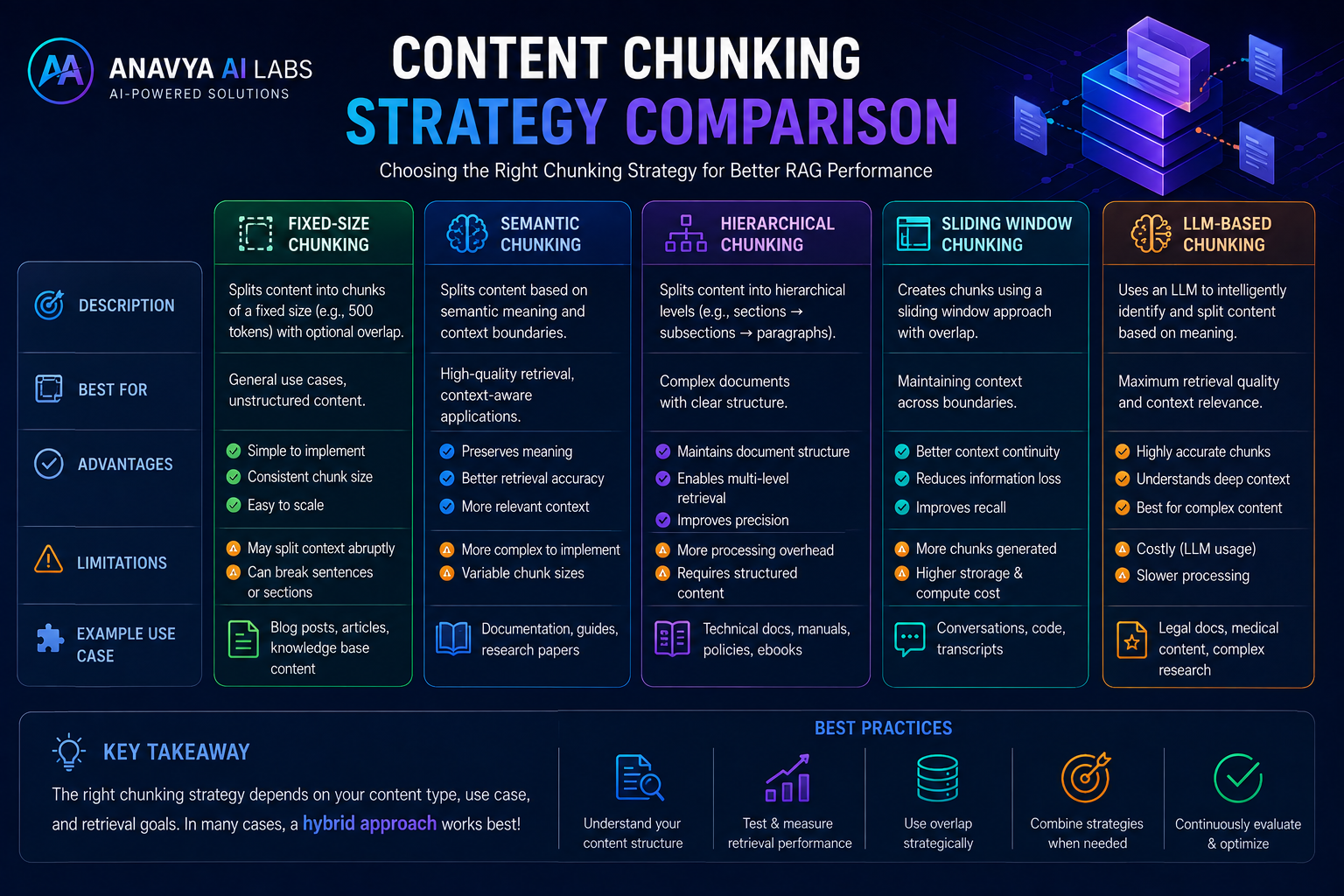
The Issue:
Most SaaS documentation is written for human reading, not RAG retrieval. RAG systems need to break your content into "chunks" (usually 200-1000 words). If chunks are poorly structured:
- Too small: "How to connect Slack" alone has no context
- Too large: 5,000-word page mixes multiple unrelated topics
- Bad boundaries: Chunk cuts off mid-sentence or mid-concept
- Lost hierarchy: System doesn't understand what's important
Real Example:
Your knowledge article:
Integration with Slack

Connect your project management tool with Slack to get real-time
notifications. This requires a Slack workspace and admin access.

Setting Up the Integration

First, navigate to Settings > Integrations. Click "Connect Slack".
You'll see an OAuth flow...

Troubleshooting

If your notifications don't appear, check that notifications are
enabled in your workspace settings...
Bad chunking: Might split "Integration with Slack" + first paragraph as one chunk, then "Setting Up" as another, mixing intro with instructions.
Good chunking: Each semantic section becomes its own chunk:
- Chunk 1: "What is Slack integration and prerequisites"
- Chunk 2: "Step-by-step setup guide with OAuth flow"
- Chunk 3: "Common troubleshooting steps and solutions"
Problem 2: Poor Embedding Quality
The Issue:
Not all embeddings are equal. If your content is embedded with a generic embedding model trained on general web text, it won't be retrieved well for SaaS-specific queries.
Example:
Query: "How do I set up API authentication for my SaaS tool?"
- Generic embedding: Might retrieve articles about OAuth in general, web APIs, security basics—none specific to YOUR tool
- SaaS-optimized embedding: Retrieves your specific API docs, authentication guides, and examples from YOUR product
Problem 3: Missing Metadata
RAG systems can't see:
- ✗ Which author wrote it (E-E-A-T signal lost)
- ✗ When it was published (freshness unknown)
- ✗ What version of your product it applies to
- ✗ How important/official it is
- ✗ What audience it targets (customer, developer, admin?)
Problem 4: Unstructured Content Format
Not retrievable:
- PDFs that are images (text not extractable)
- Content hidden in JavaScript (not server-rendered)
- Navigation menus mixed with actual content
- Multiple unrelated topics in one page
- Lack of clear heading hierarchy
Highly retrievable:
- Properly structured HTML with semantic tags
- Clear H1 → H2 → H3 heading hierarchy
- Separate pages for separate topics
- Rich metadata (schema markup)
- Clean, accessible text
Problem 5: Lack of Semantic Structure
Not optimized for RAG:
Features of our tool:
- Fast
- Secure
- Scalable
- Integrations
- Analytics
Optimized for RAG:
Core Features and Capabilities

Performance Optimization
Our tool processes 100,000+ requests per second with <50ms latency.
Built on Go and PostgreSQL for maximum efficiency.

Security and Compliance
Enterprise-grade security including FIPS 140-2 compliance,
SSO/SAML authentication, and end-to-end encryption.

Scalability
Horizontal scaling architecture handles millions of concurrent users.
Auto-scaling infrastructure adapts to traffic patterns.

Native Integrations
Pre-built connectors for Slack, GitHub, Jira, and 500+ third-party tools.
Custom API for building proprietary integrations.
Part 3: Optimizing SaaS Content for RAG Retrieval
Strategy 1: Redesign Your Content Architecture
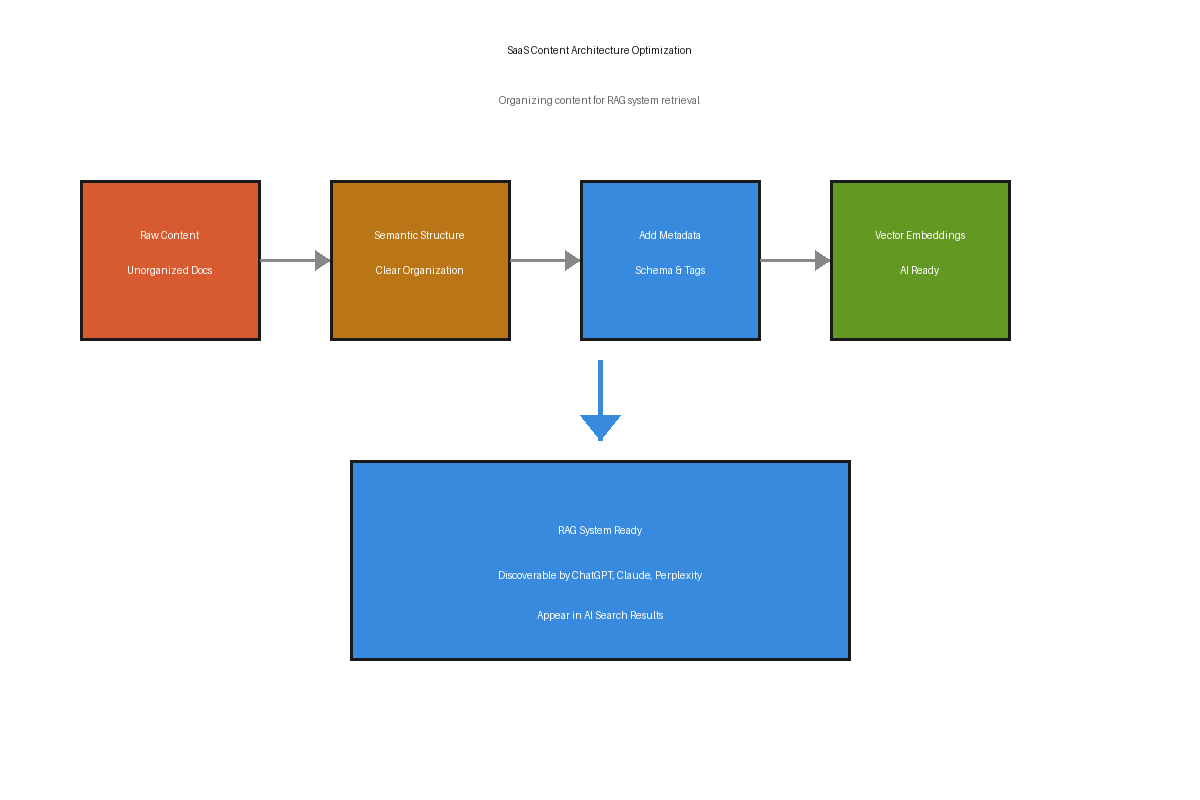
From: Page-Centric Thinking → Product has 100 pages, each covering multiple topics
To: Chunk-Centric Thinking → Product has 500+ retrievable chunks, each focused on one topic
Implementation:
-
Audit your documentation structure
- List all your knowledge base pages
- Identify topics that span multiple pages
- Find pages mixing unrelated topics
-
Reorganize into microcontents
- Each page covers ONE specific topic
- Title is the exact question users ask
- Length: 300-1,000 words (optimal for RAG)
- Clear single heading hierarchy
-
Add semantic structure
Title: "How to Set Up API Authentication"

[Overview - 100 words explaining what this covers]

## Prerequisites
- Requirement 1
- Requirement 2

## Step-by-Step Setup
### Step 1: Generate API Key
[Instructions]
### Step 2: Configure Permissions
[Instructions]
### Step 3: Test Connection
[Instructions]

## Common Issues and Solutions
[Troubleshooting]

## Related Articles
- Link to bearer token setup
- Link to rate limiting docs
Strategy 2: Optimize for Specific Embeddings
Step 1: Choose the Right Embedding Model
For SaaS documentation, consider:
| Embedding Model | Best For | Why | |-----------------|----------|-----| | OpenAI text-embedding-3-large | General SaaS docs | High quality, widely used, reliable | | Mistral embeddings | Technical documentation | Excellent for code, technical precision | | Anthropic Claude embeddings | Complex conceptual docs | Understands nuance, context | | Fine-tuned embeddings | Your specific domain | If generic models underperform |
Step 2: Optimize Title and Structure
RAG systems weight the title heavily. Make titles specific and query-intent-focused:
❌ Bad titles (generic):
- "Setup Guide"
- "Integration"
- "Features"
- "FAQ"
✅ Good titles (specific, query-focused):
- "How to Set Up OAuth 2.0 Authentication"
- "Integrate With Slack: Real-Time Notifications"
- "API Rate Limiting: Tiers and Overages"
- "Troubleshooting: Why My Webhook Isn't Firing"
Step 3: Write for Semantic Search
Use natural language that mirrors how users ask questions:
Document Title: "API Authentication Methods"

Content should include questions/phrases like:
- "How do I authenticate API requests?"
- "What authentication methods are supported?"
- "How do I generate an API key?"
- "Bearer token authentication"
- "OAuth 2.0 setup for API"
- "How to use API credentials"

This ensures it gets retrieved for all these query variations.
Strategy 3: Implement RAG-Friendly Metadata
Add schema markup to your SaaS documentation:
<script type="application/ld+json">
{
  "@context": "https://schema.org",
  "@type": "TechArticle",
  "headline": "How to Set Up API Authentication",
  "description": "Complete guide to setting up OAuth 2.0 and API key authentication for our platform API",
  "datePublished": "2026-01-15",
  "dateModified": "2026-08-24",
  "author": {
    "@type": "Person",
    "name": "API Documentation Team",
    "affiliation": "Your SaaS Company"
  },
  "publisher": {
    "@type": "Organization",
    "name": "Your SaaS Company",
    "logo": "https://yoursite.com/logo.png"
  },
  "keywords": "API authentication, OAuth, API keys, bearer token",
  "articleSection": "Technical Documentation",
  "teaches": [
    "OAuth 2.0 authentication flow",
    "API key generation and management",
    "Bearer token usage",
    "Permission scopes configuration"
  ],
  "mainEntityOfPage": {
    "@type": "WebPage",
    "@id": "https://yoursite.com/docs/api-auth"
  }
}
</script>
Strategy 4: Create Content Specifically for RAG
High-Value Content for RAG:
-
Comparison Guides
- "OAuth 2.0 vs. API Key Authentication: When to Use Each"
- RAG systems retrieve comparisons frequently
- Easy to cite and attribute
-
Troubleshooting Guides
- "Why Is My Authentication Failing? 7 Common Issues"
- Users ask AI these exact questions
- RAG systems love diagnostic content
-
Step-by-Step Tutorials
- "5-Minute Setup: Integrate Our API Into Your App"
- Clear structure, numbered steps
- Easy for RAG to parse and cite
-
Architecture Explanations
- "How Our Authentication System Works Internally"
- Technical depth establishes authority
- Gets cited for educational content
-
API Reference Pages
- Structured, scannable format
- Perfect for RAG extraction
- Frequently cited in AI responses
Strategy 5: Build Citation-Worthy Content
Make Your SaaS Docs Citable:
-
Clear attribution:
- Every section should be sourceable
- Heading = source identifier
- URL should remain stable (don't move docs around)
-
Specific examples:
- Include code samples
- Real-world scenarios
- Actual parameter values
- This gets cited more often
-
Official documentation only:
- Keep blog posts separate from official docs
- RAG systems prioritize official sources
- Mark community content clearly
-
Version clarity:
API Authentication Guide
Version: 3.2 (Current)
Updated: August 2026
Applies to: API v3.0 and later
Part 4: Measuring RAG Retrieval Success
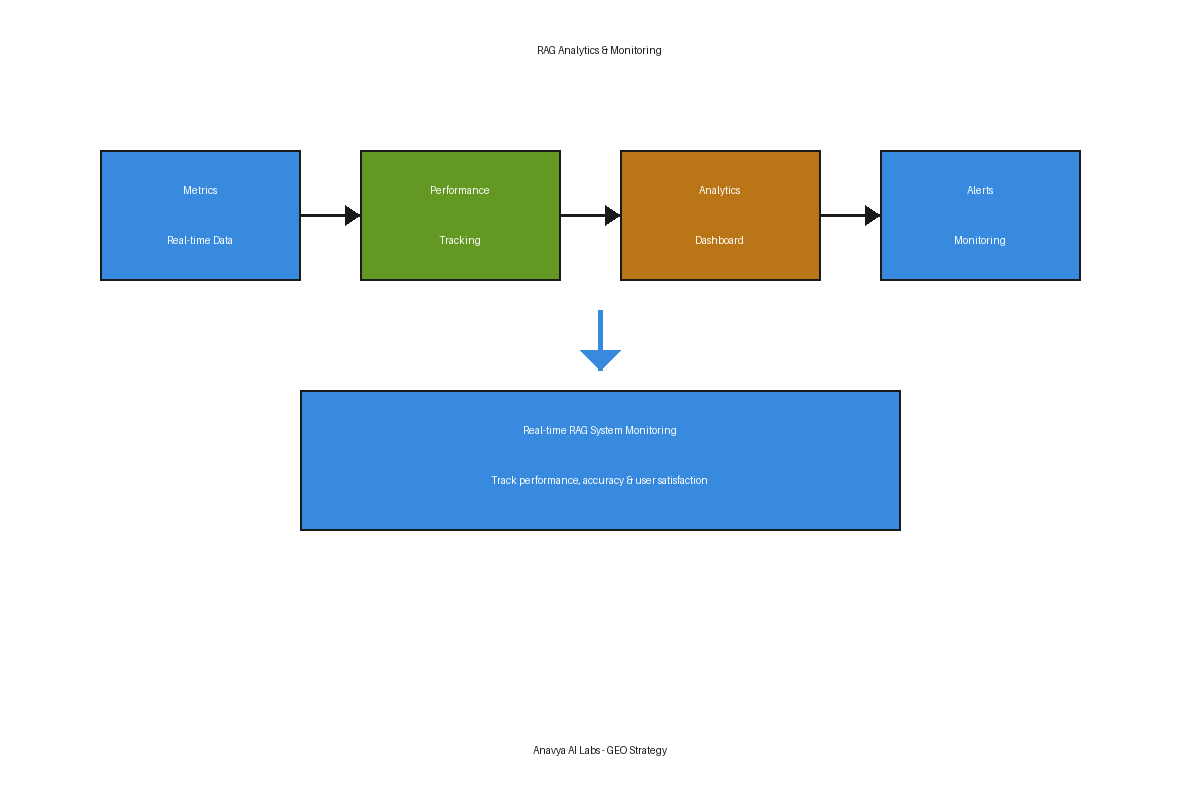
Metrics to Track
| Metric | What It Means | How to Track | |--------|---------------|--------------| | Citation Frequency | How often RAG systems cite your docs | Manual testing in ChatGPT/Claude, search for your domain | | Retrieval Rate | % of your docs retrieved by RAG systems | Vector DB monitoring, LLM API logs | | Citation Quality | Are relevant sections being cited? | Check if citations match the query | | Traffic from AI Sources | Users coming from ChatGPT, Claude, etc. | Analytics: track referrer sources | | Embedding Quality | Are your docs semantically similar to queries? | Test queries against your vector DB | | Content Freshness | Are recent docs being retrieved? | Monitor recency signals in RAG responses |
How to Test RAG Retrieval
Manual Testing:
- Open ChatGPT, Claude, or Perplexity
- Ask questions your SaaS docs should answer
- Check if your docs are cited
- Note which sections are retrieved
- Identify gaps in coverage
Example Test Cases:
Query 1: "How do I set up [Your Product] API authentication?"
Expected Result: Your API auth docs appear in top 3 results

Query 2: "What's the pricing for [Your Product]?"
Expected Result: Your pricing page or comparison docs cited

Query 3: "Is [Your Product] HIPAA compliant?"
Expected Result: Your compliance documentation cited

Query 4: "[Your Product] + Slack integration"
Expected Result: Your integration guide top-ranked
Part 5: Quick Implementation Checklist
This Week (Priority: HIGH)
- [ ] Audit your documentation for retrieval-blocking issues
- [ ] Identify pages with mixed topics (separate them)
- [ ] Add schema markup to top 10 knowledge base pages
- [ ] Rewrite titles to be query-intent focused
- [ ] Add clear metadata (author, date, version) to docs
This Month (Priority: HIGH)
- [ ] Implement semantic chunking strategy
- [ ] Rewrite 5 key docs for RAG optimization
- [ ] Set up analytics to track AI referral traffic
- [ ] Test your docs in ChatGPT, Claude, Perplexity
- [ ] Document which of your pages get cited
This Quarter (Priority: MEDIUM)
- [ ] Reorganize entire knowledge base for RAG
- [ ] Create comparison and troubleshooting guides
- [ ] Implement continuous metadata updates
- [ ] Build RAG-specific content pieces (tutorials, architectures)
- [ ] Establish a documentation update cycle
Conclusion
The future of SaaS content discovery is RAG-powered. While traditional SEO optimization got companies to the first page of Google, RAG optimization will determine whether you appear in AI search results—the new discovery channel in 2026.
The companies that optimize their SaaS documentation for RAG retrieval will:
✅ Appear in ChatGPT, Claude, and Perplexity results
✅ Drive qualified traffic from AI search
✅ Establish authority through citations
✅ Reduce support load through better documentation discoverability
✅ Capture demand that never reaches traditional search
Your Next Step
Start with your documentation audit this week. Identify which pages are blocking RAG retrieval. Then prioritize rewriting your top 10 most important docs using the strategies above.
The window to dominate AI search is now. Your competitors are probably ignoring it.
Last Updated: August 24, 2026
Average Read Time: 10 minutes
#RAG
#GEO Strategy
#SaaS Marketing
#AI Search
#Content Optimization
#Vector Search
#Embeddings
#AI Visibility
#Search Strategy
#ChatGPT Optimization
#Claude Integration
#Perplexity Search
#Technical SEO
#Content Strategy
#Product Documentation
More from the journal
Artificial Intelligence
12 min read
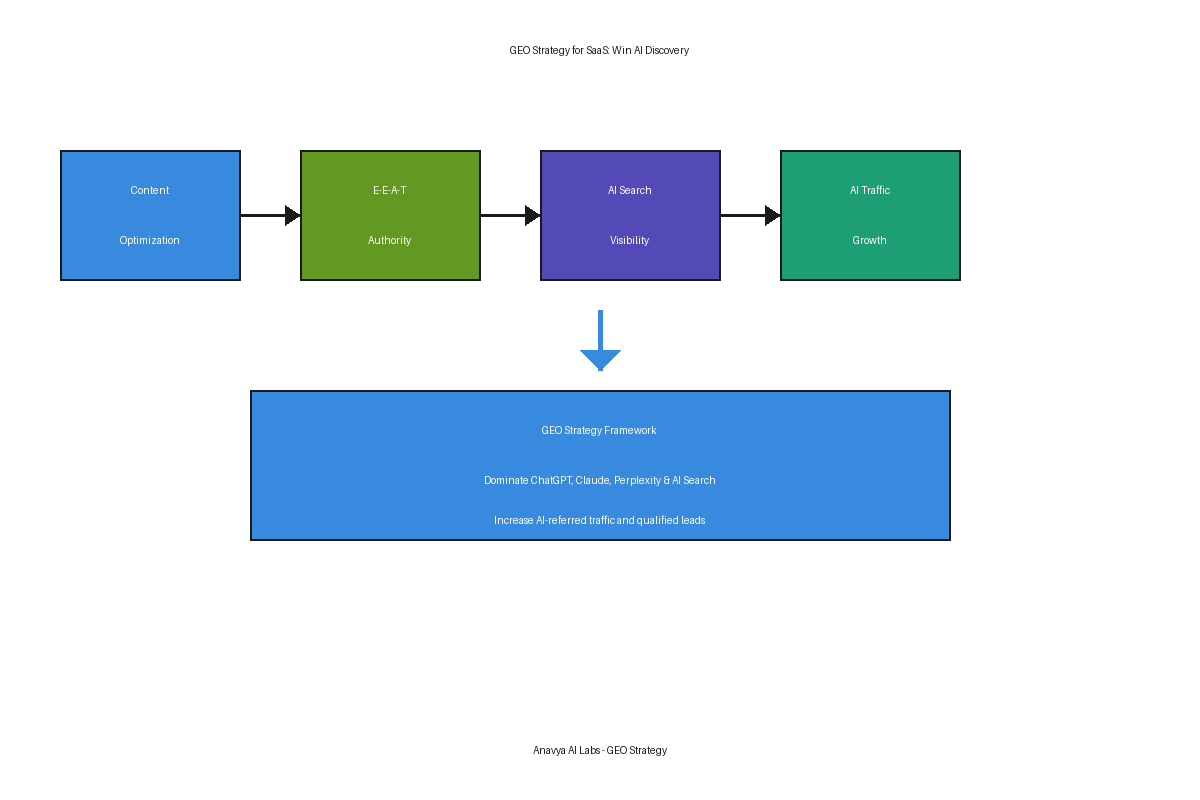
GEO Strategy for SaaS Companies: How to Win AI Discovery
GEO (Growth Engineering Optimization) is replacing traditional SEO as the primary framework for SaaS companies to win in AI-powered search results. Master the 5-pillar GEO framework to increase visibility across ChatGPT, Claude, Perplexity, and Google AI Overviews.
Artificial Intelligence
9 min read
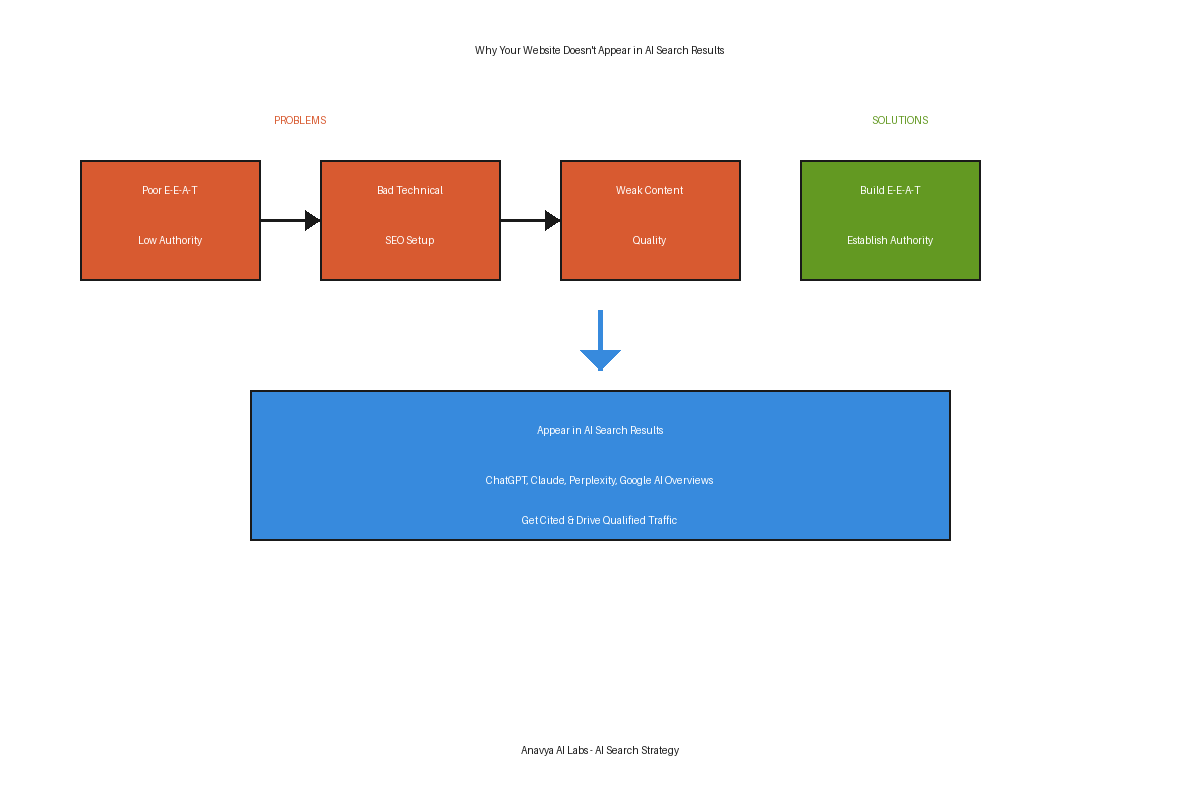
Why Your Website Doesn't Appear in AI Search Results (And How to Fix It)
Learn why your website doesn't appear in AI search results from ChatGPT, Claude, and Perplexity—and discover proven strategies to fix it. This comprehensive guide covers E-E-A-T optimization, technical SEO for AI crawlers, content strategies, and actionable checklists.
SEO
10 min read
How Google and AI Engines Understand Your Brand
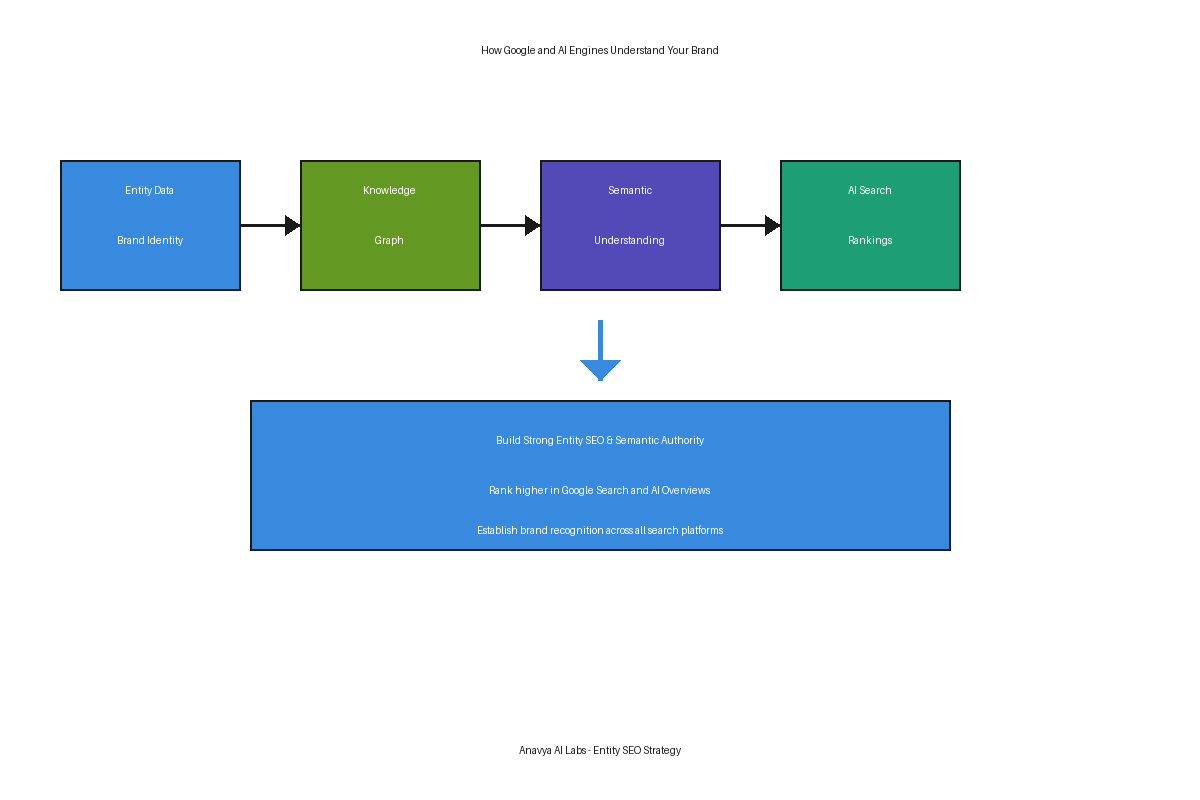
In 2026, Entity SEO has replaced keyword-only optimization as the dominant ranking framework. Learn how Google's Knowledge Graph and AI systems understand your brand, why entity relationships matter for AI Overviews, and the 5-step framework to build lasting semantic authority.
AI that finds what is costing your website customers.
Product
Company
Resources
© 2026 Anavya AI Labs. All rights reserved.